The European Union has moved IRIS² from planning into full-scale deployment after the European Commission and SpaceRISE signed an implementation agreement covering the secure-connectivity programme’s revised architecture and delivery schedule. The main constellation has been expanded to 348 satellites, with first launches targeted for 2029.
The agreement follows negotiations begun in January 2026 and establishes the next steps for detailed design, satellite construction, secure ground infrastructure, launch procurement, and progressive service deployment. The European Space Agency is supporting technical implementation and overseeing development, qualification, and in-orbit validation.
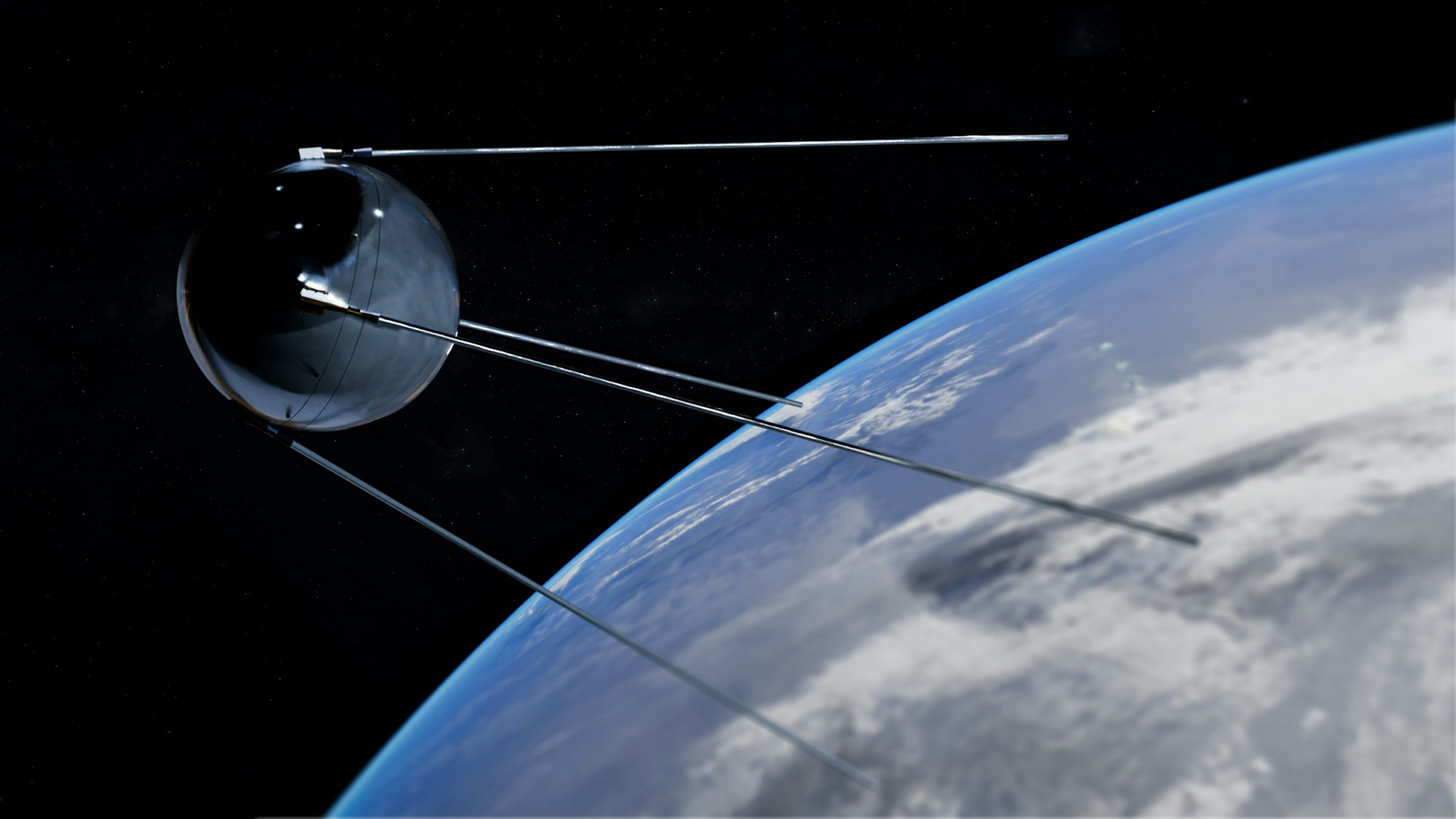
The revised architecture comprises 330 satellites in low Earth orbit and 18 in medium Earth orbit, with additional optional elements available for specific missions. The programme has added 66 satellites to strengthen capabilities intended for defence, security, and emergency-service users.
According to ESA, the reinforced architecture is intended to increase secure governmental capacity by 60% within the EU and by 54% globally. IRIS² is designed to provide sovereign and resilient connectivity for governments, defence and security services, emergency responders, and other authorised users, reducing dependence on non-European communications infrastructure for critical operations.
The industrial consequences now move closer to the foreground. SpaceRISE combines SES, Eutelsat, and Hispasat, while the manufacturing team includes Airbus Defence and Space, Thales Alenia Space, OHB, and Aerospacelab alongside a broader European supply chain. The programme therefore reaches into spacecraft structures, payloads, antennas, electronics, propulsion, power systems, thermal management, secure software, ground infrastructure, testing, and launch integration.
Building several hundred spacecraft demands a different industrial rhythm from producing a small number of bespoke satellites. Repeatability, configuration control, supplier qualification, standardised interfaces, and production-line discipline become central to delivery, particularly when security requirements must be incorporated without creating a succession of one-off variants.
That challenge is familiar to manufacturers in automotive and electronics production but less forgiving in space hardware, where components face radiation, thermal cycling, vibration, vacuum, and strict reliability requirements. Serial production can reduce unit costs and shorten assembly cycles only if suppliers can maintain qualification and traceability as volumes increase.
IRIS² will also compete for industrial capacity with commercial constellations, Earth-observation programmes, defence systems, and national space projects. Radiation-tolerant electronics, secure communications hardware, specialist test facilities, propulsion systems, and launch availability can all become pacing items even when the satellite production line itself has room to expand.
The programme’s ground segment is equally important. Secure connectivity depends on gateways, control centres, network management, cybersecurity, encryption, terrestrial interfaces, and resilient infrastructure capable of operating when conventional communications are disrupted. The agreement therefore moves more than satellite manufacturing into execution.
Funding is also broadening. Poland has committed €656 million and Hungary €500 million, while Spain has announced investment of between €1.6 billion and €2 billion. Further national contributions are under consideration, supplementing EU resources and private-operator investment.
More money and more satellites do not automatically make delivery simpler. Each national contribution, mission requirement, security standard, and industrial work package has to fit within a common architecture if the programme is to avoid the configuration growth that has troubled many complex aerospace projects. The accelerated timetable puts added pressure on those interfaces.
The first launches in 2029 leave several years for design finalisation, manufacturing scale-up, qualification, ground-segment construction, and launch contracting. That sounds generous until the number of spacecraft, suppliers, interfaces, and security requirements is considered. A constellation of 348 satellites is a production programme before it is a launch programme.
IRIS² now has an implementation agreement, a larger architecture, named industrial participants, and a route towards operational services. The political ambition was established years ago; the next test is industrial. Hundreds of spacecraft, launch slots, secure ground systems, and qualified components now have to arrive in sequence rather than merely exist on a programme chart.