Instron has launched a technical e-guide to help engineers generate high-strain-rate tensile data for materials and components exposed to rapid loading events.
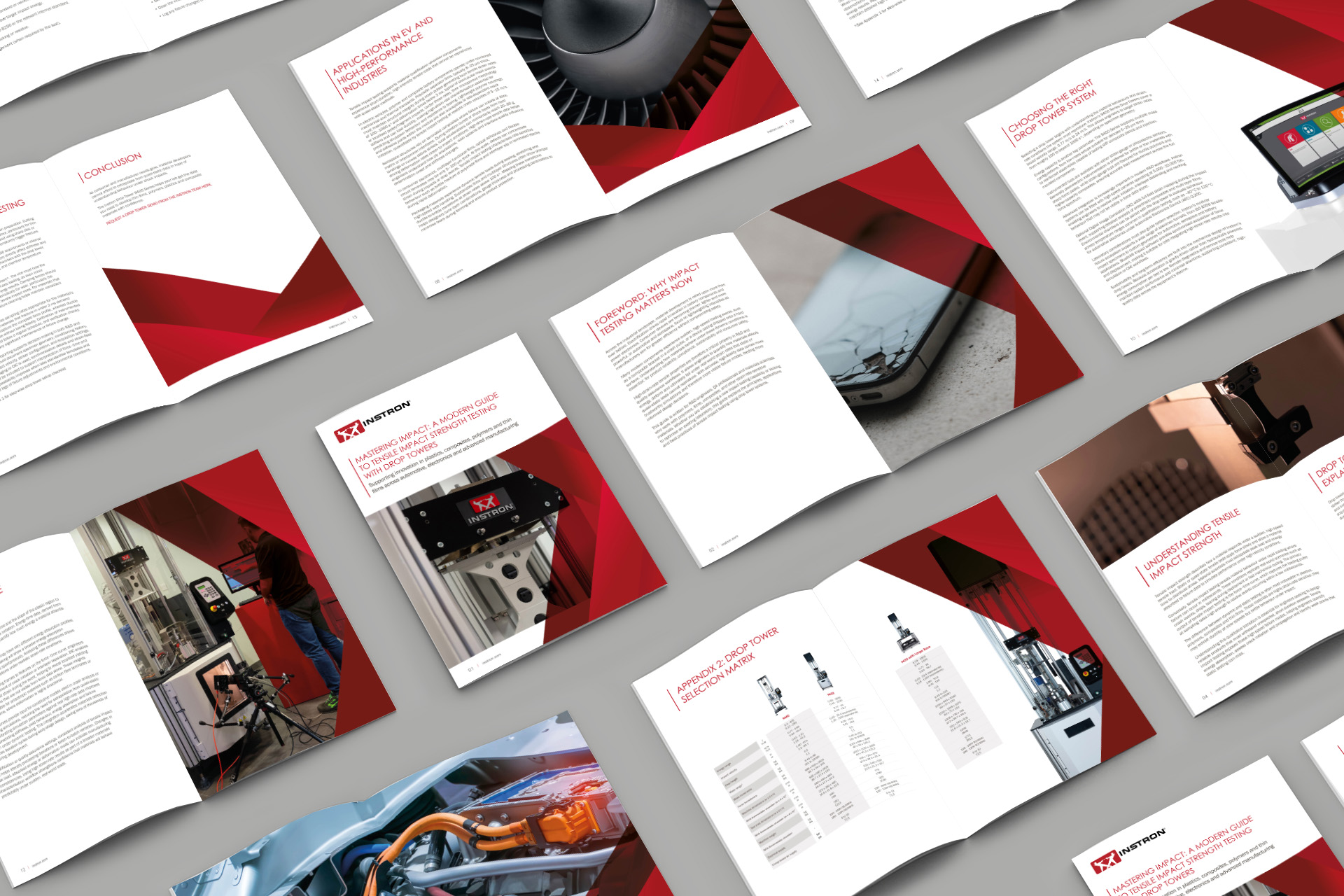
The publication, Mastering impact: a modern guide to tensile impact strength testing with drop towers, examines how dynamic drop testing can improve simulation accuracy and material characterisation. It is written for engineering and laboratory teams working on applications where material behaviour changes under fast impact conditions.
High-strain-rate data is becoming more important as electrification, lightweighting, and compact product architectures push materials into more demanding service environments. Electric vehicle battery systems, laminated structures, thin polymer films, electronics housings, and structural composites can all experience loading events that occur in milliseconds.
Conventional quasi-static testing remains necessary, but it does not always capture the way stiffness, ductility, or crack propagation change when loading rates increase. Where that dynamic behaviour is not directly measured, simulation models often rely on extrapolated data, affecting how failure modes and safety margins are assessed.
Drop tower tensile impact testing applies controlled impact forces and records material response under more realistic loading speeds. Force-time data can show how energy is absorbed, where failure initiates, and how cracks develop under rapid tensile loading.
“Development teams are specifying materials for applications where loading events happen in a few milliseconds,” said Andrea Incardona, application engineer at Instron and author of the new e-guide. “Yet material data is often generated at strain rates that do not reflect those conditions.
“When that happens, engineers are forced to make assumptions inside their simulation models. High-strain-rate tensile data reduces that uncertainty. It allows teams to see how energy is absorbed and where failure initiates, which ultimately supports more confident design decisions.”
The guide also covers strain-rate sensitivity and the relationship between laboratory results and simulation outputs. That correlation is becoming a routine concern in qualification programmes where thinner components, new polymers, composites, and lightweight structures must perform reliably under crash, drop, or impact loading.
Engineers and laboratory managers can access the full publication through Instron’s tensile impact testing e-guide.