Greggs has proposed a major consolidation of its UK manufacturing network that would close four production sites, end manufacturing at another, and concentrate activity across six locations over the next two and a half years.
The bakery and food to go group said the proposals follow a comprehensive review of its manufacturing network as it continues to add retail capacity and invest in the infrastructure needed to supply a larger shop estate. Around 740 roles could be affected if the proposals proceed following consultation with employees and union representatives.
The four manufacturing sites proposed for closure are Enfield, North Lakes, Pettigrews, and Seaham. Distribution operations at Enfield would remain in place, while manufacturing at Treforest would cease but the site would continue as a distribution centre. Greggs also plans to reduce the range of products made at Clydesmill and Manchester and end tinned bread manufacture at Gosforth.
If implemented in full, manufacturing would be concentrated at Clydesmill, Gosforth, Balliol, Leeds, Manchester, and Derby. Some manufacturing and packing work would move between sites, while a small number of products would be sourced from specialist suppliers where Greggs considers that approach more efficient.
The proposals sit alongside a substantial expansion of the physical network. Greggs says it has invested more than £300 million in manufacturing and logistics since the start of 2024, creating capacity intended to support at least 3,500 shops. Its estate stood at 2,796 shops at the end of the third quarter, compared with 2,181 in 2021.
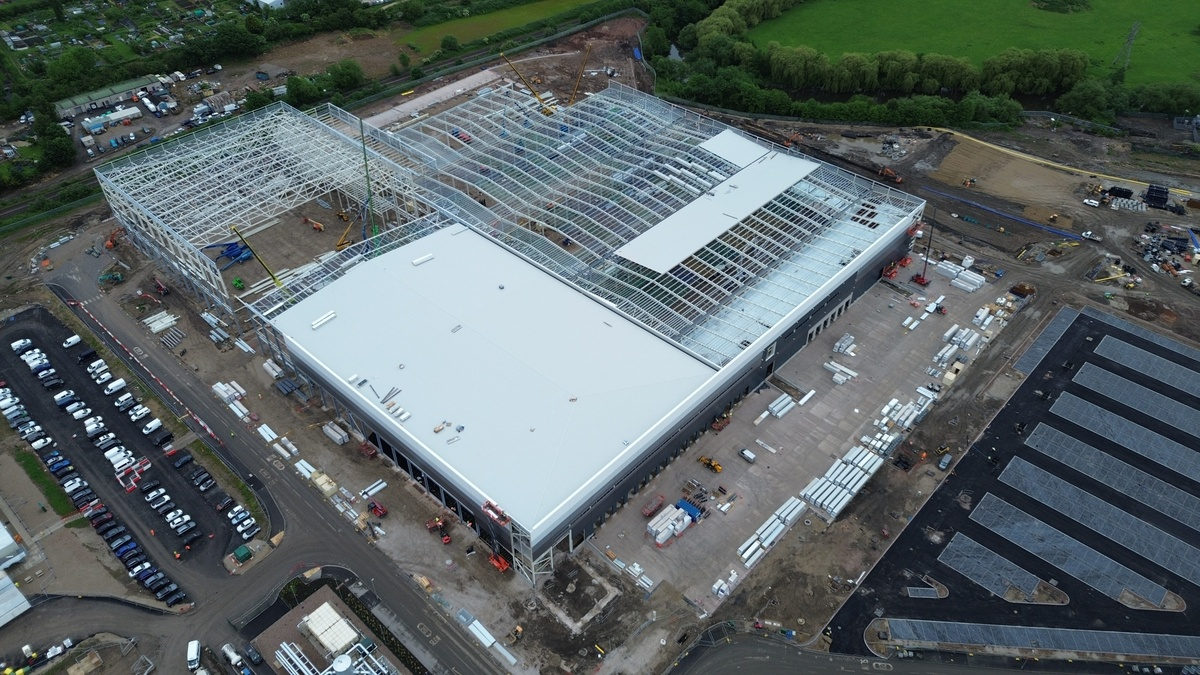
Two newer logistics investments are central to that programme. The Derby frozen manufacturing and logistics operation is intended to add sweet and savoury production capacity alongside frozen storage and automated order picking, while a national distribution centre at Kettering is due to become operational in 2027. The combination gives Greggs more centralised capacity while reducing the need to retain every legacy manufacturing activity at its existing footprint.
The restructuring is expected to carry cash costs of about £60 million, including roughly £40 million of capital expenditure as well as disruption and redundancy costs. Once the programme is complete, Greggs expects annual cash savings in pre-tax operating costs of around £20 million, with the benefits anticipated across the 2028 and 2029 financial years.
The proposed contraction in manufacturing sites is not being driven by falling group sales. Total sales increased by 7.7% in the third quarter to 26 September, while like-for-like sales in company-managed shops rose 3.4%. The company has also raised its expectations modestly for the 2026 financial year after stronger trading and continued cost control.
Adding capacity does not necessarily mean adding sites. Once larger automated facilities come online, a distributed production network assembled over many years can become expensive to operate, particularly where product ranges, packing functions, storage, and transport flows overlap. Consolidation can improve equipment utilisation and simplify material movement, but it also increases the operational importance of the remaining sites and the logistics links between them.
A smaller production footprint also changes the resilience calculation. Concentrating volume into fewer plants can raise utilisation and reduce duplicated equipment, but it leaves less spare geographic capacity when maintenance, labour disruption, or local logistics problems affect a site. Distribution planning therefore becomes part of the manufacturing redesign rather than a separate downstream exercise.
Greggs retains an unusually high degree of control over its own manufacturing and distribution for a food to go retailer. Its strategy treats ownership of the supply operation as a way to control product standards and cost, while recent capital spending has focused on centralised automation and additional capacity. The proposed closures therefore amount to a redesign of an owned manufacturing system rather than a broad retreat from internal production.
Recent UK manufacturing data has shown output improving in parts of the sector, while energy, labour, and investment pressures continue to complicate decisions about where capacity should sit. Greggs faces a more specific calculation: how to support a growing retail network with fewer manufacturing locations while preserving resilience and product availability.
No final decisions have yet been made. The consultation will determine how much of the proposed programme is implemented, but Greggs is pairing expansion in newer manufacturing and logistics assets with a reduction in the number of legacy production operations. If delivered as proposed, a smaller number of sites will carry a larger share of the company’s future production and distribution requirements.