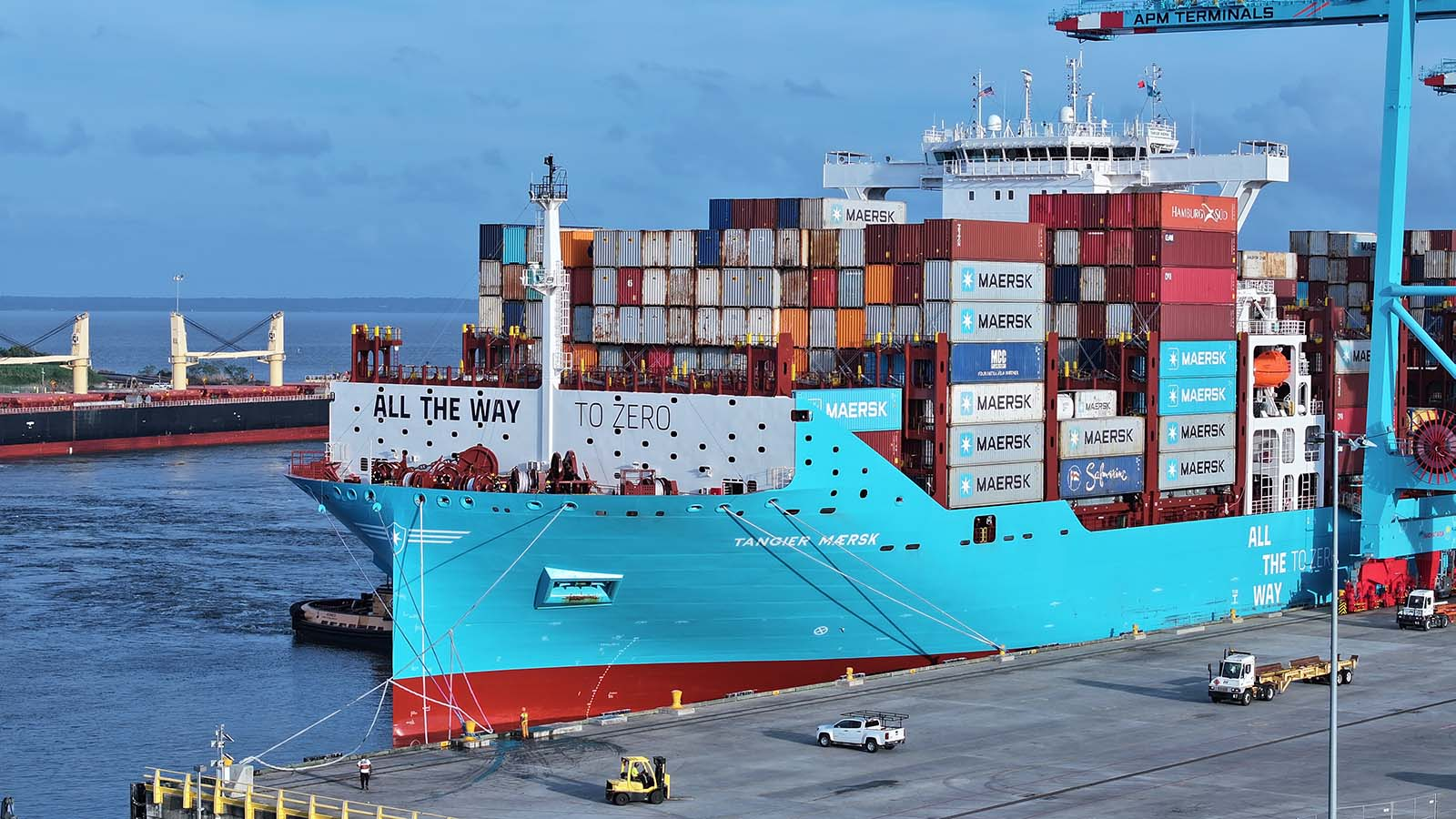
A.P. Moller – Maersk and bioethanol producer POET have completed the first US vessel bunkering operation using 100% bioethanol, testing another potential fuel pathway for alcohol-capable deep-sea shipping.
The trial took place in Houston using American-produced bioethanol supplied by POET. Kirby Corporation supported marine transportation and bunkering, the Port of Houston coordinated port requirements, and the US Coast Guard supported the regulatory process needed to conduct the operation.
Maersk has already been testing ethanol in vessels equipped with dual-fuel engines designed around methanol. Earlier trials progressed through blends before the company completed runs using 100% ethanol, allowing engineers to examine combustion performance and the implications of handling another alcohol fuel within an existing dual-fuel architecture.
The Houston operation adds the bunkering chain to that technical work. A fuel can perform satisfactorily in an engine but still have limited commercial value if it cannot be stored, transported, transferred, documented, and supplied routinely at the ports where vessels operate.
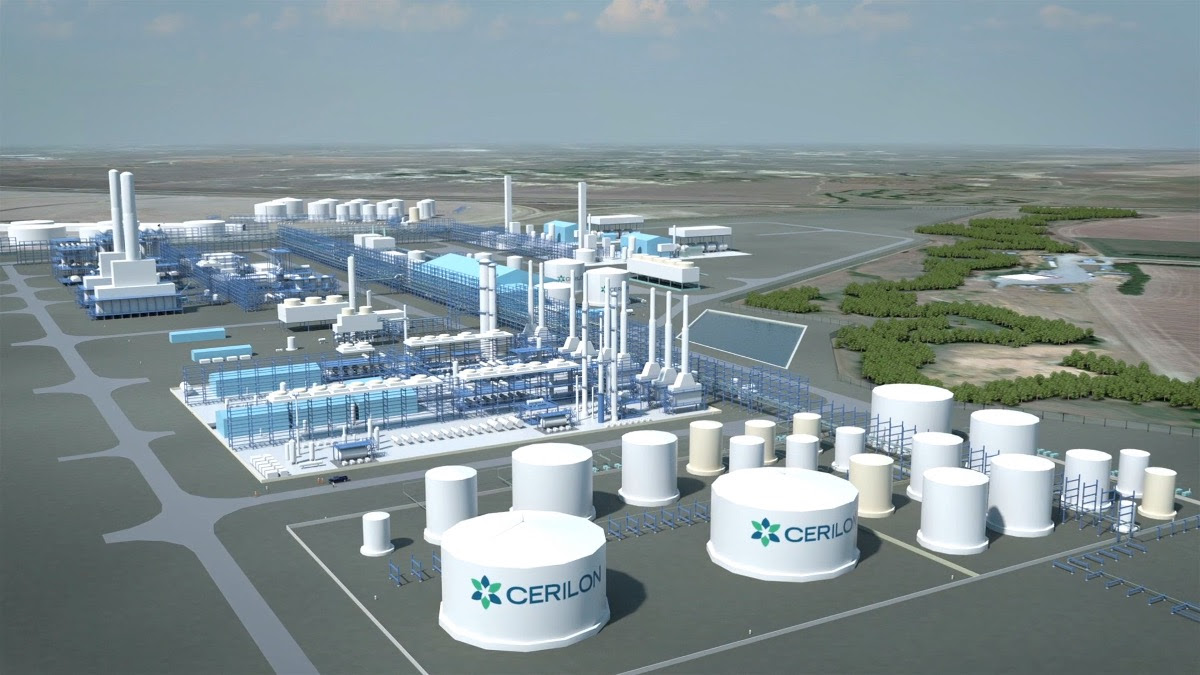
Bioethanol has an advantage in that respect because it is already produced at large scale for other markets. POET says it manufactures more than three billion gallons annually across 35 bioprocessing facilities, supported by established transport and distribution infrastructure.
That existing scale does not mean marine adoption is automatic. Deep-sea vessels consume large quantities of fuel and operate across international routes, so a practical marine fuel needs consistent specifications, suitable storage, compatible bunkering equipment, and availability at multiple ports rather than at one demonstration location.
Ethanol and methanol are both alcohol fuels, but their properties differ enough that fuel systems and engines require assessment before one can substitute for the other. Energy density, ignition behaviour, material compatibility, emissions, lubricity, and fuel management all influence how the product behaves aboard ship.
The value of an alcohol-capable vessel is therefore flexibility rather than complete fuel interchangeability. A ship designed to operate on conventional fuel and lower-emission alternatives can adapt more readily as fuel supply develops, but each additional fuel introduces operating procedures, crew training, certification, maintenance, and commercial considerations.
Maersk has invested heavily in dual-fuel ships as part of its wider strategy to reduce greenhouse gas emissions from ocean transport. Methanol has been the most visible alternative fuel in that programme, but the company has continued investigating whether ethanol could broaden the available supply base.
Emma Mazhari, vice president of energy markets at Maersk, said bioethanol could provide another scalable lower-emission option and greater flexibility in the industry’s transition. The Houston trial is intended to generate operating evidence rather than establish ethanol as the company’s preferred fuel.
The distinction is important because the emissions performance of ethanol depends heavily on how it is produced. Feedstock, agricultural practices, process energy, transport, and treatment of coproducts all influence lifecycle carbon intensity, so two fuels described simply as ethanol can have substantially different greenhouse gas profiles.
Shipping regulation increasingly requires that distinction to be measured. Vessel operators face tightening international and regional emissions requirements, creating demand for fuels that can demonstrate lower lifecycle emissions rather than merely producing less carbon at the engine exhaust.
The US bioethanol industry provides one possible supply base because production and distribution already exist at commercial scale. Marine demand could create an additional market for that output, although shipping would compete with road fuel, industrial users, and other transport sectors for suitable lower-carbon material.
Port infrastructure presents another challenge. The Houston operation required coordination between the producer, marine transporter, ship operator, port, and regulator. Routine adoption would require that process to become repeatable without the level of bespoke preparation associated with a first-of-kind trial.
The bunkering equipment itself may not be radically different from systems used for other liquid fuels, but procedures must account for ethanol’s characteristics, contamination control, fire safety, documentation, and compatibility with vessel storage and transfer systems.
Operational economics will ultimately determine how far the fuel progresses. Vessel owners have to compare fuel cost, energy content, emissions compliance value, engine efficiency, availability, and the cost of maintaining multiple fuel systems. A technically workable fuel can still remain marginal if it is consistently more expensive or less available than alternatives.
The Houston trial nevertheless closes an important gap between engine testing and commercial fuel logistics. POET has shown that US-produced bioethanol can move through a marine supply chain into a deep-sea vessel using a ship-to-ship bunkering process supported by established maritime operators.
The next test is repetition. One successful operation demonstrates feasibility; routine use would require the same fuel to be supplied predictably at multiple ports, at sufficient volume and with verified lifecycle performance. Maersk now has another practical data point as it decides how broadly ethanol should sit alongside methanol and other fuels in its future operating mix.