Generational has published analysis of 2,000 used plug-in vehicles showing that plug-in hybrid electric vehicles display wider battery health variation than battery-electric vehicles, despite broadly similar average performance.
The UK battery diagnostics company analysed 1,000 PHEVs and 1,000 BEVs from automotive retailers, comparing vehicles of similar age and mileage. Across the PHEV cohort, average battery State of Health stood at 94.27%, while BEVs recorded a slightly higher average of 94.94%.
The greater difference appeared in the spread of results. PHEVs recorded a State of Health standard deviation of 5.48%, compared with 4.14% for BEVs, and 4.70% of PHEVs in the sample fell below 85% State of Health. Among BEVs, 1.50% fell below that threshold.
Mileage and age remain useful valuation indicators, but neither fully captures how a battery has been charged, discharged, stored, or managed. As used EV and PHEV volumes increase across retail, leasing, remarketing, and finance channels, that missing information is becoming harder to ignore.
PHEVs can accumulate very different battery histories even when their odometer readings look similar. Some are charged frequently and used mainly in electric mode, while others operate largely as combustion vehicles with intermittent charging. Smaller battery packs can also experience different cycling patterns from BEVs, particularly where journeys create repeated shallow charge and discharge cycles.
“Average state of health evidently remains strong across both PHEVs and BEVs. What stands out is the wider spread of results among PHEVs, which underscores how both buyer and seller need to double down on checking the usage profile of the vehicle in question,” said Oliver Phillpott, CEO of Generational.
Generational’s wider 2025 Battery Performance Index, based on more than 8,000 battery health assessments, found average battery health of 95.15% across tested vehicles. The company said even 8–9-year-old vehicles retained around 85% median capacity, while high-mileage EVs with more than 100,000 miles frequently returned 88–95% State of Health.
The latest PHEV and BEV comparison does not point to a broad durability problem. It shows how individual vehicle condition can diverge from assumptions based on mileage, age, or powertrain badge, particularly where charging behaviour and electric-mode use vary sharply.
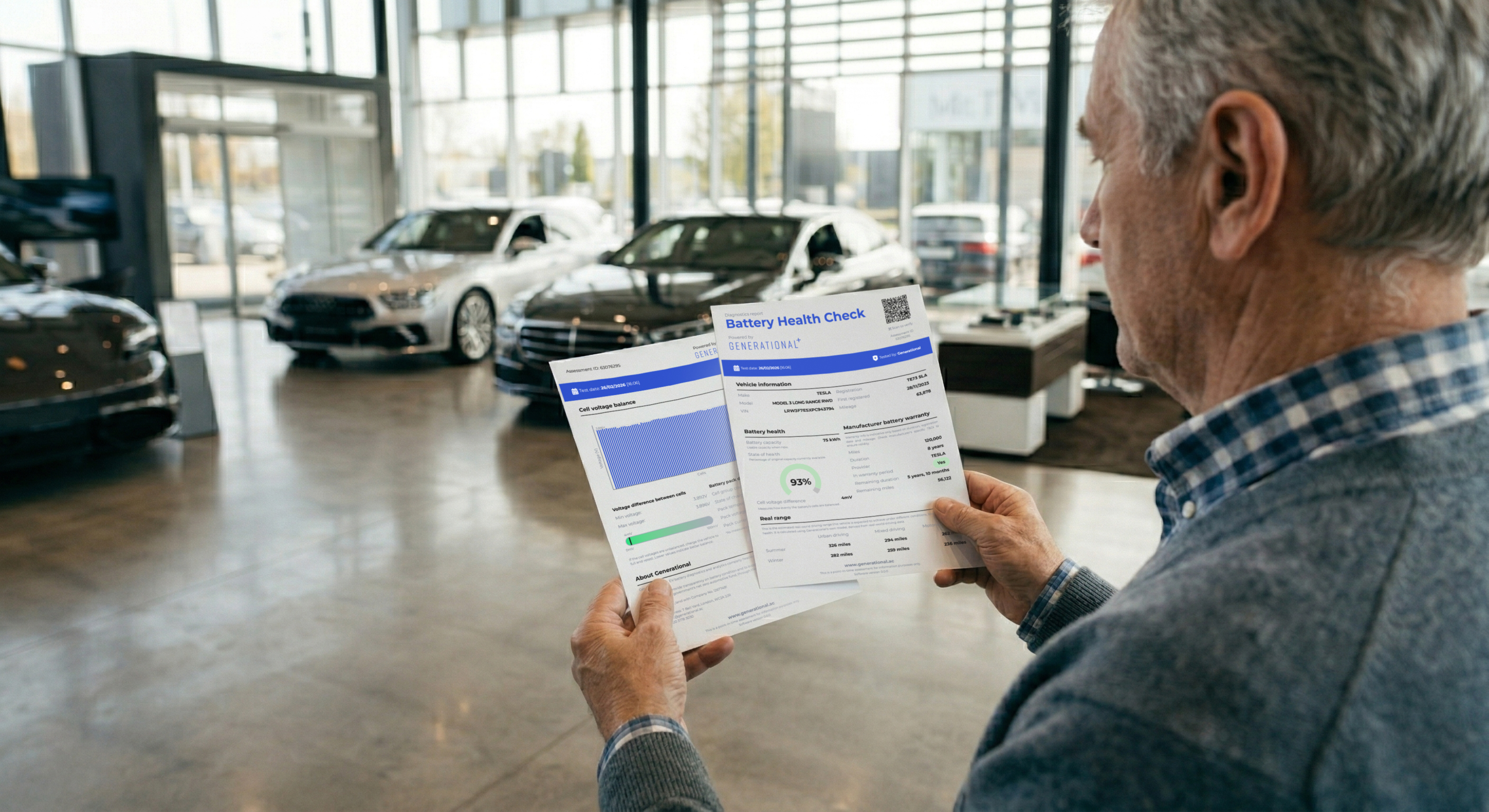
Generational’s battery health checks and State of Health certification are designed to help retailers, leasing companies, finance providers, and remarketers assess used plug-in stock more consistently. Battery condition is now moving from a technical afterthought to a direct input into pricing, warranty exposure, and buyer confidence.