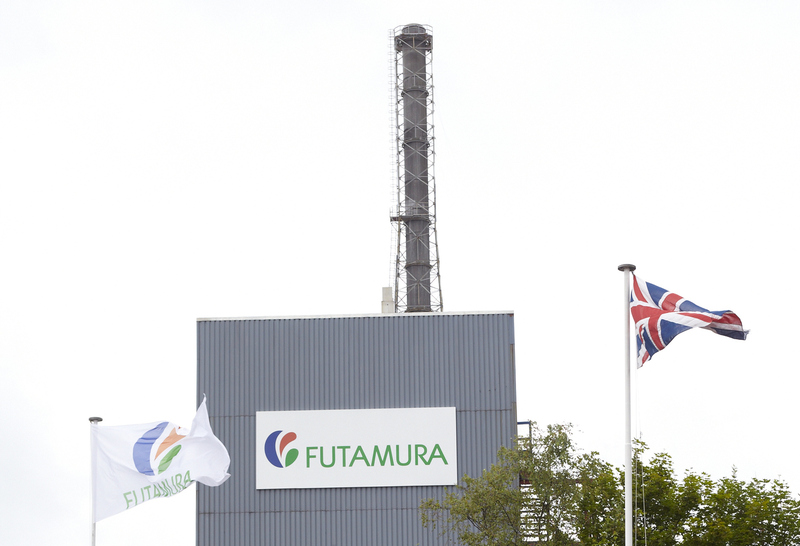

Today, Futamura announces a new £15 million initiative at its Wigton-based factory to drive major changes in its sustainability and performance, following significant investments in site infrastructure and machinery in recent years. The product’s environmental impact will be lessened as a result of this significant investment, which will also increase energy efficiency and reduce emissions.
The manufacturer, who employs 270 people and has been based in Wigton for over 90 years, manufactures renewable flexible packaging films that are derived from wood-pulp.
Futamura fosters a culture for sustainability and innovation, its NatureFlex packaging films being certified for both home and industrial composting at end-of-life to support a reduction in packaging waste.
The new investment will enable a significant step change in the company’s drive towards net zero and notably reduce their emissions. The project, internally called WSA will divert waste gasses from the production process to generate a valuable raw material via an oxidation process. Heat generated as a by-product of the chemical reaction will then be used to generate steam, the main energy utilised in the production process. Once operational, this asset will generate 15% of the total energy requirement of the Futamura site. As a result, the packaging manufacturer will also be able to reduce the amount of natural gas bought from the grid, reducing carbon emissions and improving the footprint of its products.
This project will be the largest investment the Wigton site has undertaken since their Japanese owners purchased the cellulose plant in 2016. Futamura is delighted to confirm that the company has also been awarded a UK government grant of up to £4.5 million
through the Industrial Energy Transformation Fund (IETF) to support this project. The grant from the UK Government showcases the confidence in the site and the benefits this new venture will generate.
The company’s managing director Adrian Cave commented: “I don’t think in my career, there has been a project that I have been more excited about. At Futamura we are passionate about our NatureFlex and Cellophane products, and we believe that this also means that we have to continually evolve and utilise greener manufacturing processes, to further reduce our environmental footprint. We are delighted
that the IETF energy efficiency grant has resulted in this project coming to fruition. Transformational projects such as this WSA installation invariably are expensive and have a medium to long term payback. We are very grateful for this support.”
Markus Campbell-Savours, Member of Parliament for Penrith & Solway, welcomed the news. He said: “I congratulate Futamura on securing this investment, one of the largest grants to be issued in this round of IETF funding. This government is committed to helping industry reduce its energy consumption and this project will enhance the sustainability and future of this 90-year-old business. This is a huge boost to Wigton, and the hundreds of workers employed at the site.”