Filtronic has secured an $8 million (£5.9 million) follow-on contract with a US customer to design, develop, and manufacture prototype units for satellite deployment, extending a customer relationship that began with development work earlier this year.
The award follows a $0.5 million (£0.4 million) development contract announced in June 2026 and a separate $8 million order placed by the same customer in March for amplifier technology. Filtronic expects the latest programme to be completed during the first half of its 2028 financial year, with revenue recognised across FY2027 and FY2028.
The customer has not been named, and Filtronic has not disclosed the satellite platform, payload architecture, unit count, operating band, or detailed performance specification. The latest contract nevertheless moves the relationship beyond initial development work into the design and manufacture of hardware intended for satellite deployment.
Filtronic specialises in RF, microwave, and millimetre-wave technology for space, aerospace, defence, telecommunications infrastructure, and other high-performance communications markets. Its work covers components and subsystems including solid-state power amplifiers, filters, transceivers, microelectronic assemblies, and associated design, manufacturing, and test services.
Nat Edington, chief executive officer at Filtronic, said: “Being awarded this significant follow-on contract with our recently secured US customer demonstrates the growing relationship and the confidence they have in Filtronic’s technical expertise. Our ability to develop and deliver highly advanced mmWave technology at pace is enabling us to establish ourselves as a trusted partner in the rapidly growing satellite market.”
Moving from a development contract to deployable prototype hardware introduces a different set of engineering controls. Designs have to progress from proving electrical performance towards units that can be manufactured consistently, tested against defined acceptance criteria, and integrated into the wider spacecraft system.
At millimetre-wave frequencies, relatively small variations in materials, assembly, interconnects, thermal conditions, and dimensional tolerances can have a measurable effect on RF performance. Process control therefore sits alongside circuit design, particularly when hardware must withstand launch and then operate without physical access for repair.
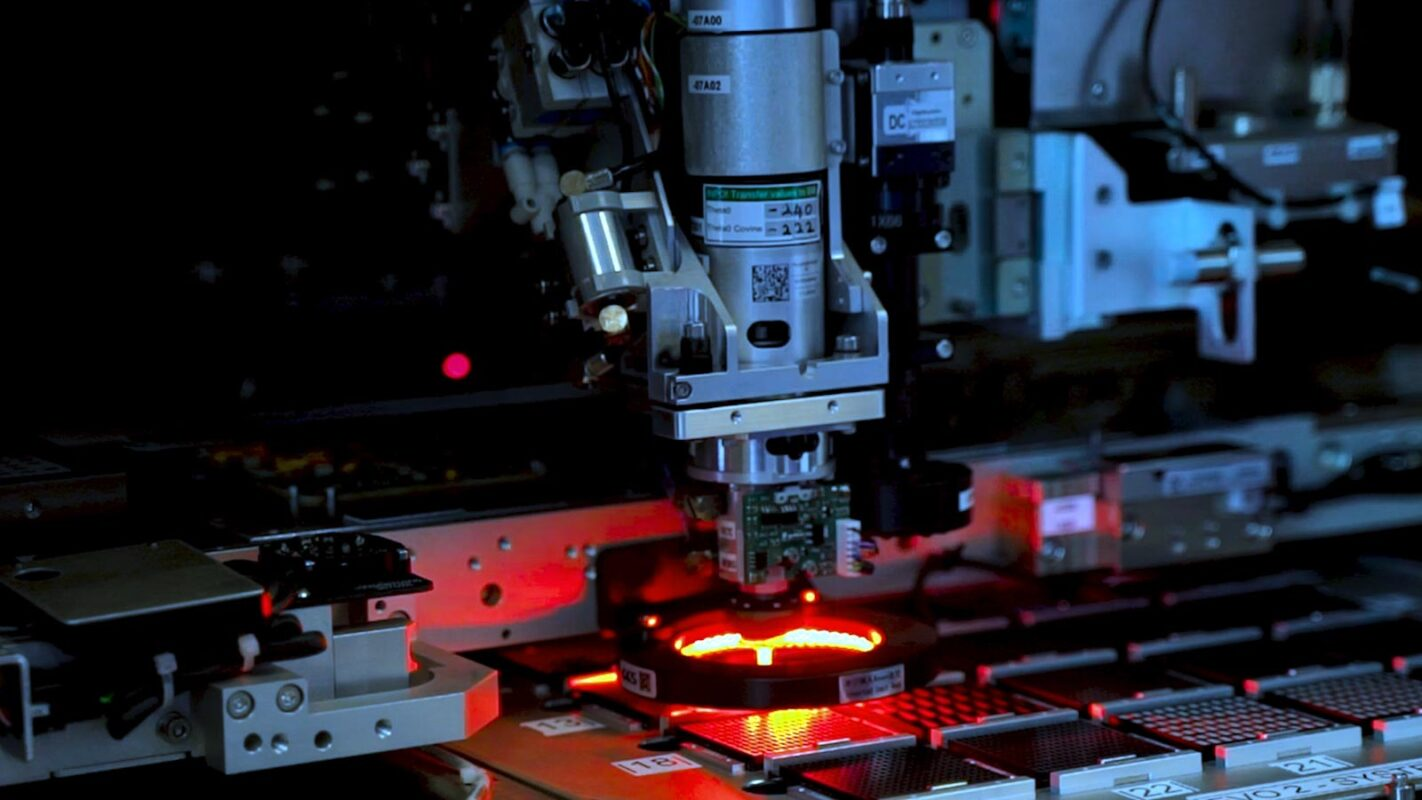
Filtronic’s in-house capabilities include hybrid manufacturing, microelectronic assembly, process engineering, and RF testing, allowing design changes and production feedback to be handled within the same engineering organisation. That integration becomes increasingly useful as hardware moves towards satellite use, where qualification demands are substantially higher than for many terrestrial communications products.
The new contract joins a broader expansion of Filtronic’s space and defence order book. In its results for the year ended 31 May 2026, the company highlighted a $62.5 million order linked to next-generation gallium nitride E-band technology for SpaceX, alongside a €7 million agreement with a European space customer and a £13.4 million contract with a European defence prime.
Those awards are separate from the unnamed US customer covered by the latest announcement, but they show the increasing contribution of space and defence programmes to Filtronic’s commercial workload. The company operates across frequencies extending from hundreds of megahertz into millimetre-wave bands, where greater available bandwidth can support high-capacity satellite and terrestrial links but places tighter demands on packaging, substrates, thermal management, assembly repeatability, and test methodology.
The sequence of orders from the latest customer is also becoming more substantial. An amplifier order was followed by development work and has now progressed into a larger prototype programme. No production contract beyond the prototype stage has been announced, so the eventual volume opportunity remains undefined.
If the hardware progresses into repeat manufacture, satellite programmes can generate significant demand for RF suppliers where the same design is used across multiple spacecraft. Qualification schedules, constellation deployment plans, and customer concentration can also make that demand uneven, particularly when a supplier is working with a relatively small number of high-value programmes.
Revenue recognition across FY2027 and FY2028 gives Filtronic additional visibility while the engineering work proceeds. The unnamed customer and undisclosed unit count prevent any meaningful comparison of value per payload or an assessment of the eventual production scale, but the contract demonstrates a clear progression in scope from development into prototype manufacture.
The work also extends Filtronic’s manufacturing visibility into FY2028, giving its production organisation a longer planning horizon for engineering resources, test capacity, and programme execution.
Qualification and deployment now form the next programme thresholds. A subsequent move into recurring payload manufacture would turn the relationship into a sustained production programme; until then, the $8 million award provides Filtronic with a substantial engineering and manufacturing project extending into the first half of FY2028.