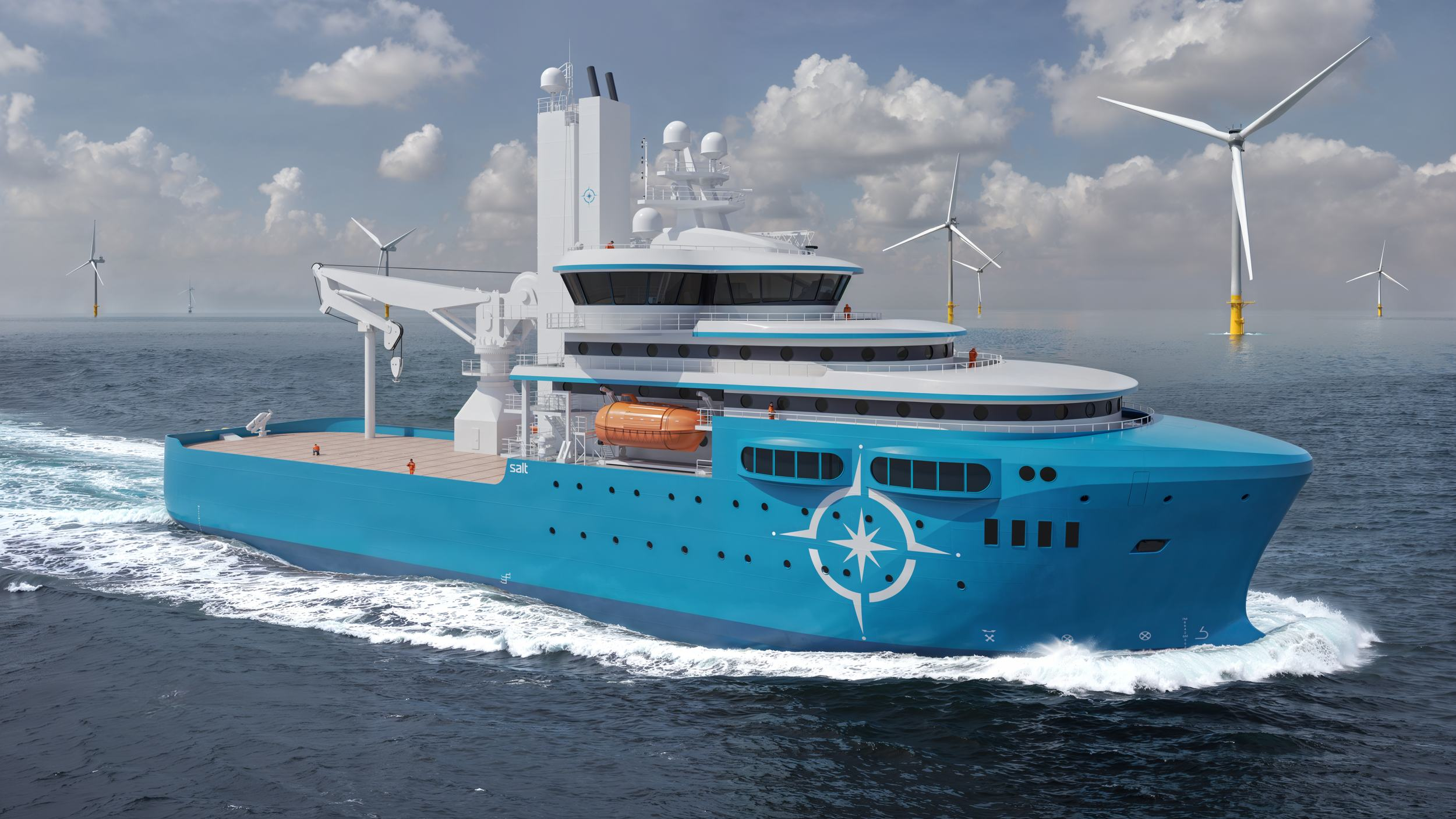
EST-Floattech will supply a battery system of more than 1MWh for Marco Polo Marine’s new CSOV Plus after being selected by Siemens Energy, which is integrating the vessel’s hybrid power plant. The Commissioning Service Operation Vessel is being built at Marco Polo Marine’s Batam shipyard in Indonesia for delivery during the second quarter of 2028.
Designed by Norway’s Salt Ship Design, the vessel is intended to work across offshore wind and oil and gas operations and combines a 100-tonne active heave compensated crane with a motion compensated gangway for walk-to-work transfers in significant wave heights of up to three metres. Construction began during the second quarter of 2026, while the hull and propulsion arrangement has been developed around extended station-keeping and dynamic-positioning work.
Siemens Energy’s BlueDrive PlusC system will integrate the generator sets, propulsion equipment and EST-Floattech Octopus High Energy batteries into a hybrid electrical plant. During dynamic positioning, thrusters continually adjust output to counter wind, waves and current, creating rapid changes in electrical demand even when the vessel itself remains in one position. The battery can absorb those variations and provide spinning reserve, allowing fewer generator sets to remain online solely to cover sudden load changes.
Reducing the number of running generators allows the remaining engines to operate nearer efficient load points rather than spending prolonged periods at low load while excess capacity is held in reserve. Battery charging and discharging can then smooth the difference between generating capacity and short-term propulsion demand, while the vessel retains the redundancy required for offshore operations around wind turbines and other installations.
The initial energy storage package is modest compared with the vessel’s future design allowance. Marco Polo Marine has reserved space and system capacity for battery storage to increase to 20MWh, a configuration intended to support fully electric sailing where operating profile and charging infrastructure make that practical. EST-Floattech’s modular Octopus architecture allows additional modules to be added through the existing battery-management platform rather than replacing the first installation.
Reserving that expansion during construction avoids several limitations that can make later electrification difficult. Battery rooms need structural space, ventilation and cooling, electrical distribution, fire protection, cable routes, access for maintenance and enough weight and stability margin to accept additional modules. Incorporating those requirements into the original vessel design gives the owner a defined upgrade path instead of requiring major structural work once the ship is already in service.
Octopus High Energy has type approval from DNV, Bureau Veritas, Lloyd’s Register and RINA and is offered for hybrid propulsion, full electric propulsion, hotel loads, peak shaving, backup power and spinning reserve. EST-Floattech lists a nominal module voltage of 52V and 10kWh storage capacity, with modules combined through the wider Octopus system to meet the voltage and energy requirements of each vessel.
Marco Polo Marine’s operating model gives the hybrid plant a demanding duty cycle because commissioning service vessels can spend long periods holding position while technicians transfer between the ship and offshore structures. Walter van der Pennen, chief commercial officer at EST-Floattech, described Asia-Pacific support vessels as facing “long periods on DP, constant load changes and multi-year charters”, conditions that favour a battery system designed around repeated cycling and later expansion.
After delivery, CSOV Plus will be operated by PKR Offshore, Marco Polo Marine’s Taiwan-based subsidiary. The vessel is intended for deployment by Siemens Gamesa under a multi-year framework agreement covering Taiwanese offshore wind projects, while Marco Polo Marine’s first CSOV, MP Wind Archer, has already been operating in Taiwan since 2025.
The dual-sector design broadens the range of duty profiles the electrical plant may have to support. Offshore wind commissioning, subsea work, oil and gas support, transit and prolonged dynamic positioning place different demands on generators, thrusters and hotel loads, making a battery sized around one fixed operating pattern less useful than a system that can be expanded if future charters justify additional storage.
A 20MWh battery would change the vessel’s operating possibilities substantially, but the reserved capacity should not be read as a commitment that the full package will be fitted. Charging availability, battery cost, charter requirements, vessel weight and the economics of generator operation will determine whether the owner uses the space. The value of the current design lies in preserving the option before structural and electrical decisions become difficult to reverse.
The contract is EST-Floattech’s first project in Singapore and Taiwan and expands the Dutch supplier’s exposure in an Asia-Pacific offshore market where long transit distances and limited charging infrastructure make full electrification more difficult than on short fixed routes. Hybridisation provides a nearer-term route to reducing inefficient generator operation while retaining conventional generating capacity for endurance and redundancy.
CSOV Plus will therefore enter service with its battery acting primarily as part of the vessel’s power-management system rather than as its main energy source. Generator loading, fuel consumption, battery cycling, dynamic-positioning response and availability during charter work will show how much value the initial 1MWh-plus installation delivers, while the reserved 20MWh configuration leaves a route to a more heavily electrified operating model later in the vessel’s life.