Datum Tool Design has secured £1.6 million of funding from Paragon Bank to support the purchase of a large five-axis CNC machining centre for aerospace tooling work.
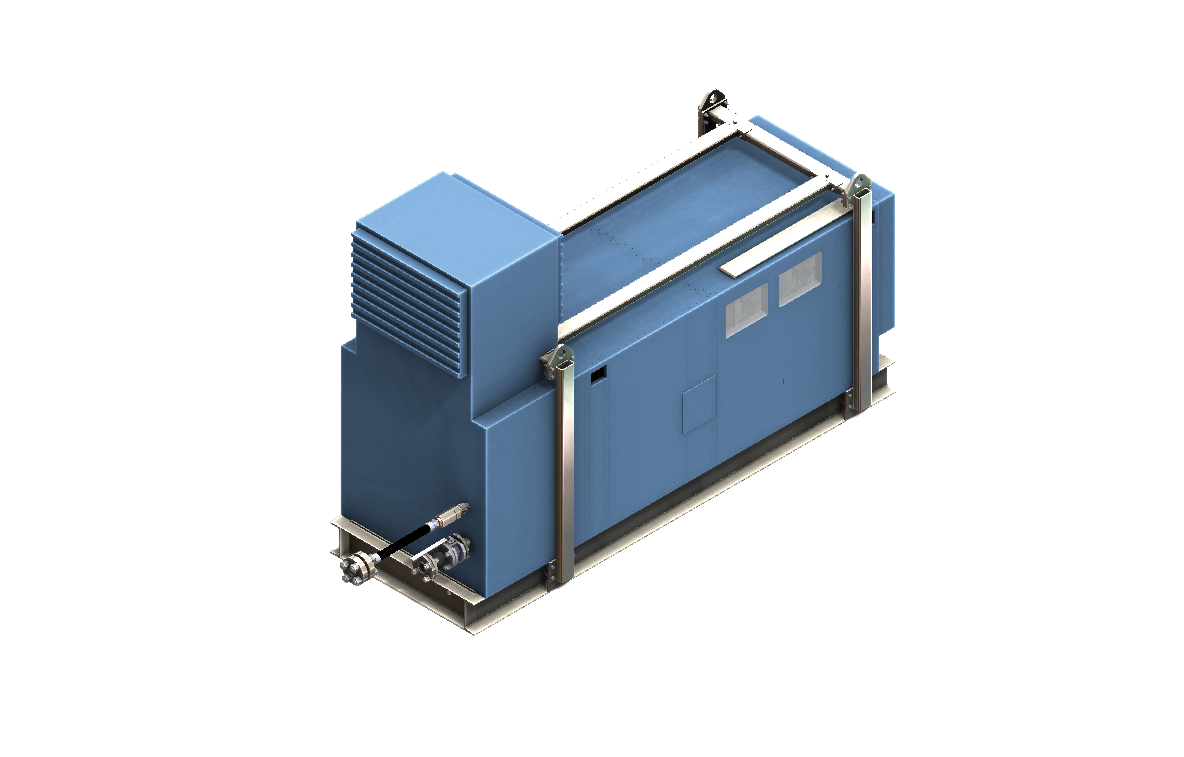
The Lisburn-based company will use the funding to acquire a Promac Sharav HGVT machine, a 22-metre, five-axis machining centre designed to support larger and more complex tooling projects. The machine is understood to be the largest of its type in Ireland and will allow Datum to bring more capability in-house.
Founded in 1996, Datum Tool Design designs and manufactures high-precision tooling for major aircraft programmes. Its work spans composite tooling, assembly fixtures, trimming and drill tooling, and build-to-print aerospace tooling. The company supports major aerospace manufacturers and supply chains, including Airbus, Bombardier, and BAE Systems.
The investment is intended to increase production capacity, improve control over scheduling and quality, and support larger aerospace tooling packages. It forms part of wider growth plans for the business, including grant support from the Aerospace Technology Institute connected to a broader investment programme and a new facility to house the machine.
Joe Blanthorn, business development manager in Paragon Bank’s SME Lending division, said: “Datum Tool Design is a strong example of a specialist UK manufacturer investing for growth. The business has built a reputation over many years for supporting technically demanding aerospace programmes, working with some of the biggest names in the sector.”
Michael Maguire, director at Datum Tool Design, said: “The new 5-axis machining centre is a significant investment in the next stage of our development. As the largest machine of its type in Ireland, it gives us greater capacity, more flexibility and the ability to manufacture larger, more complex tooling in-house.”
The funding was introduced to Paragon by Paul Close Finance in Northern Ireland. The deal was led for Paragon by Blanthorn, with support from head of vendor Terry Lloyd.
Aerospace tooling suppliers are no longer adding machining capacity only to increase spindle hours. Larger aircraft structures, composite assemblies, tighter tolerances, and shorter development schedules are changing what customers expect from specialist manufacturers. Tooling companies increasingly need to combine machining scale with accuracy, inspection capability, design support, and resilience across long-running aircraft programmes.
Five-axis machining capacity is especially valuable where complex geometries, large fixtures, and composite tooling surfaces are involved. Machining large parts in fewer setups reduces handling, alignment error, and schedule friction. It also gives suppliers more control over quality because fewer process handovers are required between machining stages or external subcontractors.
Bringing more work in-house reflects a supply-chain pattern that has become more pronounced since the disruption of recent years. Manufacturers have reassessed dependencies across logistics, materials, labour, energy, and capacity. In aerospace, where certification, documentation, and programme continuity carry high stakes, control over critical process steps can be as valuable as headline capacity.
Northern Ireland’s manufacturing base has established strengths in aerospace, precision engineering, composites, materials, and tooling. Investment of this kind strengthens the region’s position in high-value engineering supply chains, especially where specialist SMEs support major primes and tier suppliers with capability that would be difficult to replicate quickly.
The capital intensity remains substantial. Large machine tools require upfront investment, installation planning, floor space, operator training, programming capability, fixturing, inspection, and a suitable pipeline of work. Asset finance gives established manufacturers a route to move ahead with equipment that would otherwise place pressure on balance sheets.
Datum’s expansion also sits alongside wider investment in UK advanced manufacturing. New processes such as cold spray manufacturing, now being developed through facilities including Nottingham’s specialist manufacturing centre, are broadening the routes available for repair, remanufacture, coating, and production of high-value components across aerospace, defence, fusion, nuclear, and clean energy applications.
That wider picture points to an aerospace supply chain being asked to do two things at once: deliver reliably on existing programmes while preparing for more complex future systems. Tooling, machining, inspection, repair, and materials capability all sit inside that shift. Prime contractors cannot build advanced aircraft without specialist manufacturers able to turn design intent into repeatable production assets.
Datum’s new machine gives the business a larger manufacturing envelope and greater internal control. The next test will be utilisation: programming efficiency, operator skill, inspection discipline, and the company’s ability to convert larger tooling opportunities into reliable delivery for aerospace customers.