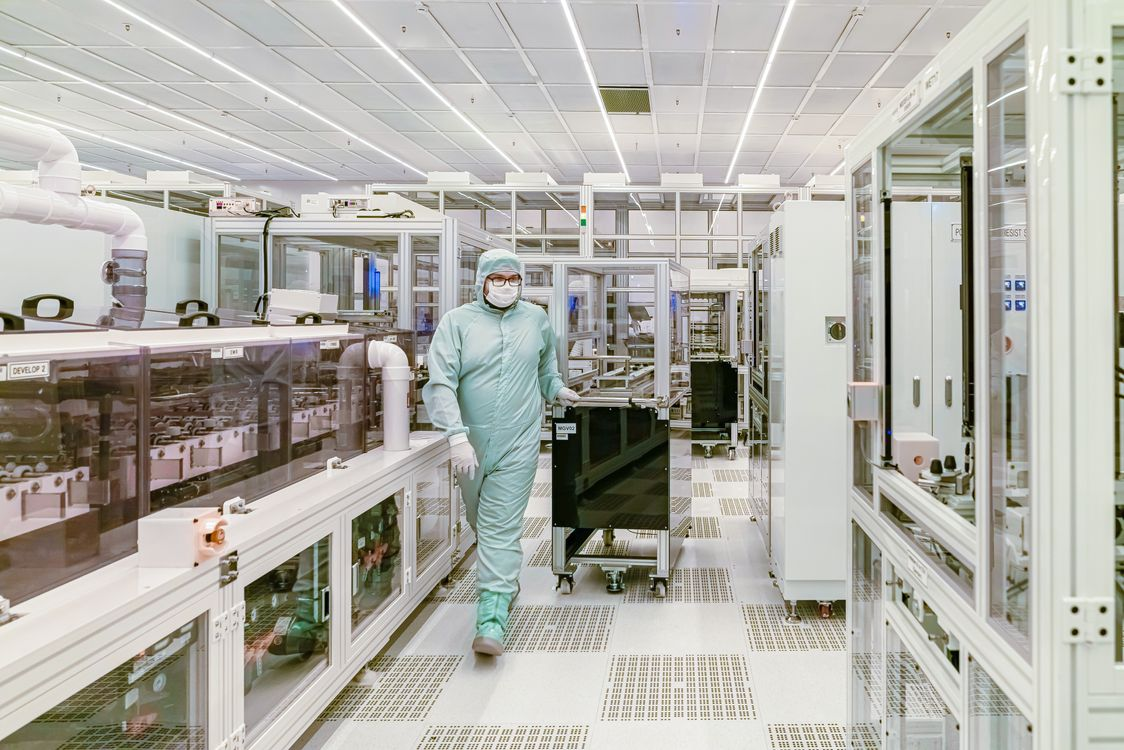
Codis has completed demolition work and begun constructing an expansion at its Haverhill pharmaceutical manufacturing facility to accommodate a new solvent-capable GEA Pharma-SD PSD-4 spray dryer. The project will increase commercial-scale spray drying capacity for amorphous solid dispersions, a formulation approach used to improve the performance of poorly soluble drug substances. Installation and validation remain ahead of the plant, with the additional capacity expected to become available during the final quarter of 2027.
The work has advanced from an equipment investment decision to construction of a new building within the existing Haverhill operation. Redundant facilities have been removed to create space for the development, while the company intends to make use of established site infrastructure. The facility occupies approximately 100,000 sq ft and operates to current good manufacturing practice requirements. Maintaining those manufacturing controls as equipment is installed and brought into service is part of the route from construction to usable commercial capacity.
Spray drying converts a liquid feed into a dry powder by atomising it into fine droplets and contacting them with a controlled stream of heated gas. The large surface area of the droplets permits rapid solvent removal, while the properties of the resulting particles depend on feed composition and process conditions. Pharmaceutical systems must control variables including inlet and outlet temperatures, feed rate, atomisation and powder recovery to obtain material with repeatable characteristics.
In amorphous solid dispersion manufacture, an active pharmaceutical ingredient is distributed within a suitable carrier, typically a polymer, without remaining entirely in its original crystalline form. This can help improve dissolution behaviour for compounds that otherwise dissolve poorly. The stability of the amorphous material, residual solvent content and reproducibility of the resulting powder require careful formulation and process control. Spray drying is one established route to preparing such dispersions when an appropriate solvent system and operating window have been developed.
The Haverhill investment specifically concerns solvent-based processing at commercial scale. Such operations need solvent containment, process atmosphere controls and recovery arrangements suited to the materials being handled. The GEA PSD-4 will also have to connect to site utilities, feed systems and powder collection equipment within an existing regulated facility. Cleaning and changeover procedures will form part of the manufacturing controls because campaigns may involve different customer products, each with defined material specifications and contamination limits.
Codis already operates smaller-scale processing at Haverhill, while the new system is intended to support customers moving from formulation and development work towards larger production campaigns. Scale-up requires more than a proportionate increase in feed volume because atomisation behaviour, gas flow, residence time and powder collection can change with equipment size. Process developers therefore need to establish settings that deliver the target particle attributes on the commercial machine and support consistent results from batch to batch.
Codis’s Nottingham operation adds formulation development, analytical services, clinical supply and oral solid dose capabilities to the Haverhill spray drying activities. Process knowledge gained during earlier formulation and analytical work can then inform the conditions selected for a larger dryer, with consistent measurements helping to bridge the development and commercial manufacturing stages. The combined UK operation is intended to support programmes across those stages, from the selection of formulation materials through to the preparation of powders for oral dosage manufacturing.
Nick Hodgson, vice-president and general manager of Haverhill operations, linked the construction programme to the existing site infrastructure and established expertise. The 100,000 sq ft plant provides a regulated manufacturing environment into which the new equipment must be integrated, with construction and commissioning proceeding alongside existing activity. Successful start-up will require engineering checks as well as the pharmaceutical quality procedures needed for the line’s intended products.
A factory acceptance test assesses whether equipment satisfies agreed requirements before it is transferred to the operating location. After installation, pharmaceutical equipment must be qualified and the relevant manufacturing process validated for its intended use. The timing of commercial availability therefore depends on successful completion of engineering, installation and quality work, rather than merely finishing the building or receiving the machine.
The planned factory acceptance test is the next step in Codis’s equipment programme, followed by installation, commissioning and qualification at Haverhill. The company is targeting commercial availability in the final quarter of 2027. The additional line would give its UK network more solvent-based spray drying capacity for amorphous solid dispersions as customer processes move from development work into larger manufacturing campaigns.