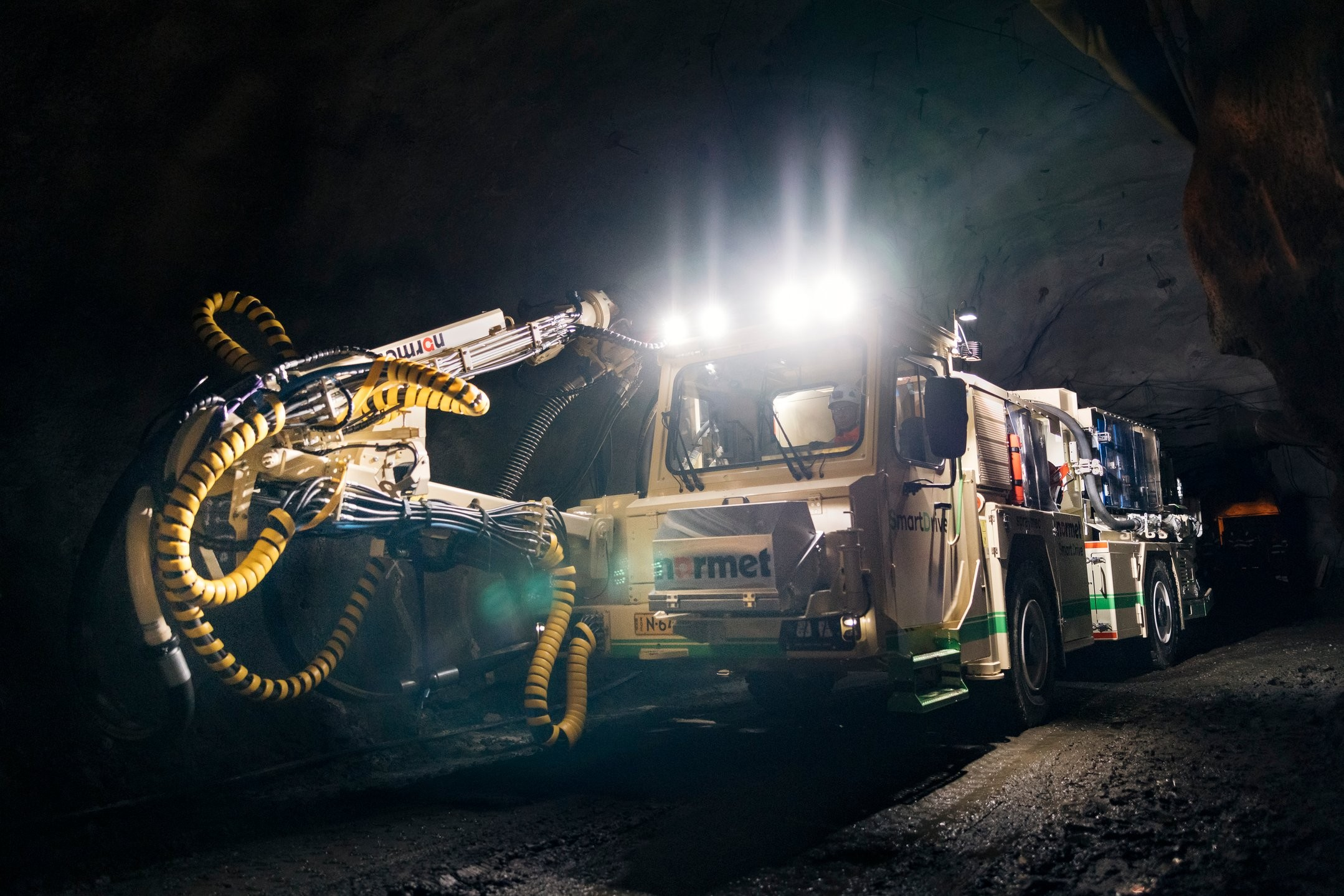
Normet and Chilean copper producer Codelco have entered a five-year development programme covering autonomous and remotely operated underground mining technologies. The companies will test three operating concepts at Codelco’s El Teniente mine, focusing on concrete transport and spraying, rock scaling, and stationary breaking equipment.
Announced on 16 October, the agreement is intended to reduce worker exposure to hazardous areas while improving the continuity and efficiency of selected underground operations. Development will take place at Normet’s recently opened technology centre in Pirkkala, Finland, before the systems are evaluated under production conditions in Chile.
The collaboration establishes a programme of technology development and operational trials, not a confirmed order for a fleet of autonomous machines. Neither company has disclosed commercial deployment quantities, completed pilot results, or independently measured improvements in productivity or worker exposure.
El Teniente is a major underground copper mining operation, with an extensive network of excavations and production infrastructure. As extraction progresses into deeper areas, equipment and personnel can encounter increasingly demanding ground conditions, including seismic activity, elevated temperatures, restricted working space, and the need for carefully managed ground support.
The partners have selected processes in which removing people from the immediate working area could provide safety benefits. Each involves different equipment and operating requirements, meaning that the development programme will need separate technical solutions rather than one autonomous control package applied unchanged across all three tasks.
The first pilot concerns autonomous concrete transport and spraying. Sprayed concrete is used as part of underground ground support systems, helping to stabilise exposed surfaces according to the mine’s engineering design. Application takes place in excavations where surfaces may be irregular and access conditions can change as mining advances.
The proposed equipment will use perception systems, environmental mapping, onboard artificial intelligence, connectivity, and data-led controls. These functions are intended to help machines understand their surroundings and execute specified tasks with less continuous direct human control.
Mapping provides information about the geometry of the working area, while perception systems can identify relevant features and potential obstructions. Control software must then translate that information into permitted machine movements, taking account of the position of the vehicle, its spraying equipment, and the surrounding environment.
Mining conditions create difficulties for sensing equipment. Dust, water, limited lighting, and changing surfaces can affect the quality of sensor measurements. Machines and personnel may also move through the work area, requiring the system to distinguish between stable features and temporary obstructions.
The concrete application process introduces further variables. The equipment must position the nozzle and manage its movement relative to the surface being treated, while the delivery system must provide material suitable for the intended operation. The quality of the finished ground support depends on the specified mix, application conditions, and procedures used during the work.
Automation therefore requires coordination between navigation, perception, vehicle controls, spraying equipment, and operating limits. The partners intend to investigate those functions, but the announcement does not demonstrate that autonomous spraying already achieves the required coverage, consistency, or productivity under every mining condition.
The second pilot addresses remotely operated scaling. Scaling equipment is used to remove loose or unstable rock from the surfaces of underground openings, reducing the risk of material falling into areas occupied by personnel or machinery.
Operators carrying out scaling need to identify potentially unstable material and position the equipment accurately. Remote operation can move the operator away from the immediate hazard, but it also changes how visual and spatial information must be communicated to the person controlling the machine.
Normet and Codelco intend to combine advanced mapping with extended reality technology for this pilot. The approach is designed to give operators information about the equipment’s position and the surrounding ground while allowing the scaling process to be carried out from a separate location.
Remote control remains different from autonomous decision-making. The scaling pilot is described as a remotely operated system, with human operators retaining a direct role. Mapping and display technologies may assist their decisions without replacing the engineering judgement needed to identify and remove unsuitable rock.
The usefulness of these systems will depend on the accuracy and timeliness of the information presented. Communication delays, incomplete sensor coverage, or an inaccurate representation of the work area could reduce an operator’s ability to control the equipment safely. Such constraints must be assessed during testing.
The third pilot concerns autonomous stationary breakers. These installations use powered equipment to break oversized rock that would otherwise restrict the movement of material through parts of the mine’s production system.
Rock flow can be interrupted when large pieces of material obstruct an opening or handling point. A stationary breaker provides a means of reducing the material to a size that can continue through the process, but conventional operation may require personnel to monitor conditions and intervene when blockages develop.
Automating the function requires equipment capable of identifying where breaking is needed, controlling the working mechanism, and remaining within the permitted operating area. The system must also recognise surrounding structures and equipment so that its movements do not create additional hazards.
Improved process continuity is one of the intended benefits. A system that responds effectively to oversized material could reduce certain interruptions, although actual performance will depend on how accurately it identifies obstructions, completes the breaking task, and interacts with the surrounding production equipment.
The company announcement contains no verified cycle-time reduction, increase in tonnes handled, or reduction in operator interventions from these pilots. Such results will need to be measured against the relevant existing processes before the benefits of wider deployment can be assessed.
Normet’s technology centre in Pirkkala provides a development base for robotics, autonomy, software, and digital mining systems. Work carried out there can support testing of individual functions before equipment is transferred to El Teniente, where production conditions will introduce additional environmental and operational variables.
Deployment within an operating mine will also require integration with communications networks, operating procedures, maintenance arrangements, and safety systems. Equipment faults or loss of connectivity must be managed through defined responses appropriate to the machinery and its working environment.
The new agreement follows a separate Codelco collaboration with MacLean Engineering involving underground mining technology. That earlier programme concerns a different equipment supplier and development arrangement. The Normet partnership adds three specified pilot activities rather than superseding or duplicating the MacLean work.
During the five-year programme, the principal milestones will be completion of the technical development stages and evaluation of the systems in production conditions at El Teniente. Demonstrated safety performance, repeatability, equipment availability, and process output will determine whether the individual technologies are suitable for broader underground use.
The programme’s industrial objective is to move selected hazardous tasks towards remote or autonomous execution without compromising their operational requirements. Whether that can be achieved consistently will depend on the pilot evidence rather than the stated intentions of the agreement.