Bio-Techne has opened a manufacturing facility in Bristol for Good Manufacturing Practice (GMP) grade small molecules used in cell therapy development and production. The 10,000 sq ft operation contains five ISO 8 multifunctional cleanrooms and two ISO 7 cleanrooms dedicated to GMP manufacturing and product handling. It is already producing materials for customers, adding British capacity to the company’s international network of specialist life sciences facilities.
Small molecules used during the expansion and differentiation of therapeutic cells can influence specific cellular pathways and the behaviour of the resulting culture. As experimental methods are transferred into clinical manufacturing, the composition and consistency of those inputs become part of the process controls. Variations in a reagent can affect successive cell therapy batches even when the rest of the production procedure remains unchanged.
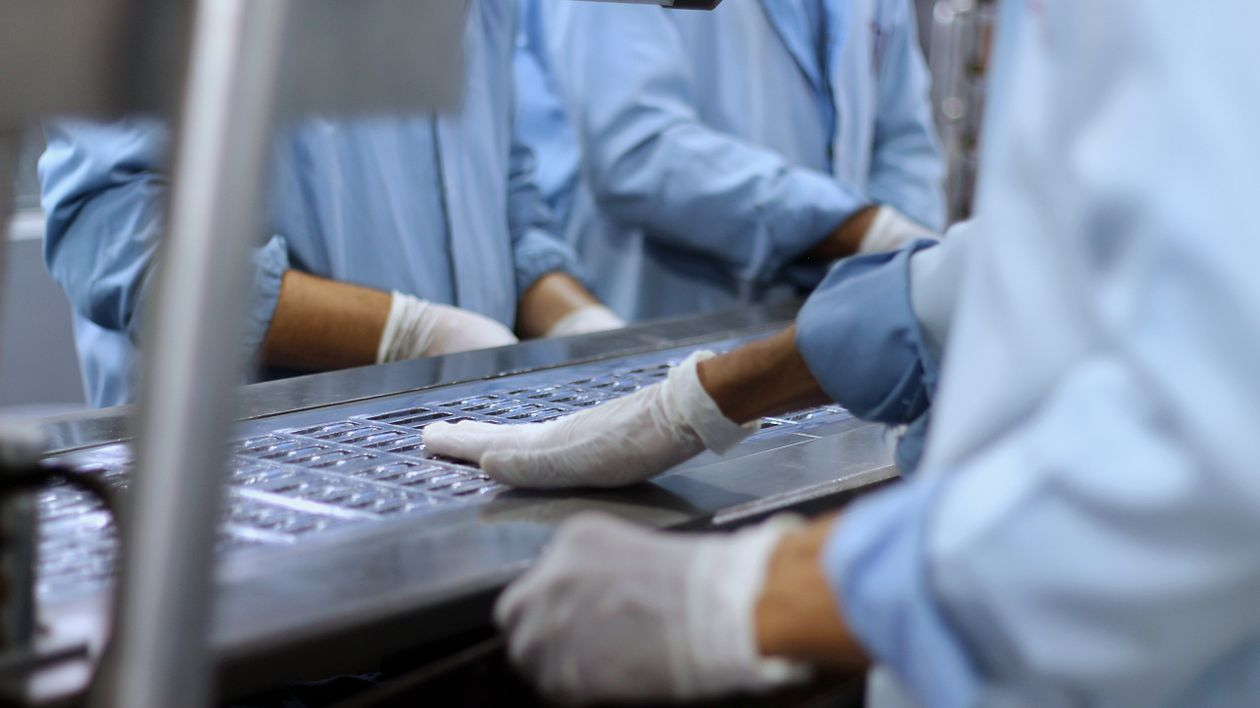
Producing these materials requires controlled environments, and the Bristol facility uses different cleanroom classifications for its manufacturing and handling operations. ISO 8 and ISO 7 define limits for airborne particles under specified conditions, with the two ISO 7 rooms meeting the more demanding classification. Particle control is an important feature of the manufacturing environment, although a cleanroom designation alone cannot establish compliance with every GMP requirement.
Maintaining those conditions is part of a wider GMP system covering equipment qualification, material identification, production procedures, personnel training and documented execution. Chemical processing also needs methods for identifying the intended compound and testing for unwanted substances introduced during synthesis, purification or handling. Together, these arrangements provide evidence that customers can assess against the specifications required by their own cell therapy processes.
Even where two reagents carry the same chemical name, differences in purity, concentration, storage or handling can affect cells being prepared for therapy. Supplier qualification consequently involves reviewing the material specification and obtaining evidence that comparable batches can be manufactured and delivered consistently. A change of supplier may require the therapy developer to assess its effect on an established procedure before adopting the replacement material.
As a treatment moves from laboratory development to repeated clinical production, the evidence needed to qualify a supplier becomes more demanding. Early laboratory work may rely on small quantities of specialised reagents, whereas repeated production for clinical studies requires defined purchasing arrangements, traceable batch records and procedures for handling deviations. A therapy developer also has to establish how raw material variability contributes to the overall manufacturing process, rather than assuming that an individual certificate of analysis resolves every risk.
Within Bristol, five ISO 8 rooms and two ISO 7 rooms provide controlled areas for manufacturing and product handling, with the individual operations organised to maintain the conditions needed by each process. Movement of personnel and materials, the sequence of production activities and cleaning procedures can influence the risk of contamination between batches. The new floor space establishes additional infrastructure, while the actual production volume will depend on the installed equipment, processes and their operating schedules.
Once an individual manufacturing process is assigned to the facility, its synthesis, purification, isolation and testing stages must be performed under controlled conditions appropriate to the substance. Reaction temperature, mixing, duration and solvent use may influence the final material, while transferring the process to new equipment requires evidence that the specified characteristics can be reproduced. These conditions vary between products, so the same cleanroom infrastructure may support different operating methods.
Testing then establishes whether the finished reagent meets the agreed requirements for identity, purity and specified impurities, alongside any additional controls associated with its intended use in cell therapy. Selection of suitable tests depends on the material and process, rather than applying an identical specification to every small molecule. The results become part of the information used by the customer when qualifying the ingredient.
The additional small molecule capacity complements Bio-Techne’s recombinant protein manufacturing in Minneapolis and its GMP capabilities in St Paul, Minnesota. Through its relationship with Wilson Wolf Corporation, the company also supplies cell culture technologies including the G-Rex platform. These product categories perform separate functions, but a cell therapy programme may require all three as its manufacturing process is developed and operated.
Growth factors and other recombinant proteins supply biological signals that influence cellular activity, while small molecules can regulate particular pathways during cell expansion or differentiation. Culture vessels provide space for cell growth and the handling of media, with each component operating as part of the established manufacturing procedure. Compatibility, consistency and documentation remain important regardless of whether a developer obtains these products from one supplier or several.
Although Bristol adds controlled manufacturing capacity for reagents, the developer of each therapy remains responsible for validating how those materials perform in its process. Supplier qualifications, specifications and changes to production arrangements all form part of the manufacturer’s quality system. Consistent inputs can help reduce variability, but the complete cellular manufacturing procedure must still demonstrate reliable results under its specified operating conditions.
Continuity of supply is another operating constraint for therapies that rely on specialist reagents, particularly when biological material must be processed within defined handling windows. Additional manufacturing capacity can provide another source of supply, but its practical contribution will depend on the products made, available volume and delivery arrangements. These factors also influence how readily manufacturers can schedule successive clinical production batches.
The Bristol facility is operating with seven controlled cleanrooms across 10,000 sq ft, extending Bio-Techne’s ability to manufacture GMP grade small molecules in Britain. Its contribution to cell therapy supply will become measurable through production output, utilisation and the materials subsequently qualified for customers’ clinical or commercial manufacturing programmes.