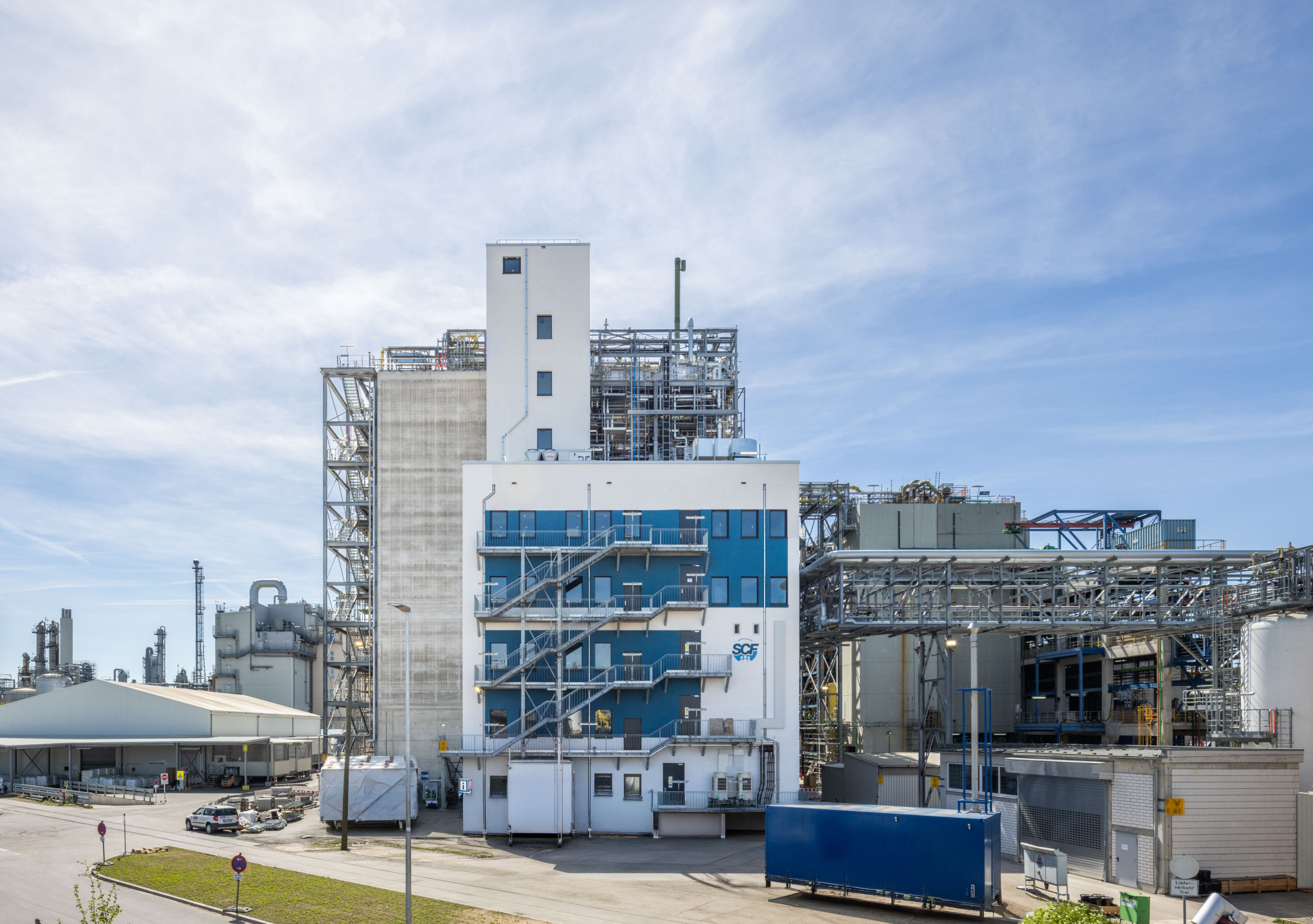
BASF has commissioned a fully modernised acid chlorides and chloroformates plant at its Ludwigshafen Verbund site after investing a low three-digit million-euro sum in the production asset. The project fundamentally renews the site’s production infrastructure and increases capacity by approximately 30%, strengthening an established supply base for intermediates used across pharmaceuticals, crop protection, coatings, plastics, rubber, and other process industries.
The plant forms part of BASF’s Intermediates division and produces a portfolio the company groups as ACCF. Ludwigshafen is one of two BASF manufacturing locations for the products, alongside Yeosu in South Korea, giving the German operation a role in supplying customers across several industrial value chains rather than a single downstream market. BASF says the latest investment is intended to combine greater output with improved supply reliability and lower calculated product emissions.
This is more substantial than a conventional debottlenecking exercise around an otherwise unchanged line. BASF describes the work as a fundamental renewal of production infrastructure at a site that has manufactured acid chlorides and chloroformates for decades. Additional capacity has therefore been added while renewing an existing European chemical asset, rather than shifting production into an entirely new greenfield facility elsewhere.
Acid chlorides and chloroformates are reactive intermediates used in chemical synthesis, which means the importance of the plant extends beyond its nominal tonnage. BASF lists applications including pharmaceuticals, crop protection products, organic peroxides, coatings, plastics, and rubber mixtures. For customers working with qualified formulations or regulated production routes, maintaining predictable availability of those intermediates can matter as much as the headline expansion itself because rapid substitution is not always straightforward.
The project also alters the calculated emissions profile of the Ludwigshafen portfolio. Since 2025, BASF has used renewable electricity credits for its complete range of roughly 25 acid chlorides and chloroformates produced at the site, including the upstream raw-material processes covered by its methodology. The company says this has reduced the portfolio’s product carbon footprint by an average of 19% compared with production without those credits.
Customers receive that lower calculated footprint without changes to product specifications, certifications, or ordering processes. That detail matters commercially because chemical manufacturers attempting to reduce Scope 3 emissions can face lengthy validation work when a supplier changes the chemistry or manufacturing specification of an input. BASF’s approach is intended to lower the carbon figure attached to the existing product while retaining the technical characteristics customers have already qualified.
Mary Kurian, member of the Board of Executive Directors of BASF SE, said: “The opening of this modernized plant demonstrates BASF’s commitment to investing in competitive and sustainable production assets.” The company is positioning the project as evidence that additional capacity, emissions work, and continued investment in Ludwigshafen can still be combined within the same manufacturing programme.
That is a significant consideration for Europe’s chemical sector. Producers continue to face high energy costs, growing international capacity, and substantial capital requirements associated with decarbonising existing plants. Ludwigshafen’s Verbund model depends on closely connected production assets sharing energy, raw materials, infrastructure, and intermediate flows, so renewing one established unit helps preserve more than the output of an isolated product line.
The integrated site also means capacity changes in one unit can affect neighbouring plants through shared feedstocks, utilities, logistics, and intermediate flows. Modernisation therefore has to protect interfaces with the rest of the Verbund while new equipment is commissioned, a constraint that makes brownfield chemical investment technically different from building an isolated plant on a cleared site.
The decision to expand capacity also provides a useful indicator of where BASF still sees sufficient demand to commit major capital at the German complex. The company generated around €60 billion of sales in 2025 and has been reshaping parts of its wider portfolio, but the ACCF programme places a low three-digit million-euro investment directly into existing European production. That is a more concrete manufacturing signal than another long-range competitiveness statement.
The modernised plant now has to demonstrate that the additional capacity can be absorbed without weakening utilisation or operating economics while maintaining the claimed carbon-footprint improvement as output increases. For downstream manufacturers, the less dramatic part of the project may prove the more useful one: greater availability of an established, qualified group of intermediates from a renewed European asset. Chemical production rarely needs another slogan. Reliable tonnes from equipment capable of remaining competitive are rather more valuable.