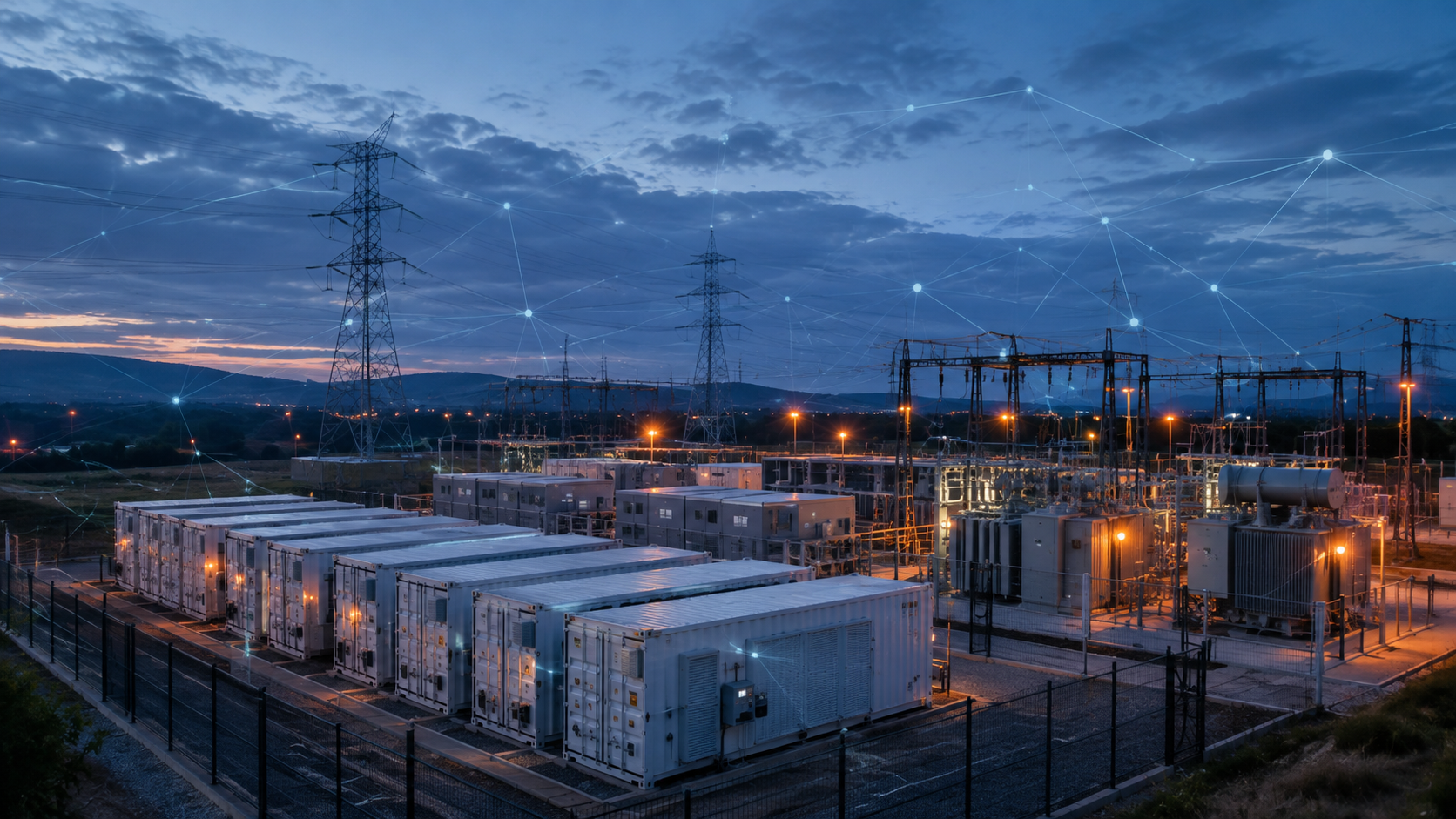
Helsinki energy company Helen has agreed to take recovered heat from a planned OnZero AI computing facility, connecting high-density digital infrastructure directly to the Finnish capital’s district heating network.
OnZero and Helen have signed an agreement covering the new facility, with heat recovery scheduled to begin during 2027. Helen says the completed installation could supply more than 500,000MWh of heat to the network each year, enough to meet the heating requirement of around 70,000 flats.
OnZero gives a higher maximum figure of up to 525,000MWh annually and says its AI Heat Factory architecture is designed to capture as much as 99% of the thermal energy produced by computing equipment. Those figures are company design claims, while Helen’s 500,000MWh-plus estimate provides the independently published utility-side expectation for the Helsinki connection.
The project uses direct-to-chip liquid cooling rather than relying entirely on large volumes of conditioned air to remove processor heat. Liquid cooling transfers energy from high-density computing hardware into a controlled fluid circuit, concentrating heat in a form that can be passed through heat exchangers and into a wider energy system.
Almost all electricity consumed by computing equipment eventually appears as heat. Conventional data centres remove that energy to protect processors, memory, power electronics, and networking equipment, after which much of it is rejected to the atmosphere through cooling plant.
A district-heating connection changes the engineering requirement because heat rejection becomes heat delivery. Cooling-water temperatures, pumps, heat exchangers, control valves, network return conditions, redundancy, and operating schedules have to be designed around both the computing equipment and the external heating system.
The value of recovered heat depends heavily on temperature. A district heating network needs energy at a useful supply temperature, and any gap between the data-centre cooling loop and the network may require heat pumps or another temperature-lift stage, consuming additional electricity.
OnZero describes its wider AI Heat Factory platform as purpose-built around commercial heat recovery and closed-loop liquid cooling. The company also says the architecture eliminates onsite cooling-water consumption, because thermal energy is exported rather than rejected through evaporative cooling equipment.
The exact equipment configuration for the Helsinki installation has not been published in equivalent detail, so platform specifications should not be treated as confirmed project parameters. Final heat-pump capacity, temperatures, electrical load, computing capacity, and network connection design remain matters for the project itself.
Helen already has operating experience with data-centre heat recovery. The utility says it has been integrating waste heat from data centres into Helsinki’s district heating system and supplying the resulting energy to residents since 2010.
The latest agreement therefore extends an established energy model rather than introducing waste-heat recovery to the city for the first time. Its scale is the differentiating factor: more than 500GWh a year would make the OnZero installation a substantial thermal input if the facility reaches its planned operating level.
Helen is increasingly using electricity-based heat production and recovered energy as it reduces dependence on combustion. The company has set a goal of phasing out combustion-based energy production by 2040, with heat pumps, electric boilers, renewable electricity, and waste-heat sources forming a growing part of that transition.
Recovered computing heat does not eliminate the electrical demand of a data centre. The servers still consume power, as do pumps, cooling equipment, electrical distribution, and ancillary systems. Its system benefit comes from using thermal energy that would otherwise have to be rejected while reducing the amount of heat that Helen needs to produce separately.
That benefit depends on the timing of supply and demand. Computing workloads can operate throughout the year, while space-heating demand rises and falls strongly with weather. District-heating networks can absorb some of that mismatch through their scale, storage, alternative heat sources, and control systems, but useful heat still needs a customer when it is available.
Location therefore becomes part of the data-centre energy calculation. A facility built close to an established heat network can transfer energy through relatively short pipework, whereas long distances increase capital cost, pumping requirements, and thermal losses.
OnZero is also developing software intended to vary computing demand in response to electricity-grid and thermal conditions. That creates a more complicated operating problem because computing output, power prices, grid balancing, and district-heating demand may not always favour the same load profile.
The Helsinki project consequently links infrastructure systems that are normally assessed separately. The data centre will be a large electricity consumer, a computing asset, and — if the recovery system performs as designed — a sizeable heat source connected to municipal energy infrastructure.
OnZero says it already operates facilities in Kemijärvi and Kerava and is developing further sites across the Nordic region and Europe. A Helsinki installation supplying more than 500,000MWh annually would give the company a larger reference project within a district-heating market that already has experience accepting recovered data-centre heat.
The 99% capture figure will not by itself determine the project’s industrial performance. The useful measures will be how much heat reaches Helen’s network over a full year, at what temperature, with how much additional pumping and temperature-lift energy, and how reliably that output matches network demand.
Heat recovery is due to start in 2027. Once operating data become available, Helsinki should provide a sizeable test of whether high-density AI computing can function as dependable urban heat infrastructure as well as another large electrical load.