Chartwell Marine has said the UK’s latest offshore wind auction has restored confidence in the market, while also increasing pressure on vessel operators to modernise and diversify support fleets ahead of a new phase of larger and more complex projects. The company said Allocation Round 7 has accelerated demand for vessels able to operate further offshore, support a broader range of tasks, and remain commercially useful between project cycles.
According to Chartwell, the next wave of offshore wind developments will place different demands on the support fleet than earlier rounds. Projects are becoming larger, moving into deeper waters, and often requiring a more flexible mix of service operation vessels, crew transfer vessels, and daughter craft. Owners are being pushed to think beyond single-role tonnage as developers look for assets that can support construction, operations and maintenance, survey work, life-extension programmes, and decommissioning activity over time.
Andy Page, managing director of Chartwell Marine, said: “AR7 is a major step forward for the offshore wind sector, restoring confidence and unlocking a new wave of vessel activity and investment. However, based on past experience, market fluctuations are inevitable. It will therefore be essential for the industry to take a smart, flexible approach and develop fleets capable of supporting a wide range of commercial activities until AR7 and AR8 projects ramp up.”
Chartwell said that response will need to include both new vessel investment and upgrades to existing assets. The company is advocating a combination of next-generation SOVs, CTVs, and daughter craft, alongside retrofits that allow older vessels to be redeployed into adjacent roles and kept commercially viable during softer periods in the offshore wind cycle. That includes work in decommissioning, survey support, and wind farm life-extension activity.
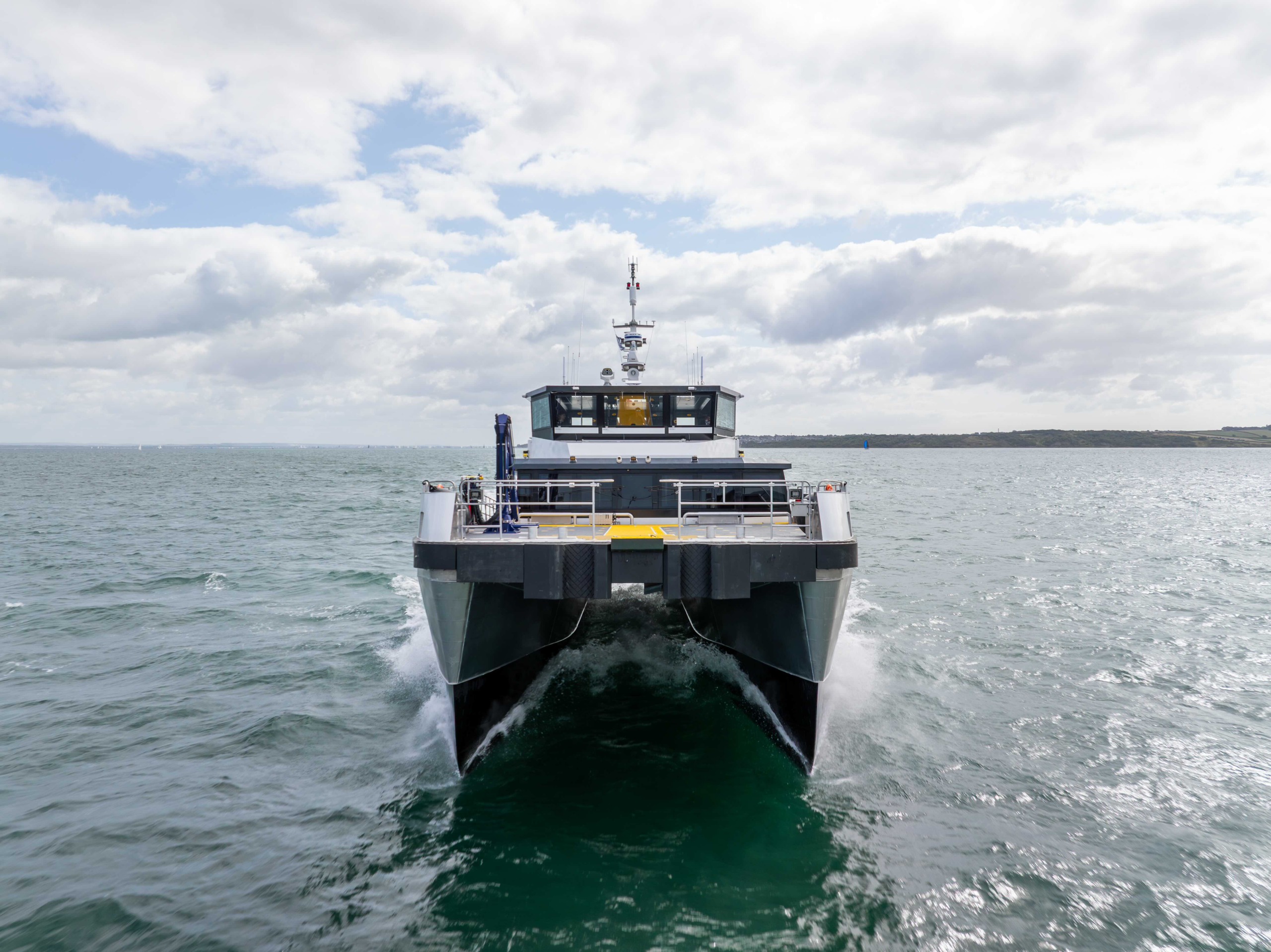
The company also pointed to the role of UK shipbuilding and industrial partnerships in scaling the required fleet. It said designs such as the Chartwell Courageous, Brevity SL, and Brevity XL can support operational efficiency, flexibility, and safety in deep-water environments, while also being suitable for construction in UK yards. Alongside newbuild activity, Chartwell said expanding stock-build programmes, strengthening shipbuilding capacity, and investing in workforce skills will be necessary if the market is to respond quickly enough to project demand.
Page added: “Incorporating new vessels is only part of the solution to meeting the challenges facing the offshore wind support fleet. The industry also needs to maximise the value of the existing fleet to remain competitive and resilient through future market cycles. At Chartwell, we are committed to delivering proven, next-generation designs and building stronger industry partnerships that facilitate the transformation and diversification of the fleet.”
For operators, the commercial test is becoming clearer. As offshore wind projects grow in size and distance from shore, fleet value will increasingly depend on how well vessels can move between roles, remain productive through uneven demand, and support delivery schedules without becoming stranded assets between auction rounds.