Alstom has secured the first commercial order for its new Traxx Shunter platform after signing a framework agreement with leasing company Northrail covering up to 100 locomotives and a potential value of €700 million.
The initial firm order is worth just under €100 million and includes locomotives for deployment in Germany together with ten years of maintenance services. The units will be designed and assembled at Alstom’s Belfort centre in France, with deliveries scheduled to begin at the end of 2029.
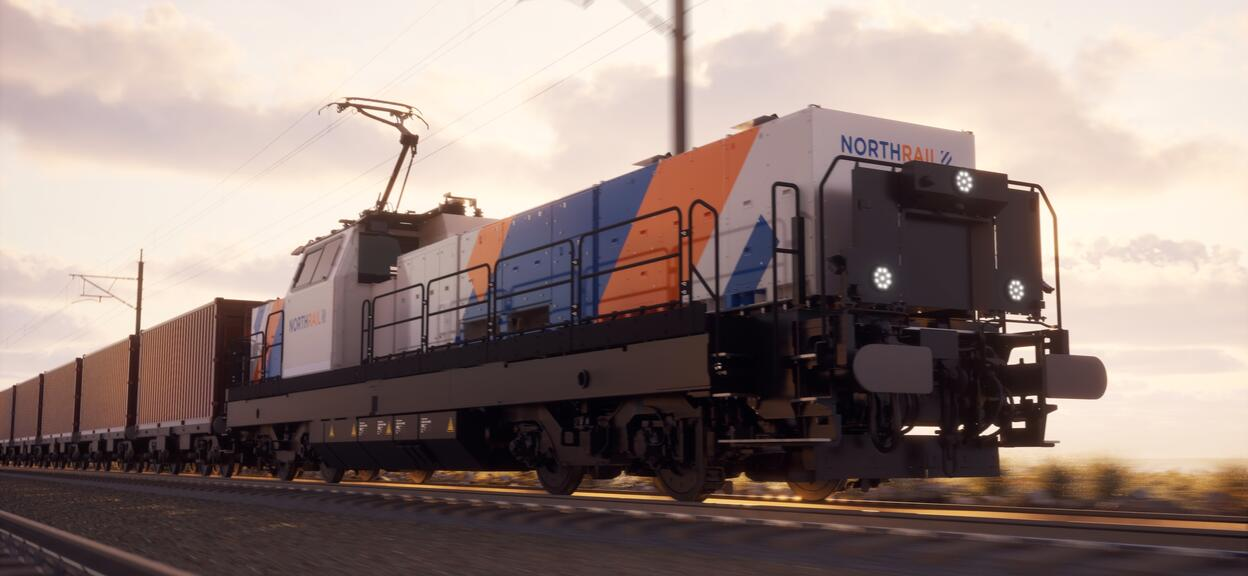
Northrail has selected a version combining overhead electric operation through a pantograph with an onboard diesel module. The configuration is intended to cover medium and heavy shunting work while retaining the ability to operate away from electrified track, including on parts of the mainline network.
The wider framework gives Northrail options for additional locomotives, including units for France, and could extend maintenance provision to as much as 20 years. If all options are exercised, the programme would give Belfort a substantial production and service workload extending well beyond the first batch.
Frédéric Wiscart, president of Alstom France, Belgium and Luxembourg, said: “We are particularly proud to announce the world’s first order for the next-generation Traxx Shunter locomotives.”
The Traxx Shunter has been developed as a modular mid-cab locomotive positioned between conventional yard shunters and larger dual mode mainline machines. Alstom says the platform can combine several energy sources, allowing operators to match traction equipment to route and duty rather than using one propulsion arrangement for every application.
The Northrail configuration retains diesel because shunting fleets often work on sidings, terminals, industrial sites, ports and other infrastructure where overhead electrification is incomplete. The onboard engine can also use hydrotreated vegetable oil or biodiesel, while the locomotive draws electricity from overhead supply where infrastructure is available.
Northrail says the modular design provides a future route to replace the diesel module with a battery system. That matters because the working life of a locomotive can extend well beyond the first propulsion technology fitted to it. Designing conversion into the platform from the outset can reduce the amount of structural redesign required if fuel economics or emissions requirements change during the fleet’s service life.
The locomotive is designed for speeds up to 120km/h, allowing it to move between worksites and operate within mainline traffic rather than remaining confined to low speed yard duties. High tractive effort and adhesion control are intended to support longer and heavier wagon formations, including work on gradients and more demanding industrial routes.
Cab design also reflects the operating pattern of shunting locomotives. Drivers may repeatedly change direction and work closely with ground personnel, so visibility, access, walkways, cameras and usable platforms at both ends become as important as maximum speed. The platform is fitted with Alstom’s modular Onvia ETCS system and can accommodate additional national signalling equipment where required.
Maintenance is part of the sale rather than a separate afterthought. The locomotives will use Alstom’s HealthHub condition monitoring system, giving maintenance teams data intended to support predictive intervention. For a leasing company such as Northrail, availability and maintenance expenditure across the asset life can be as important as acquisition cost because locomotive downtime directly affects the commercial return generated by the fleet.
The order also gives Alstom a production launch customer after several years of engineering and development. A new locomotive platform requires design, validation, certification, tooling, supplier qualification, software, signalling integration and maintenance documentation before serial production can begin. A firm first batch establishes a route through those industrialisation stages while the framework creates an opportunity to spread development costs across a larger fleet.
European shunting fleets remain heavily dependent on diesel traction, partly because yards and freight facilities are rarely completely electrified. Replacing those assets is therefore more complicated than buying a conventional electric locomotive for a fully wired mainline route. Operators need enough flexibility to work beneath overhead lines, inside terminals and across unelectrified sidings without adding another locomotive for each traction environment.
Alstom says it has sold more than 6,000 Traxx locomotives since 2000 and maintains more than 2,450 locomotives globally. The Shunter extends that industrial base into a segment where ageing fleets and mixed infrastructure create a different replacement problem from passenger or long distance freight traction.
Belfort will now move from development into detailed industrialisation for the Northrail units. With first deliveries not expected until late 2029, the immediate workload will centre on final engineering, certification, supplier mobilisation, production preparation and maintenance planning before the first completed locomotive enters German service.