The Aluminium Federation (ALFED) has proposed a coordinated programme to strengthen UK aluminium recycling, processing and manufacturing, identifying industrial energy costs, material flows and gaps in domestic production capability as priorities for investment.
The federation launched its Reindustrialising UK Aluminium white paper during UK Metals Expo in Birmingham on 4 November. The report combines economic modelling, an assessment of the country’s industrial capabilities and research undertaken with Cranfield University.
ALFED estimates that the UK aluminium industry directly contributes approximately £3.78 billion in gross value added and supports 54,200 full-time-equivalent jobs. Including domestic supply chain effects, the estimated contribution increases to £5.97 billion and 81,900 jobs.
These figures describe the federation’s estimated economic footprint rather than new investment or manufacturing output generated by the white paper.
The UK retains aluminium businesses serving automotive, aerospace, construction, defence, energy and other industrial markets. Their activities include recycling, remelting, casting, rolling, extrusion, finishing and component manufacture.
ALFED argues that industrial renewal should build on these existing capabilities, identifying commercially viable opportunities to retain more value from aluminium already being recovered, processed or used in Britain.
Its proposals are organised around five priorities: competitive industrial energy, higher-value circularity, connected manufacturing capability, coordinated trade and carbon policy, and strategic resilience through procurement.
Energy costs affect several stages of aluminium processing. Melting and remelting require substantial thermal input, while rolling, extrusion and finishing operations use electrical and mechanical equipment whose performance influences production costs.
Manufacturers considering new equipment must assess both its capital cost and the utilities required to operate it. A proposed expansion may depend on additional electrical capacity, suitable buildings, material handling systems and supporting infrastructure.
The federation wants industrial electricity prices and grid access addressed alongside other investment conditions. Increasing energy efficiency within a plant can reduce consumption, but a project must still be commercially viable at the electricity prices faced by the operator.
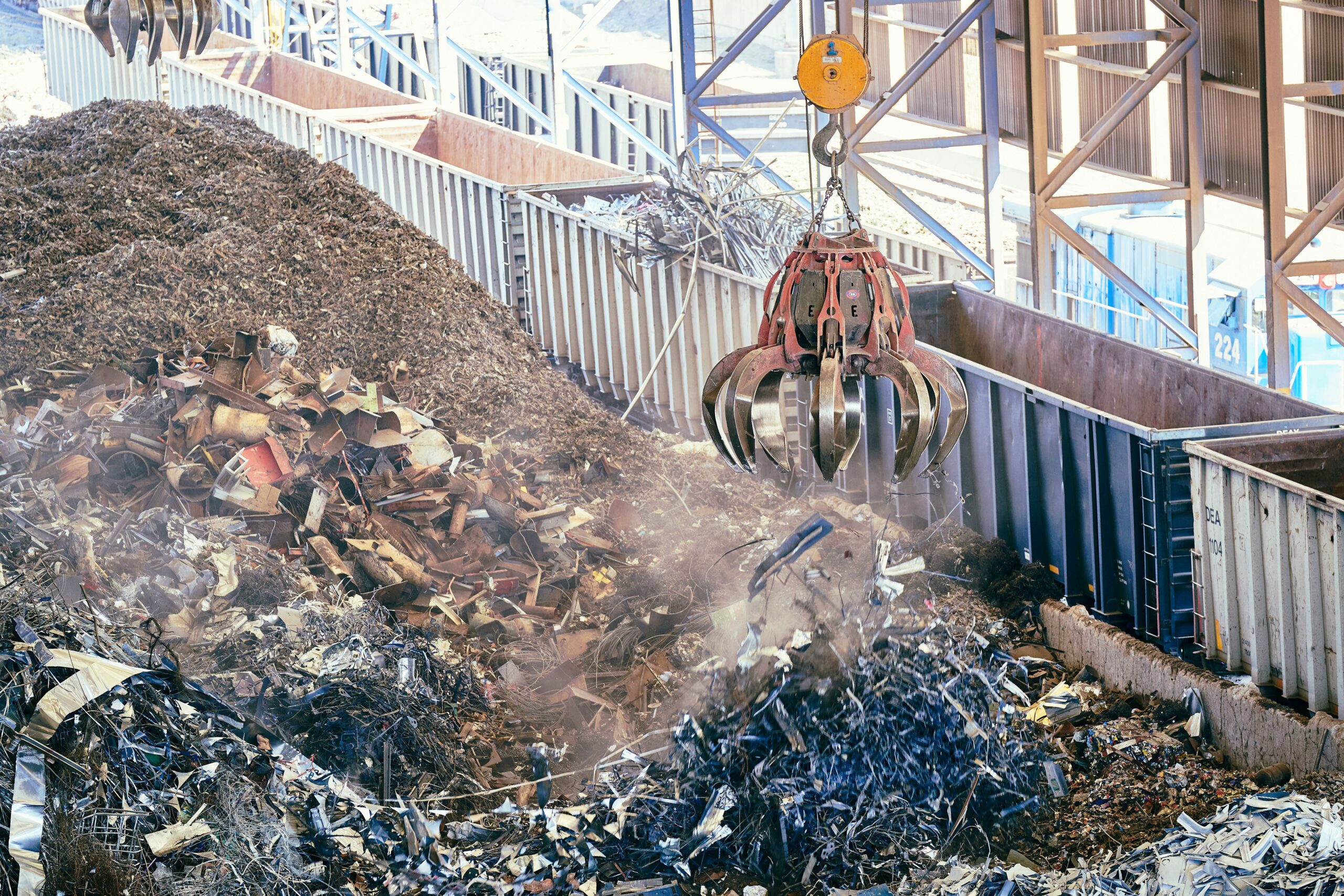
Material recovery presents a different set of engineering challenges. Aluminium can be recycled repeatedly, but the commercial value of recovered metal depends on its composition, condition and suitability for subsequent manufacturing processes.
Different aluminium alloys contain varying proportions of elements that influence mechanical properties, corrosion resistance, formability and other characteristics. Mixing incompatible material streams can make it more difficult to produce a recovered metal grade suitable for a particular customer.
Sorting processes therefore need to distinguish materials with different compositions. The methods employed depend on the type and condition of the scrap, the volumes handled and the quality requirements of the intended product.
Contamination from coatings, attachments or other materials can introduce further processing requirements. Preparing recovered aluminium for high-value manufacturing may involve separation, cleaning, remelting, composition adjustment and quality verification.
ALFED is calling for better information about the movement and quality of aluminium scrap, enabling manufacturers and investors to identify where additional processing capacity could be economically justified.
The federation’s research with Cranfield University examines material flows through recovery, recycling, processing, manufacturing and international trade. Understanding those relationships can help identify where material leaves the domestic supply chain and what capabilities would be required to process it within the UK.
Recovering more aluminium does not automatically mean that the country can manufacture more finished products from it. Suitable remelting, casting and downstream processing equipment must also be available.
A manufacturer producing extruded profiles, for example, requires feedstock in a suitable form and composition, extrusion equipment, tooling and the subsequent finishing or inspection operations necessary to meet customer requirements.
Rolled products involve different manufacturing processes, while cast components may require moulding, controlled solidification and further machining. Investment opportunities therefore depend on connecting material availability with specific industrial capabilities and markets.
ALFED’s third priority focuses on these connections. The federation wants government and industry to identify strategic gaps in the existing supply chain and establish where investment could support commercially viable domestic production.
The objective is not to reproduce every historical stage of British aluminium manufacture. The white paper instead proposes concentrating on activities where existing businesses, skills and industrial demand provide a credible basis for expansion.
Nadine Bloxsome, chief executive of ALFED, said: “We already have the businesses, expertise, and skills that underpin so many strategically important sectors.”
She identified competitive energy prices, coordinated government policy and a clearer understanding of investment opportunities as requirements for developing the industry.
Trade policy is another part of the federation’s programme. Tariffs, carbon pricing, the Carbon Border Adjustment Mechanism and other market-access arrangements can affect the costs of imported feedstock, domestic processing and exports.
The consequences may differ between businesses operating at different stages of the aluminium supply chain. A measure that changes the price or availability of one material input can affect manufacturers using that material in subsequent production.
ALFED wants industry consulted before relevant policy decisions are implemented, with the effects assessed across recycling, processing and manufacturing rather than considering each activity separately.
Carbon-related requirements also need to account for the production methods and energy sources associated with aluminium materials. Different facilities can have substantially different emissions profiles, making reliable data important when assessing environmental performance and compliance obligations.
The federation’s fifth priority connects industrial capability with procurement and national resilience. Defence, transport infrastructure, energy and other strategic sectors require materials and components meeting defined technical specifications.
Procurement decisions can influence the confidence manufacturers have in future demand, particularly where establishing a production capability involves substantial capital expenditure and extended qualification periods.
Aerospace and automotive customers, for example, may require material traceability, inspection records and demonstrated process consistency. These requirements influence whether a supplier can enter a particular manufacturing programme and maintain production once approval has been obtained.
ALFED is proposing a closer government-industry delivery partnership to turn its recommendations into investment opportunities. The proposed approach includes improved evidence on domestic capabilities, a confidential pipeline of potential projects and measurable monitoring of progress.
The organisation intends to take the findings forward through its Make More of UK Aluminium campaign, working with manufacturers, policymakers and other participants in the supply chain.
The report does not announce a funded programme of new factories or a confirmed increase in national production capacity. It identifies the conditions under which additional processing and manufacturing investment could become commercially viable.
Its next stage will involve identifying projects that can connect recovered or imported aluminium with suitable domestic manufacturing capabilities, while establishing the energy, infrastructure and market conditions required for those investments to proceed.