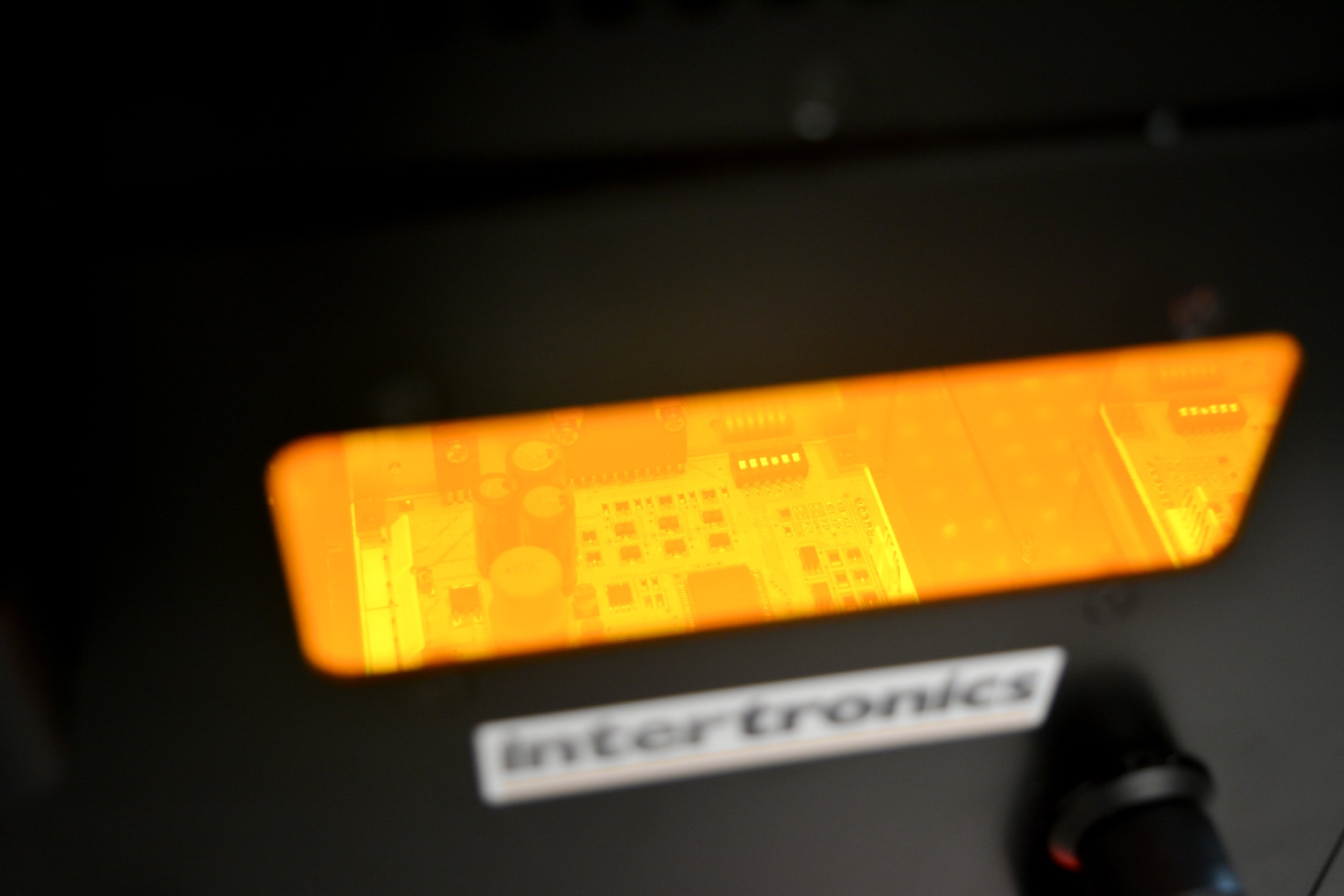
Intertronics has introduced the IUV301 LED UV Curing Chamber, an enclosed benchtop system intended to make ultraviolet curing conditions easier to establish and repeat in laboratories and manufacturing operations. The unit gives process developers control over light intensity and exposure time, while separate versions provide 365nm, 385nm or 405nm output to suit the material being cured. It is designed for UV curable adhesives, coatings, inks and encapsulants, including work that progresses from initial trials into repeated production cycles.
A chamber with controlled settings reduces variation caused by changes in the position, angle or duration of a hand-held UV exposure. The IUV301 places components within an enclosed working space whose reflective surfaces are intended to spread illumination across the curing area. The part’s orientation and any shadowed features still affect the exposure received, so a repeatable process begins with a defined loading position as well as fixed equipment settings. That combination allows results from laboratory trials to be compared with subsequent production cycles.
Ultraviolet curing relies on a material formulation that responds to light in a suitable wavelength range. Where photoinitiators are present, absorbed light can trigger the chemical reactions that convert a liquid or partially set formulation into a cured material. The process therefore depends on the emitted wavelength matching the material’s absorption characteristics. Providing a choice between 365nm, 385nm and 405nm versions allows the equipment to be selected for particular formulations; it does not mean that every UV curable material will respond equally to all three wavelengths.
The accumulated exposure dose is a function of irradiance and time when intensity is steady, making those settings central to process development. Irradiance describes optical power received per unit area; curing dose depends on how long the material receives that light. Adjustable intensity and exposure duration allow a technician to vary the two factors independently during trials and then record the conditions associated with acceptable results. Cure quality also depends on formulation, bondline or coating thickness, substrate and component geometry, which is why a recorded exposure setting needs to be assessed against the finished part.
Intertronics specifies UVA irradiance of up to 250 mW/cm² and greater than 90% uniformity across the working area. The reflective interior is intended to reduce variations in the amount of light reaching accessible component surfaces, particularly when several parts are loaded together. A consistent fixture remains useful where an assembly has recesses or surfaces that face away from the LEDs. Uniformity across the chamber’s rated area and the dose delivered to every surface of a three-dimensional part are different measurements, so both positioning and inspection remain relevant during qualification.
The working chamber measures 170mm by 170mm by 200mm, within an overall enclosure measuring 246mm by 282mm by 410mm. Intertronics lists the system weight as 14kg, maximum consumption as 250W and a single-phase mains input from 100V to 305V AC at 50/60Hz. These dimensions make the equipment a benchtop process station rather than a continuous conveyor installation. They also establish a physical limit on the size and arrangement of parts that can be placed inside for each exposure cycle.
Intertronics presents controlled process development as a central use for the IUV301, with the same equipment also suited to repeatable production work. “If you want to get into UV curing, this is the place you start,” said Simon Gibbs, Technical Sales Specialist at Intertronics. “The controlled, enclosed curing chamber gives you the opportunity to evaluate the curing process properly and establish the right conditions that work for your application.” The manufacturer also identifies research, quality laboratories and process improvement work as applications that fit the enclosed batch format.
UV shielding and safety interlocks are integrated into the enclosure to protect operators from direct radiation during normal curing cycles. This changes the practical layout of the workstation compared with an exposed flood lamp, because parts can be loaded into a designated chamber and then treated under a controlled cycle. Intertronics lists CE and UKCA conformity for the equipment, together with RoHS III and REACH information. Those declarations concern the product and its materials; the curing process itself still needs parameters appropriate to the adhesive, coating or encapsulant being used.
The IUV301 forms part of a wider equipment introduction. Intertronics is also bringing out the IUV110 LED UV Spot Curing Lamp for localised curing and the IUV105 cordless spot curing pen. The IUV110 is designed around a focused emitter, adjustable light output and timed operation, making it suitable for smaller cure areas and controlled workstations. The cordless pen addresses more portable tasks. These products differ from an enclosed chamber in how the light is presented to the workpiece, so their suitability depends on component size, assembly access and the process controls required.
Process validation links the chosen exposure settings to an observable result. Bond strength, coating performance or encapsulation integrity may need to be checked against a specification rather than judged only by whether the surface looks cured. A development programme can vary wavelength selection, intensity and time while holding the part geometry and sample preparation constant, then test the cured components. Once an acceptable operating window has been established, the same chamber arrangement and programmed cycle give production teams a repeatable baseline for later batches.
The IUV301’s benchtop dimensions and enclosed loading area make it a batch process station. The number of parts that fit within a cycle, the time required for each material and the handling needed between exposures will determine practical throughput. Intertronics’ companion IUV110 and IUV105 devices address more localised or portable curing work, whereas the chamber provides a contained exposure area for repeatable trials and repeated batches. Its adjustable settings allow the manufacturing process to be developed and documented before it is used routinely.