Adura has submitted further information to the UK’s Offshore Petroleum Regulator for Environment and Decommissioning for the Jackdaw and Rosebank developments, moving two major North Sea projects further through the approvals process.
The submissions follow UK court decisions affecting environmental assessment requirements for offshore oil and gas developments. Jackdaw and Rosebank are both already at advanced stages of construction and development, with more than £3bn invested across the two schemes.
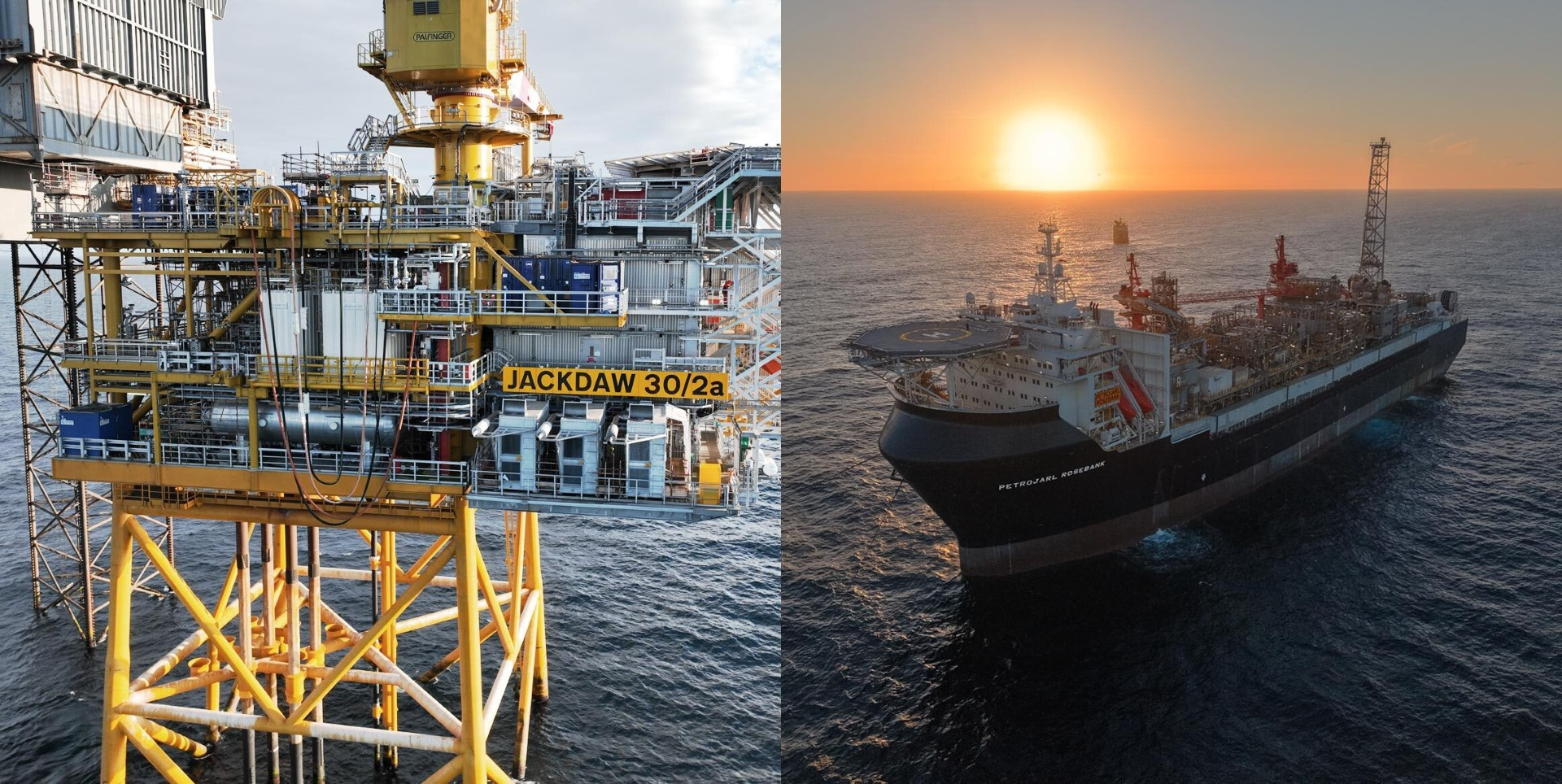
Jackdaw is being developed as a gas project tied back to the existing Shearwater Hub, with production routed to the St Fergus terminal in north east Scotland. The platform has already been installed in the North Sea and is in the final stages of preparation before startup.
Rosebank, located west of Shetland, is one of the UK’s largest undeveloped oil fields. Offshore activity has continued, with the Petrojarl Rosebank FPSO reaching location as installation work progresses. Once operational, the project is expected to add a substantial volume of oil production to the UK Continental Shelf.
Both projects sit at the centre of a difficult energy and industrial balance. The North Sea is a mature basin, but it remains a major source of skilled engineering work, specialist offshore contracting, energy infrastructure, and domestic oil and gas production. As older fields decline, new projects carry greater weight for the supply chain because fewer large developments are available to sustain capability across design, fabrication, installation, subsea systems, process equipment, inspection, and maintenance.
Regulatory certainty has become a defining feature of that investment environment. Offshore projects require long lead times and early capital commitment, with operators and contractors making decisions years before production begins. When assessment requirements change late in the process, schedules, contract sequencing, vessel planning, and workforce deployment all become harder to manage.
The environmental scrutiny around Jackdaw and Rosebank reflects a broader shift in UK energy policy. Domestic oil and gas production is being assessed against national emissions commitments, while the UK continues to consume hydrocarbons for power, heat, transport, chemicals, and industrial processes. New production cannot reverse the maturity of the basin, but it can affect import dependence, tax receipts, infrastructure utilisation, and continuity of offshore employment.
Project execution in the North Sea also has a direct bearing on adjacent low carbon industries. The same offshore engineering base that supports oil and gas will be needed for carbon storage, floating wind, subsea electrification, hydrogen infrastructure, and decommissioning. A sharp contraction in offshore activity could erode capability before those markets are large enough to absorb the workforce and supplier base.
There is no tidy separation between today’s hydrocarbon projects and tomorrow’s offshore energy system. Vessels, engineering consultancies, fabrication yards, control system providers, rotating equipment specialists, subsea contractors, and inspection companies often operate across multiple energy markets. The pace of transition therefore depends partly on whether those businesses can retain capacity while demand patterns change.
North Sea deal activity has remained active even as the basin has aged, with Serica Energy’s acquisition of Catcher and Golden Eagle interests showing continued appetite for mature UKCS assets. Those transactions sit alongside larger development decisions, giving a mixed picture of a basin that is declining geologically but still commercially active where infrastructure, fiscal terms, and project execution align.
Jackdaw and Rosebank are now tests of both project delivery and regulatory confidence. Their physical progress means that much of the industrial work is already embedded in platforms, subsea equipment, FPSO preparation, pipeline connections, terminal interfaces, and contracted services. The remaining approval process will determine whether those assets move into production on a commercially useful timetable.
The submissions to OPRED do not complete the route to startup, but they keep the developments moving. Their outcome will be watched across the offshore supply chain, where late-stage projects are rare enough to shape planning decisions far beyond the operators themselves.