Munich-based industrial automation developer Bentic is preparing to enter the US market as the number of robots incorporating its technology approaches 100 installations at customer production sites.
Formerly known as sewts, the German company develops artificial intelligence software enabling industrial robots to manipulate deformable materials, addressing manufacturing operations that have remained dependent on manual handling despite widespread automation elsewhere in production.
Bentic expects to deliver its first systems in the United States before the end of 2026, extending the commercial deployment of technology initially developed for automated textile handling.
The company’s established applications include feeding textiles into industrial laundry machinery, while its wider development programme addresses automotive cable handling, technical textiles, carbon fibre materials, food processing, and e-commerce returns.
Flexible materials present particular difficulties for industrial robots because their geometry can change continuously during handling. Conventional automation equipment typically operates around established relationships between the robot, its tooling, and the objects being manipulated.
A machined metal component presented within a fixture retains a consistent geometry. Once its position has been established, a robot can approach defined gripping points and move the component through a programmed sequence.
Textiles may arrive at the robot’s operating position folded, twisted, or overlapping other material. Lifting one section can change the configuration of the remaining fabric, altering the positions of features initially identified by the robot’s vision system.
The software must consequently account for how the material responds to contact and movement rather than treating its initial geometry as a fixed representation throughout the operation.
Bentic’s JUPITER platform combines an intelligence model for predicting the behaviour of deformable materials with an action model that translates those predictions into robot movements.
The platform is designed to operate across robots from different equipment manufacturers. Bentic uses operating data collected from industrial installations to develop its software, allowing information gathered across the installed population to inform subsequent improvements.
Combining production data with predictive modelling provides a means of investigating material behaviour under conditions that can be difficult to reproduce consistently within a laboratory or simulated environment.
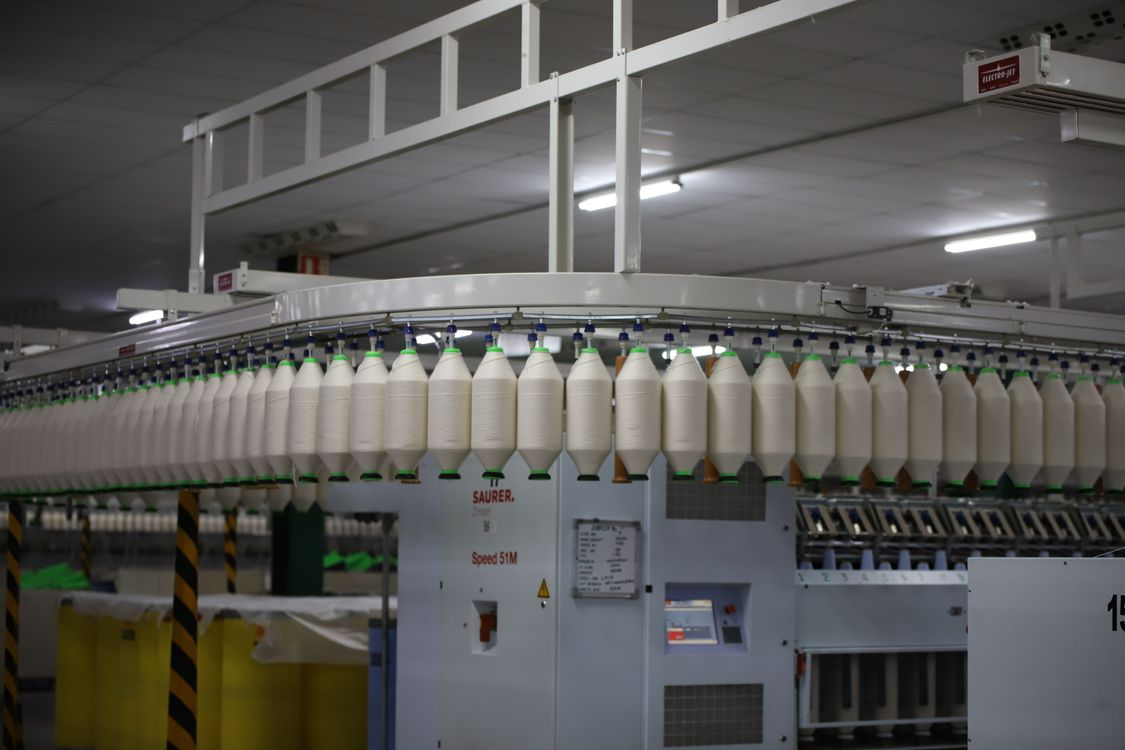
The company’s VELUM equipment provides an established commercial example. Its first industrial laundry installation was delivered in November 2022, introducing automated textile handling into an operation that traditionally required personnel to prepare individual items for folding machinery.
The system uses visual information to identify the configuration of an item, establish appropriate gripping locations, and generate the movements required to present it to downstream processing equipment.
Differences in fabric properties, item dimensions, orientation, and the distribution of material influence the handling operation. A movement that successfully separates one textile from a pile may produce a different result when applied to another item.
Predicting that behaviour requires information extending beyond the initial position of the material. The software must establish how parts of the object are likely to move relative to one another when the robot applies force at particular locations.
Automotive cable assemblies introduce a related set of engineering challenges. Flexible conductors can form loops, overlap other parts of the assembly, or change position as connectors are moved.
Robotic handling systems must establish how to manipulate those sections while protecting connectors and presenting the harness in the configuration required by the subsequent manufacturing operation.
Carbon fibre reinforcement materials introduce further constraints because fibre orientation and dimensional stability influence the properties of the finished composite structure. Handling operations may need to preserve the arrangement of fibres while transferring material between preparation, cutting, and lay-up processes.
These applications require different tooling and operating arrangements even where they can benefit from a common robotic intelligence architecture.
End effectors must accommodate the mechanical characteristics of the material, while robot reach, payload, and motion capabilities influence the movements available to the control software.
Integrating the resulting system into an established production line also requires coordination with surrounding equipment. Sensors and communications interfaces establish when material becomes available for handling and whether downstream machinery is ready to receive it.
The commercial performance of such systems depends on the consistency with which they complete their assigned operations. Rapid individual handling cycles provide limited manufacturing benefit if frequent interruptions or unsuccessful attempts require personnel to intervene.
Information gathered during commercial operation can help developers identify recurrent handling difficulties across different installations. Software improvements must subsequently be validated against the particular equipment, materials, and operating requirements of each application.
Bentic secured €7 million in Series A investment in 2023 through a funding round led by Emerald Technology Ventures, supporting the development and commercial deployment of its robotics technology.
The approaching installation milestone reflects the expansion of the company’s software into operational customer environments rather than laboratory demonstrations. It refers to deployed robots, not necessarily an equivalent number of separate factories.
Bentic’s first US deliveries are expected before the end of 2026, introducing its adaptable handling technology into an additional industrial market as the company extends its applications beyond established textile processing operations.