Sovereign Labelling Machines has relocated to a purpose-designed factory in Clacton-on-Sea, Essex, more than doubling its available manufacturing capacity for bespoke labelling and sleeving equipment.
The new premises are situated close to the company’s previous factory, allowing the machinery manufacturer to expand its production operations while retaining its established local engineering base.
Established in 1993, Sovereign designs and manufactures equipment ranging from individual labelling machines to integrated packaging lines, supplying systems configured around the production requirements of British and international customers.
The expansion follows investment in recruitment and engineering resources, with the company having identified increasing manufacturing demand as a priority in its development plans for 2026.
Sovereign undertakes machinery design, assembly, construction, and testing in Clacton-on-Sea, with component and framework fabrication also supported through the wider ENE Group.
Expanding the available production area will allow the business to accommodate larger machinery configurations and organise several projects at different stages of manufacture.
Bespoke packaging machinery must frequently be configured around existing production lines, where available space, container handling arrangements, operating speeds, and control system interfaces influence the design of individual machines.
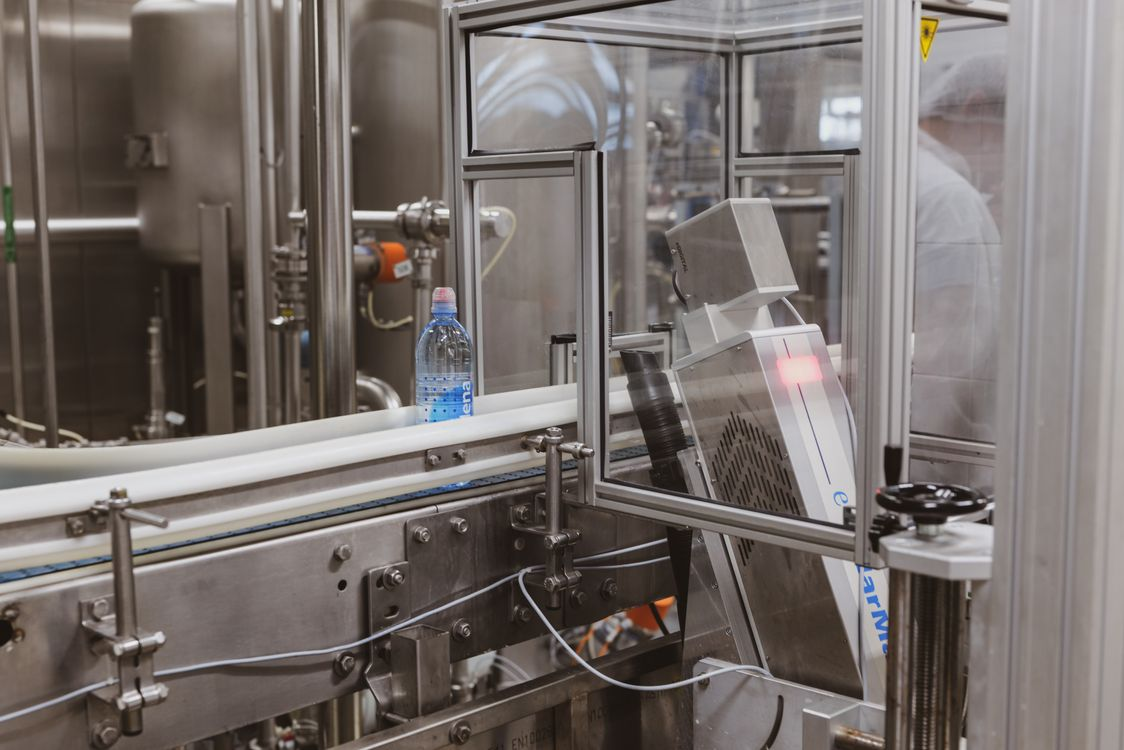
Containers must be presented to the labelling equipment in a controlled position and orientation, with sufficient stability to maintain application accuracy as products move through the line.
Pressure-sensitive labelling systems dispense individual labels from a backing material, coordinating movement of the label web with the movement of the product. The label separates from its backing as it passes through the dispensing mechanism before being applied to the container.
The geometry of the product determines the method of application. Flat surfaces can generally accommodate straightforward placement, whereas cylindrical containers require controlled rotation or wrapping to achieve consistent positioning around their circumference.
Changes in container dimensions may also require adjustments to guide systems, conveyors, sensors, and application equipment. Where a production line handles several product formats, the machinery must accommodate those changes without introducing unacceptable variations in operating performance.
Sleeving equipment introduces a different sequence of material handling operations. Sleeves must be separated from their supply material and positioned accurately around individual containers before subsequent processing, which can include controlled thermal shrinkage.
The interaction between product movement and application timing becomes increasingly important as production speeds rise. Variations in container spacing or conveyor movement can affect the position at which a label or sleeve is applied, particularly where equipment must handle products with different dimensions.
Sovereign develops its own control programmes using programmable logic controllers, with human-machine interfaces providing operators with access to operating settings and machinery functions.
Combining mechanical design and control software development allows equipment behaviour to be configured around individual customer requirements. Changes to container handling arrangements can be incorporated into control sequences alongside adjustments to sensors, actuators, and other machine functions.
Manufacturing such equipment requires space for mechanical assembly, electrical installation, software configuration, and testing. Larger systems incorporating several conveyors and processing stations can occupy considerable floor area before they are ready for delivery.
Additional factory space can allow assembly and testing activities to proceed concurrently across several projects, reducing the need to move partially completed equipment to make room for subsequent work.
Testing integrated packaging systems requires sufficient space to operate them under conditions representative of their intended application. Engineers may need to assess container stability, label placement accuracy, product changeovers, and the coordination of machinery functions before the system leaves the factory.
Factory acceptance testing also provides an opportunity to identify integration difficulties before equipment reaches its destination, where installation work must often be coordinated with existing manufacturing schedules.
Larger machinery configurations intended for international customers may need to be divided into transportable assemblies before delivery. Maintaining accurate engineering documentation becomes particularly important where mechanical structures, electrical connections, and control equipment must be reassembled at the destination.
The growing variety of packaging formats contributes to demand for machinery capable of accommodating different products without requiring extensive changes to the wider production line.
Changes to container materials, dimensions, and regulatory labelling requirements can affect the equipment manufacturers need to install. Systems capable of supporting several formats can reduce dependence on dedicated machinery, provided the relevant operating requirements are incorporated into the original design.
Delivering that flexibility requires coordination between mechanical engineering, electrical design, software development, and the practical manufacturing resources available within the equipment supplier’s factory.
The increased production area in Clacton-on-Sea addresses one element of that manufacturing capacity. Achievable output will also depend on the availability of engineering personnel, component supplies, and the complexity of individual machinery orders.
Sovereign has not disclosed a corresponding increase in annual machine shipments. Its relocation instead provides the physical capacity required to undertake more extensive machinery manufacturing programmes, supporting the company’s established operations as it develops its international customer base.