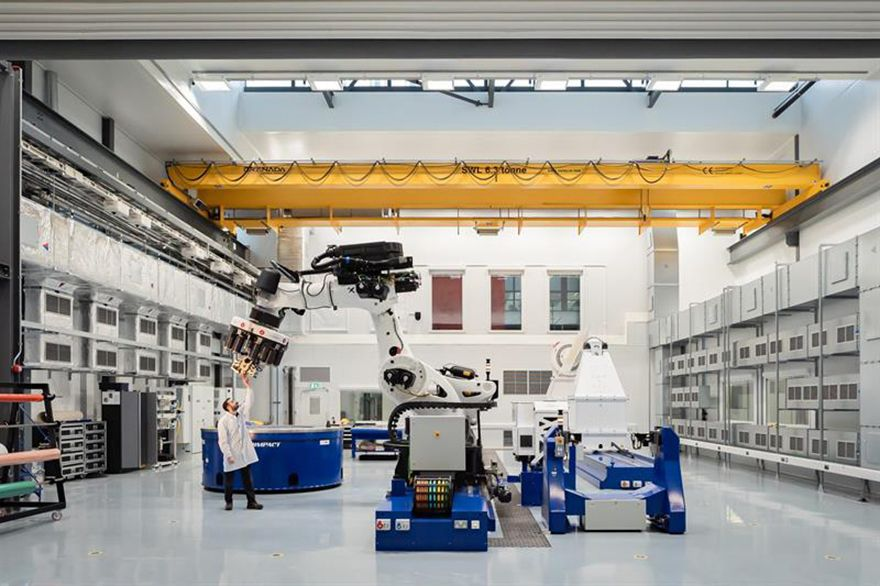
Embraer has joined the UK’s National Composites Centre (NCC) as a Tier 1 member, establishing a multi-year research partnership focused on advanced composite manufacturing, digital engineering and the development of aerospace production processes.
The agreement, confirmed on 18 November, provides the Brazilian aircraft manufacturer with access to the centre’s specialist facilities, collaborative research programmes and technical expertise. It also gives Embraer a role in shaping research priorities alongside other major industrial members.
The NCC, based in Bristol and associated with the University of Bristol, is part of the High Value Manufacturing Catapult. Its work addresses the industrial application of composite materials, including the equipment and methods required to manufacture complex structures reliably.
Embraer’s membership extends its relationship with the British aerospace sector and creates opportunities to work with UK manufacturers, technology developers and research organisations. The agreement does not identify a particular aircraft programme or announce a production contract for British suppliers.
Composite manufacturing is an important area of aerospace development because material selection and component design influence aircraft weight, mechanical performance and production requirements. Fibre-reinforced materials can offer useful combinations of properties, although their manufacturing processes differ substantially from those used for metallic structures.
Producing a composite component requires control over the reinforcement material, its orientation and the processing conditions used to consolidate the structure. Variations in those conditions can affect the properties of the finished part and the evidence required for its qualification.
Automated fibre placement and automated tape laying are among the technologies used to position reinforcement material along programmed paths. These processes can reduce some manual handling and provide controlled placement, but their performance depends on material behaviour, component geometry and the requirements of the finished structure.
Complex curvature, changes in fibre direction and the interaction between adjacent material courses can complicate automated deposition. Engineers must establish suitable process settings and inspect the resulting structure to determine whether it meets the required standard.
The NCC operates a robotic hybrid fibre placement and tape laying facility that supports research into such processes. Embraer representatives visited the equipment as part of the membership announcement, providing a direct connection between the partnership and the centre’s manufacturing capabilities.
Research programmes can use these facilities to investigate production methods before they are transferred to larger manufacturing operations. Trials may examine deposition strategies, process repeatability, material use and the inspection requirements associated with different component designs.
Full-scale manufacturing introduces constraints that are not always present during laboratory trials. Large components require appropriate material handling, machine access, tooling and quality control, while the time taken to complete each manufacturing stage affects production capacity.
Embraer will also have access to NCC programmes involving high-rate manufacturing, including the High-Rate Manufacturing Capability initiative. The work is concerned with the equipment and production methods needed to manufacture advanced aerospace structures at greater volumes.
Increasing manufacturing rates involves coordinating several operations rather than accelerating one machine in isolation. Material preparation, layup, consolidation, inspection, finishing and the movement of parts between workstations can all restrict the number of acceptable components produced.
A process capable of producing a successful prototype may require further development before it can support consistent deliveries. Production equipment must maintain the required quality across repeated cycles, while inspection systems need sufficient capacity to avoid creating a separate bottleneck.
Digital engineering is another area covered by the partnership. Models and manufacturing data can be used to examine process settings, component geometry and proposed changes before physical trials, although their predictions must be validated against the behaviour of manufactured materials.
Manufacturing information also needs to remain connected with the specifications and revisions governing each component. Aerospace programmes typically require traceable records demonstrating that materials and processes correspond to approved requirements.
Embraer operates across commercial aviation, executive aviation, defence and aircraft services. Those activities create several potential areas for technology development, but the membership announcement does not assign a named composite structure or aircraft model to the research partnership.
Cleiton Silva, Embraer’s vice-president of technology development and electronic equipment, has identified collaboration with research institutions as part of the manufacturer’s wider technology strategy. Such partnerships allow specialist facilities and expertise to be used without duplicating every capability within an individual aircraft manufacturer’s operations.
NCC chief executive Richard Oldfield has connected Embraer’s participation with opportunities for UK aerospace manufacturing. The agreement also builds on an earlier memorandum of understanding between Embraer and the UK Government covering potential industrial cooperation.
Research participation may provide opportunities for materials suppliers, tooling businesses and manufacturing specialists where their capabilities match the projects undertaken. Any subsequent procurement or industrial investment would nevertheless require separate commercial decisions.
Training forms part of the NCC’s wider remit, providing another route for transferring composite manufacturing knowledge into industrial organisations. Automated production equipment requires engineers and technicians capable of programming, operating and maintaining the systems while managing material and quality requirements.
Embraer’s Tier 1 membership establishes a formal research relationship within that environment. The next developments will be the technical programmes selected by the partners and whether the resulting processes progress through testing, qualification and eventual industrial application.