AtkinsRéalis has become the first engineering consultancy to partner with INFINITY, the organisation developing a 200-acre advanced manufacturing campus in Derby for components used in nuclear, fusion and aerospace programmes.
The bilateral agreement, confirmed on 19 November, will bring AtkinsRéalis’ experience in complex engineering projects into the development of the planned site at Infinity Park Derby. Its work will focus on helping shape facilities around the technical requirements of manufacturing, testing and validating large industrial components.
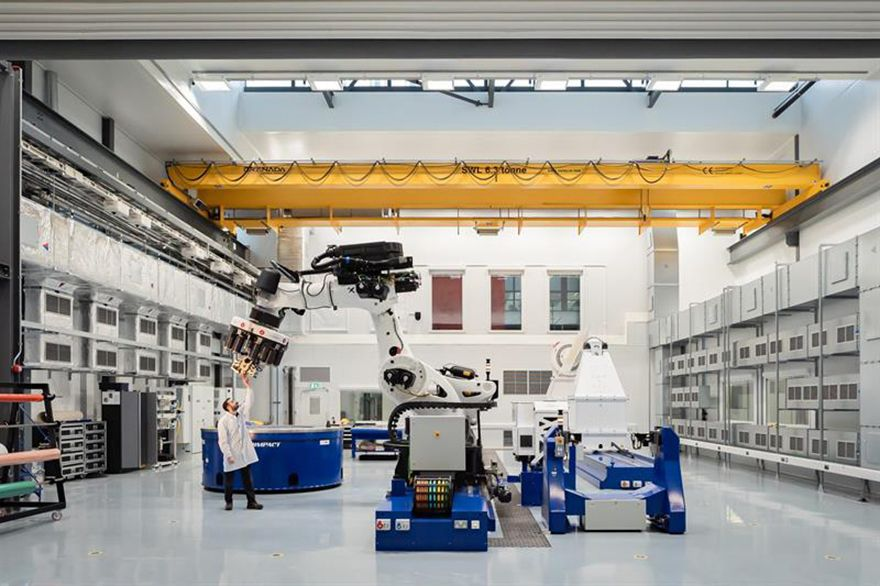
The proposed campus is intended to combine specialist engineering capabilities that are often distributed across research organisations, manufacturing companies and testing facilities. These include full-scale prototyping, digital engineering, manufacturing, testing, validation and skills development.
INFINITY was established through a joint venture involving partners including the University of Derby, Loughborough University and the Manufacturing Technology Centre. Its development plans call for a concentration of industrial facilities capable of supporting strategic UK engineering programmes.
AtkinsRéalis’ participation introduces experience from major nuclear, defence and aerospace projects into that planning process. The consultancy has an established presence in Derby, employing more than 500 people locally, and is involved in engineering work for major industrial and infrastructure programmes.
Its regional activities include support for Rolls-Royce Submarines, alongside Mott MacDonald, on the design of new nuclear manufacturing facilities associated with the planned expansion of the Raynesway site.
Large-component manufacturing creates different requirements from laboratory-scale engineering research. Equipment dimensions, component weights, handling arrangements and the need to maintain accuracy over substantial structures can limit the facilities suitable for developing and testing a production method.
Work carried out successfully on a small specimen does not necessarily reproduce the mechanical, thermal or dimensional conditions encountered during full-scale production. Larger components may require different tooling, lifting systems, process controls and inspection methods.
The proposed INFINITY facilities are intended to address this transition by making specialist equipment and engineering capabilities available within a common industrial environment. Projects would be able to progress from development work towards manufacturing trials and validation without relying exclusively on conventional research laboratories.
Six principal capabilities have been identified for the campus: skills and training, prototyping, digital engineering, supply chain scale-up, testing and validation, and advanced manufacturing.
Each serves a different stage of industrial development. Prototyping allows new component designs and manufacturing methods to be evaluated, while testing and validation establish whether the resulting parts and processes meet the requirements of their intended applications.
Digital engineering can support this work through models of components, processes and manufacturing systems. Such models may help engineers investigate design alternatives and identify potential constraints before committing material and machine time to physical production.
Physical verification remains necessary where the behaviour of a material or component depends on production conditions that must be demonstrated experimentally. Manufacturing trials can reveal differences between predicted and actual performance, especially when equipment and component dimensions change.
Nuclear and aerospace components present additional requirements for documented quality assurance. Material properties, processing histories, inspection results and the control of engineering changes can be important to the qualification of a manufacturing route.
Developing a process for these applications therefore involves the equipment used to make a component and the systems used to establish that it has been manufactured consistently. A successful prototype may be followed by further work on process repeatability, inspection and production documentation before routine manufacture becomes possible.
Shared facilities could provide smaller engineering businesses with access to specialist capabilities that would be difficult to justify solely for an individual development programme. Their usefulness will depend on the equipment ultimately installed, the terms on which businesses can access it and its suitability for particular projects.
The campus is also intended to support supplier development. Major engineering programmes often depend on several tiers of specialist manufacturers, whose ability to increase production is influenced by machine availability, qualified processes and access to skilled personnel.
Moving from a small number of development components to regular industrial output can expose bottlenecks in production planning, materials supply, inspection and handling. Facilities designed for full-scale trials could help businesses investigate these constraints before committing to larger manufacturing investments.
AtkinsRéalis will contribute to shaping the planned capabilities, rather than arriving as the operator of an already completed manufacturing campus. The partnership does not establish that the consultancy has committed a particular financial investment or secured an exclusive contract to deliver the site.
INFINITY’s founding organisations have previously estimated that developing the wider project could ultimately require around £400 million. That figure relates to the scale of the proposed campus, not funding newly committed under the AtkinsRéalis agreement.
The joint venture has been pursuing the investment required for development, with facilities expected to be introduced in stages. Plans for a complete industrial campus remain dependent on financing, construction and the participation of organisations requiring its capabilities.
The project’s connection to the Midlands engineering base is substantial. Derby already hosts businesses involved in nuclear propulsion, aerospace manufacturing and advanced engineering, alongside universities and technical organisations supporting research and workforce development.
Placing training alongside industrial facilities could allow engineering and technician development to reflect the production equipment and operating practices required by participating businesses. The workforce benefits will depend on the campus’s delivery and the training programmes ultimately established.
The partnership gives AtkinsRéalis a role in developing the site’s technical direction while INFINITY progresses the broader investment and delivery programme. Subsequent agreements and construction milestones will determine which manufacturing, testing and training capabilities become available, and when they can be used by industrial partners.