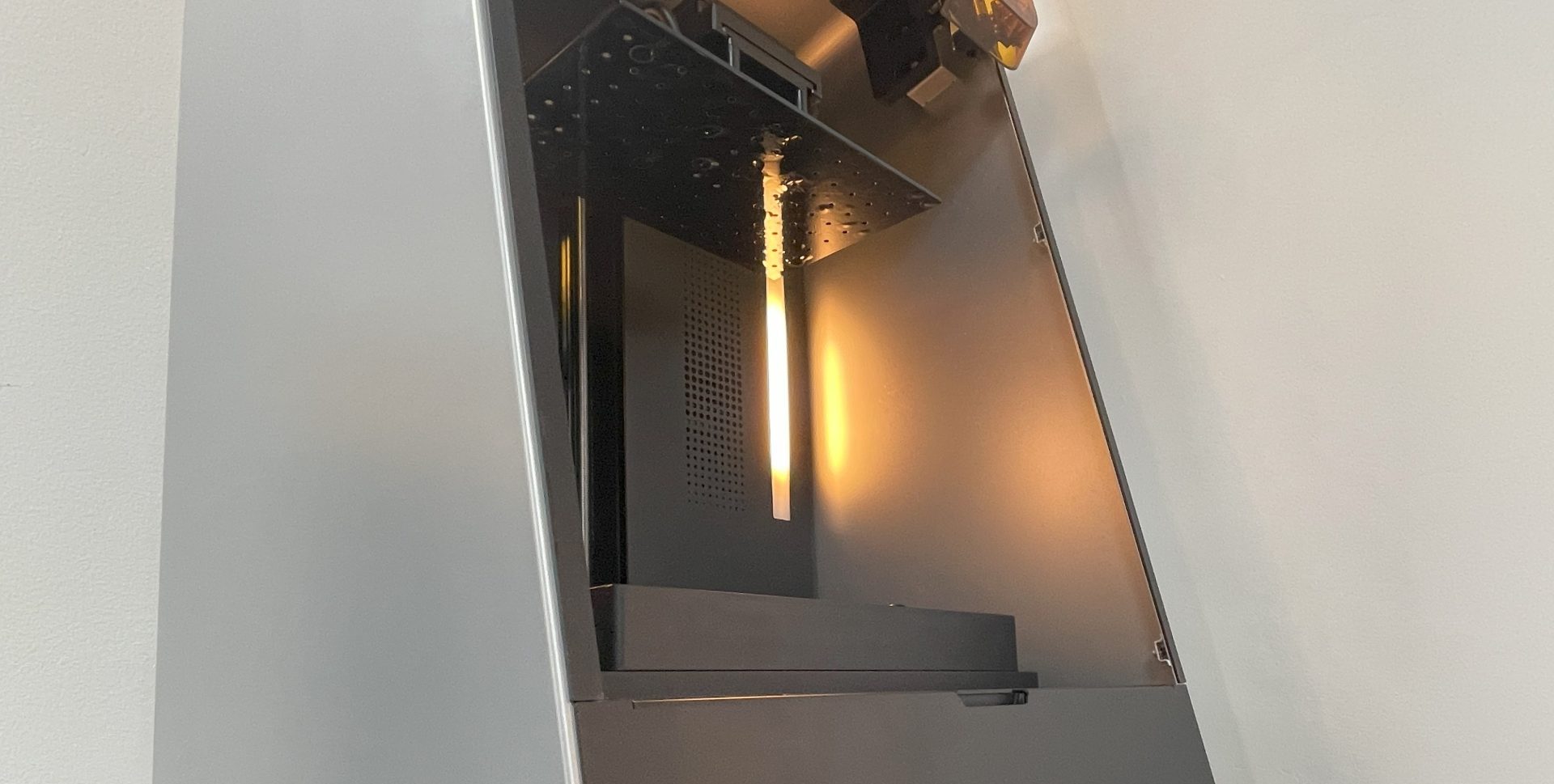
BigRep has introduced the PELLEX 750 industrial 3D printer at Formnext 2026, adding pellet extrusion capability to its portfolio of large-format additive manufacturing equipment.
The machine combines the established BigRep ONE platform with an extrusion system developed by Massive Dimension, allowing thermoplastic pellets to be used directly as printing feedstock.
It provides a build volume of approximately 750 litres and is rated for material deposition of up to 4,000g per hour. The company is positioning the system for manufacturing large prototypes, production tooling and selected end-use components.
The printer is being demonstrated at Formnext in Frankfurt, which runs from 17 to 20 November. Its introduction follows earlier collaboration between BigRep and Massive Dimension on pellet processing technology.
The PELLEX 750 uses a different feedstock arrangement from the filament extrusion systems traditionally associated with BigRep’s large-format printers.
In filament printing, a continuous strand of thermoplastic material is fed into a heated print head, melted and deposited in successive layers.
Pellet extrusion instead uses small pieces of thermoplastic feedstock that must be conveyed, heated and processed into a consistent flow of molten polymer.
The material is subsequently deposited through a nozzle following the programmed toolpath.
Both approaches build a component layer by layer, but the change in feedstock affects material handling, extrusion control and the economics of manufacturing larger parts.
Pellets are widely used in conventional polymer processing, including injection moulding and industrial extrusion.
Using suitable pellet feedstock can reduce dependence on materials that have first been converted into filament for additive manufacturing.
The cost advantage depends on the polymer grade, purchase volume and processing requirements. Lower feedstock prices do not establish that every printed part will be cheaper to manufacture.
Pellet extrusion also imposes technical requirements on the equipment.
A consistent flow of molten polymer is needed to maintain the intended deposited bead dimensions. Material temperature, viscosity, feeding behaviour and extruder operation can influence how reliably that flow is achieved.
Changes in extrusion output may affect the dimensions of the printed component, particularly where the machine deposits relatively large quantities of material.
Massive Dimension’s extrusion technology is intended to provide the material processing capability required for this approach.
BigRep specifies an extrusion temperature capability of up to 350°C for the PELLEX 750, establishing the upper operating range of the print head.
The temperature rating does not mean that every polymer capable of being processed below that temperature is automatically suitable.
Material selection also depends on melt behaviour, thermal stability, moisture sensitivity and the requirements of the finished component.
The company identifies PETG and carbon fibre reinforced PETG among the materials associated with the system at introduction.
Adding fibre reinforcement can alter mechanical characteristics, but the result depends on the fibre content, distribution, processing conditions and orientation of the deposited material.
A reinforced polymer may offer advantages for certain tooling applications while introducing requirements concerning nozzle wear or the finishing of printed surfaces.
The PELLEX 750’s maximum material output of 4kg per hour is an extrusion capability rather than a guaranteed build rate for every geometry.
Actual production depends on the path followed by the print head, the layer dimensions selected and the ability of the material to be deposited and cooled under suitable conditions.
A large component containing long continuous toolpaths may allow more material to be deposited per hour than a part requiring numerous small features or changes in direction.
Travel movements, printing interruptions and the time needed to complete supports or other features also affect the overall build duration.
BigRep has demonstrated the equipment at Formnext with industrial application examples, including a wind turbine blade mould produced using carbon fibre reinforced printing material.
The reported demonstration took less than five hours. That result relates to the particular geometry and material selected and should not be treated as a benchmark for every large tooling application.
Manufacturing a mould introduces requirements that differ from those applying to a visual prototype.
The working surface may need a specified finish, sufficient dimensional stability and compatibility with the temperature and pressure conditions of the process in which it will be used.
Printed tooling can therefore require additional machining or surface treatment after the additive build is complete.
The amount of finishing depends on the application and the precision achieved during printing.
Large-format additive manufacturing also has to manage thermal behaviour across substantial printed structures.
As deposited polymer cools, it can contract. Differences in temperature across the part may cause distortion, particularly where large sections are built over an extended period.
The relationship between deposited layers is another consideration. Mechanical behaviour can differ according to the direction in which forces act relative to the layers and toolpaths.
Build orientation, material formulation and extrusion settings consequently affect the suitability of a printed component for its intended function.
The PELLEX 750 incorporates BigRep’s SWITCHPLATE build surface, which can be heated to approximately 100°C.
A heated surface can support adhesion of the initial layers and help manage local thermal conditions, although its effectiveness depends on the material and geometry being printed.
The machine also supports comparatively large layer heights, allowing substantial material volumes to be deposited with fewer passes than would be required using very fine layers.
Larger layers can reduce build time for suitable geometries, but they can also increase the amount of surface finishing needed where tight tolerances or smooth contact surfaces are required.
The system’s 750-litre build volume provides space for large components, although usable part dimensions depend on the build envelope and the orientation of the selected geometry.
A component close to the maximum dimensions may leave limited space for supports or other printing requirements.
Manufacturing cost must therefore be assessed across the complete process, including preparation, material use, machine time, post-processing and inspection.
BigRep has not published independently verified comparative production costs for the PELLEX 750 against competing pellet systems or conventional manufacturing methods.
Nor has it confirmed a general customer delivery timetable in the launch information reviewed.
The Formnext introduction establishes the machine’s configuration, published specifications and intended applications.
Commercial installations will provide further evidence of the system’s material compatibility, production repeatability and performance under sustained industrial operating conditions.