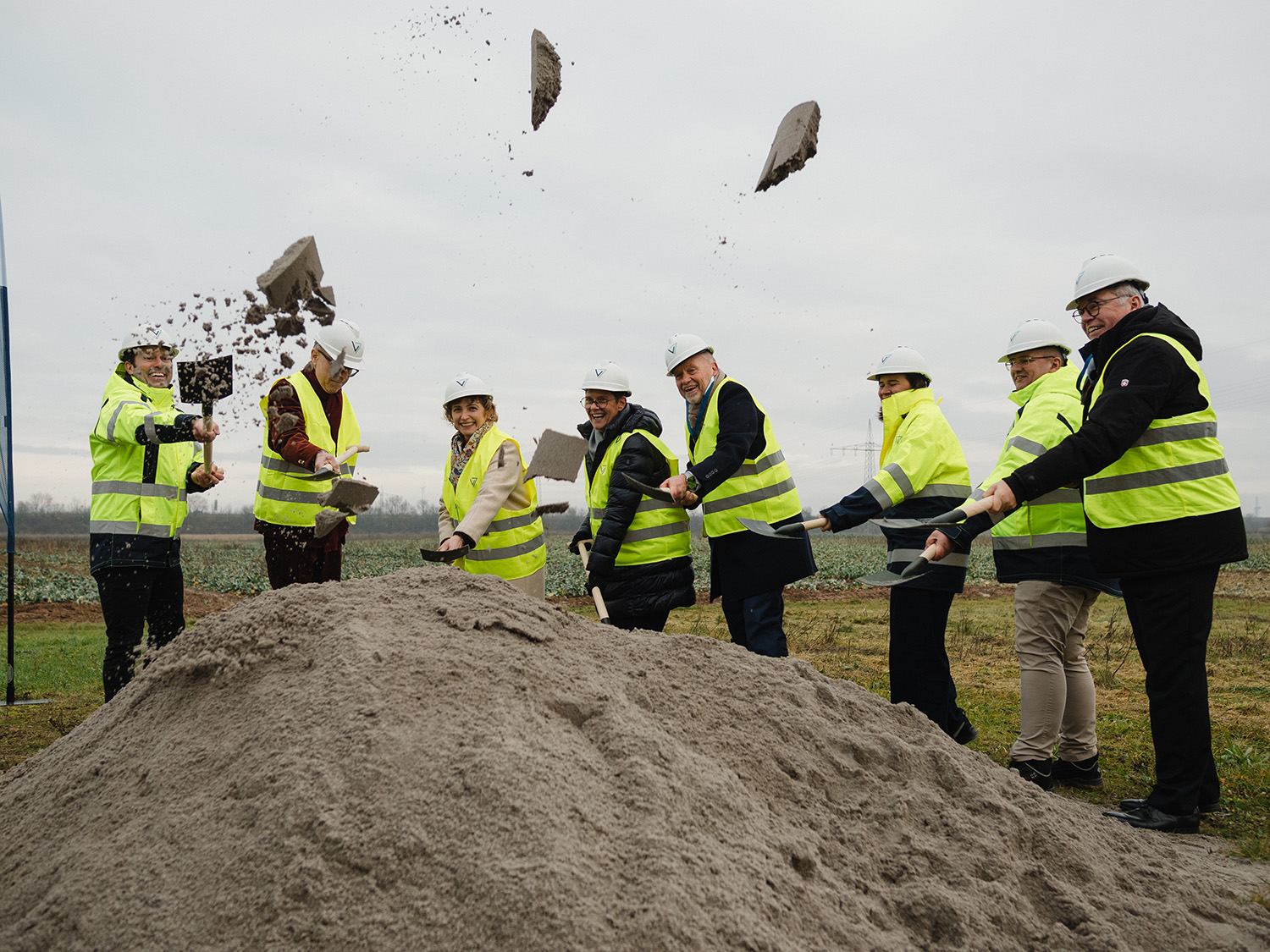
Vulcan Energy has begun civil construction at its commercial lithium extraction plant in Germany’s Upper Rhine Valley, moving the Lionheart project from bulk earthworks towards foundations and site infrastructure for processing equipment. The work covers an industrial plant that has yet to produce commercial lithium chemicals; the company is targeting the second half of 2028 for first production. Buildings, equipment assembly and commissioning are all still to follow.
Foundations for buildings and process equipment, concrete structures, utilities, a tank farm, access roads and drainage networks are included in the current scope. Vulcan says it completed early bulk earthworks before beginning these activities. Preparing the tank farm and utilities alongside the building foundations is necessary because the extraction plant will handle geothermal brine and liquid intermediates through connected process systems; the commencement of civil work does not establish whether any of those systems has been installed or tested.
Lionheart is designed as an integrated geothermal energy and lithium chemicals operation. Brine produced from underground reservoirs in the Upper Rhine Valley will supply the lithium-bearing feedstock, while geothermal energy from the same resource is intended to meet part of the project’s operating requirements and provide energy to local consumers. At the extraction plant, Vulcan plans to use its proprietary VULSORB technology to recover lithium from the brine and produce a lithium chloride intermediate.
The lithium chloride intermediate will be transported from the extraction plant to Vulcan’s downstream lithium chemicals facility at Frankfurt-Höchst. There, the company intends to convert it into battery grade lithium hydroxide monohydrate for automotive and battery supply contracts. A compliant end product therefore depends on two manufacturing operations: extraction from geothermal brine at the first site and chemical conversion and finishing at the second. Neither plant’s planned commercial throughput can be inferred from the start of foundation works.
The planned first phase has a stated annual design capacity of 24,000 tonnes of lithium hydroxide monohydrate. Vulcan equates that output to the lithium required for approximately 500,000 electric vehicle batteries, although the precise number would depend on the capacity and chemistry of the batteries ultimately manufactured. The company also forecasts annual co-production of 275GWh of renewable electricity and 560GWh of heat for local consumers over an estimated project life of 30 years. These figures are project targets, not measured output from the new plant.
Tank foundations and liquid-handling infrastructure will have to accommodate the loads and maintenance requirements of equipment intended to handle process liquids. The road network must also allow heavy components to reach the installation areas during construction and subsequently support plant servicing. Vulcan has not published an equipment installation percentage, confirmed lithium recovery yield for Lionheart’s planned commercial operation or provided commissioning data alongside the new civil construction milestone.
VULSORB is the company’s proprietary direct lithium extraction technology. Unlike processes that concentrate lithium by allowing brine to evaporate in large surface ponds, direct extraction separates lithium through treatment of the liquid stream. At Lionheart, recovery performance will depend on the actual brine composition, the performance and service life of the extraction medium, and the specification of the chloride intermediate sent onwards for conversion. Results at any earlier demonstration or production site should not automatically be treated as verified output from the new Lionheart extraction plant.
Transport between the two plants creates an additional production interface. The extraction operation must deliver material within an agreed intermediate specification, while the Frankfurt-Höchst facility must convert it to lithium hydroxide that satisfies buyers’ quality requirements. Storage, shipment, receiving inspection and process scheduling will need to work together once the sites are operating. Equipment installation, mechanical completion and commissioning are still ahead at the newly constructed site, and delivery schedules across the integrated project will depend on progress at both locations.
Vulcan says Lionheart remains on schedule and within budget, with take-or-pay offtake agreements already secured with European-focused customers. It identifies the commencement of civil works as the final major execution milestone set for 2026. That is the company’s assessment of its construction programme rather than independent confirmation of future plant availability or recovery rates; the announcement did not identify a completed process installation or an achieved lithium hydroxide output rate.
The first phase is intended to provide a German source of lithium chemicals for Europe’s battery supply chain while also producing renewable electricity and heat from the geothermal resource. The integrated model brings extraction, intermediate transport and downstream chemical conversion into a single project schedule, each with its own equipment and qualification requirements. The next verifiable steps will be completed foundations, arrival and installation of process equipment, followed by commissioning ahead of the planned 2028 production start.