Siemens Energy and its HyCoFlex partners have completed a test campaign in which an industrial gas turbine operated on 100% renewable hydrogen while generating electricity and process steam at a French paper mill. At the Smurfit Westrock site in Saillat-sur-Vienne, an SGT-400 gas turbine and heat recovery steam generator operated together at full load. The tests also covered ignition, start-up, changing output and shutdown, extending previous hydrogen electricity trials into complete combined heat and power operation.
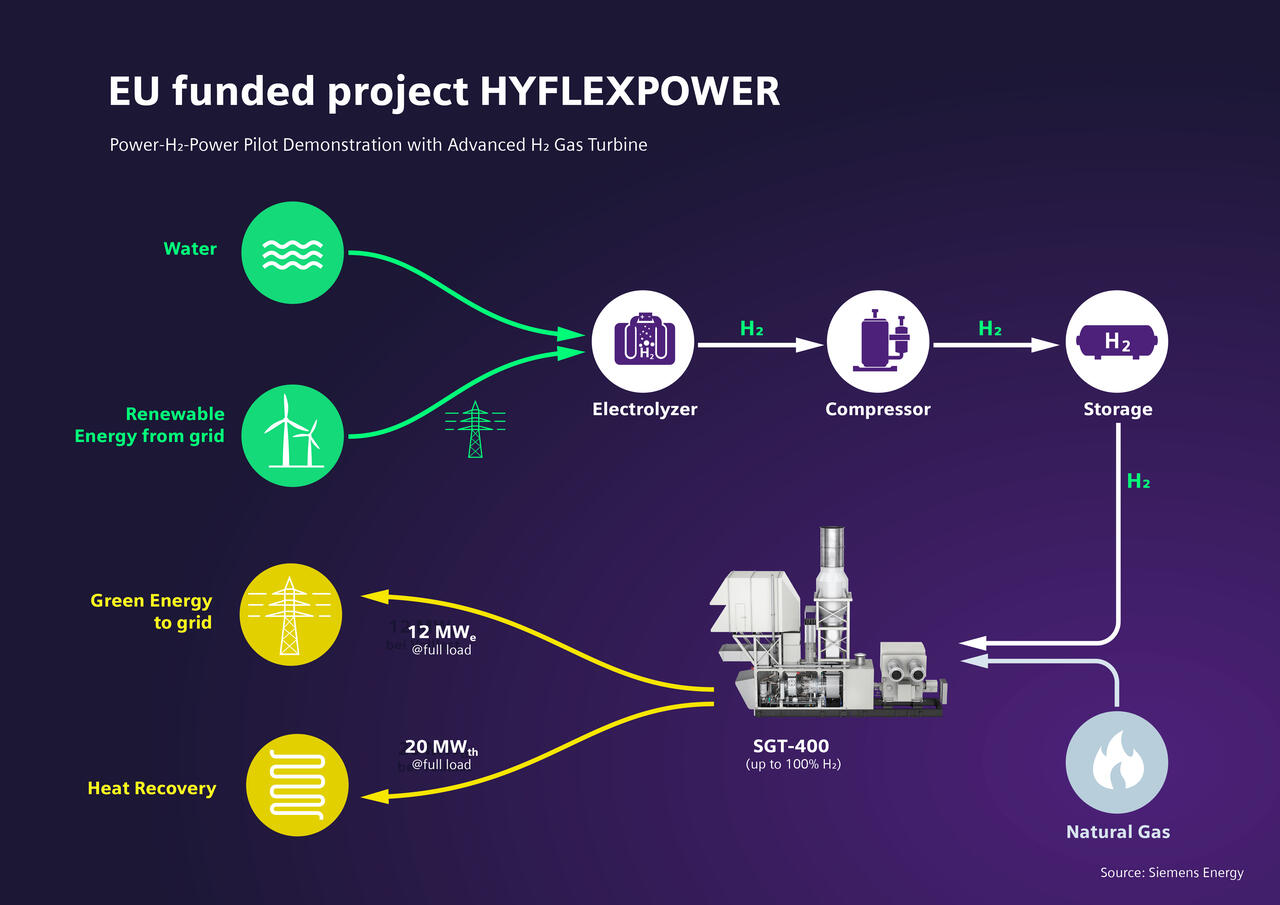
The installed SGT-400 can produce up to 12MW of electrical power and 20MW of thermal output. In combined heat and power operation, the turbine generates electricity while its hot exhaust passes through a heat recovery steam generator to produce steam for industrial use. Recovering exhaust heat allows the installation to serve the site’s electrical and process heat requirements through one integrated arrangement, although actual energy supplied depends on load and operating conditions.
The full-load campaign extended earlier HYFLEXPOWER work at the same paper mill. That programme had demonstrated the integration of local hydrogen production and electricity generation. HyCoFlex tested the connected turbine and steam-generation equipment on pure hydrogen, establishing simultaneous power and steam production under the stated operating conditions. The results relate to the tested plant; they are not a general certification of every existing gas turbine combined heat and power installation.
The SGT-400 used dry low emissions combustion technology configured for a high proportion of hydrogen. Compared with natural gas, hydrogen has a higher flame speed and different ignition characteristics, which make flame stability and combustion control important during load changes. Nitrogen oxides can still form from nitrogen in the air at high combustion temperatures. The test programme examined stable operation and low emissions but did not publish a detailed, independently comparable table of nitrogen oxide measurements for each operating point.
During the test campaign, the turbine ran on pure hydrogen from ignition and start-up through grid synchronisation, full-load generation, reductions in output and controlled shutdown. Siemens Energy says the unit could start on hydrogen alone without a separate start-up fuel. This extends the technical evidence beyond steady operation once the machine has reached its desired output: start-up and shutdown behaviour are part of the operating envelope that a site would have to accommodate when planning a retrofit.
The partners also tested hydrogen and natural gas blends at different loads, including rapid changes in fuel composition and power output. Siemens Energy reported stable, low-emission operation across the conditions examined. The statement establishes neither a universal nitrogen oxide limit for all plants nor an efficiency figure transferable to different turbines and heat demands. The dataset generated during the project can instead support engineering work on the particular fuel, burner and control arrangements evaluated.
Paper production depends on process steam for drying and other operations, so the heat recovery system is as important to the mill as the turbine’s electrical output. Its steam production will vary with turbine exhaust conditions and the demands placed on the recovery equipment. HyCoFlex demonstrated electricity and steam generation together, but the company has not disclosed what proportion of the mill’s total heat or electricity requirement was supplied during the test campaign.
Retrofitting gas turbine-based combined heat and power installations to use hydrogen may preserve existing generators and heat recovery equipment, but the fuel change brings additional engineering requirements. Burner design, control settings, gas handling, safety systems and the source of hydrogen all need assessment at each site. The successful Saillat trial shows the particular modified turbine arrangement can operate across the tested conditions; it does not establish a ready-made conversion specification for an unrelated plant.
Siemens Energy coordinated HyCoFlex with ENGIE, Smurfit Westrock, Equinor, the German Aerospace Center, the National Technical University of Athens, PNO Innovation and Centrax. The project drew on infrastructure from HYFLEXPOWER and received support from the Clean Hydrogen Joint Undertaking under Horizon Europe, with UK Research and Innovation funding for the UK-associated partners. Its purpose was to test the operating behaviour of integrated hydrogen cogeneration equipment rather than commission a new commercial paper mill power station.
Combusting renewable hydrogen avoids the direct carbon dioxide emissions associated with burning natural gas in the turbine. The whole-system greenhouse gas balance still depends on the production and handling of the hydrogen, while nitrogen oxide emissions must be controlled during combustion. The successful operation on both pure hydrogen and mixed fuels demonstrates flexibility within the tested range, but gives no assurance about the future cost or availability of a hydrogen supply for continuous industrial use.
The trial generated data covering load response, combustion and emissions during electricity and steam production. Those records can be used to develop further retrofit designs and assess control systems that must handle variable industrial demand. Siemens Energy has not disclosed a timetable for commercial deployment of the HyCoFlex configuration or confirmed that the same performance can be replicated at other SGT-400 installations without site-specific changes.
The Saillat campaign has established full-load combined heat and power operation on pure hydrogen, including start-up and shutdown on the same fuel. Future applications must still account for the connected plant’s actual steam duty, fuel storage and delivery systems, emissions requirements and equipment economics. The demonstrated operating range provides a defined engineering result; a wider commercial rollout has not yet been confirmed.