Newcastle University and New College Durham will expand their battery manufacturing skills academy using £1.2 million from a wider £3.7 million funding programme. The national award covers three regional workforce initiatives, including the National Battery Training and Skills Academy expansion. The funded work includes higher technical qualifications, modular learning and practical manufacturing training intended to strengthen the supply of skilled workers for battery production.
The Battery Innovation Programme is delivered by Innovate UK on behalf of the Department for Business, Innovation, Science and Trade. The three awards address workforce capability at different points in the battery manufacturing sector; the Newcastle announcement identifies the academy’s £1.2 million allocation but does not give an equivalent breakdown of delivery plans for the other two regional initiatives. Only the academy’s funding has been allocated to specific facilities and courses in the university’s published account.
Newcastle and New College Durham have already worked with Automotive Energy Supply Corporation, the battery manufacturer operating in Washington, Tyne and Wear. Their National Battery Training and Skills Academy has supported hundreds of workers and learners connected with the manufacturer. The additional funding will broaden the programme through NBTSA+, an industrial engagement initiative intended to involve further regional businesses and training partners across different sectors.
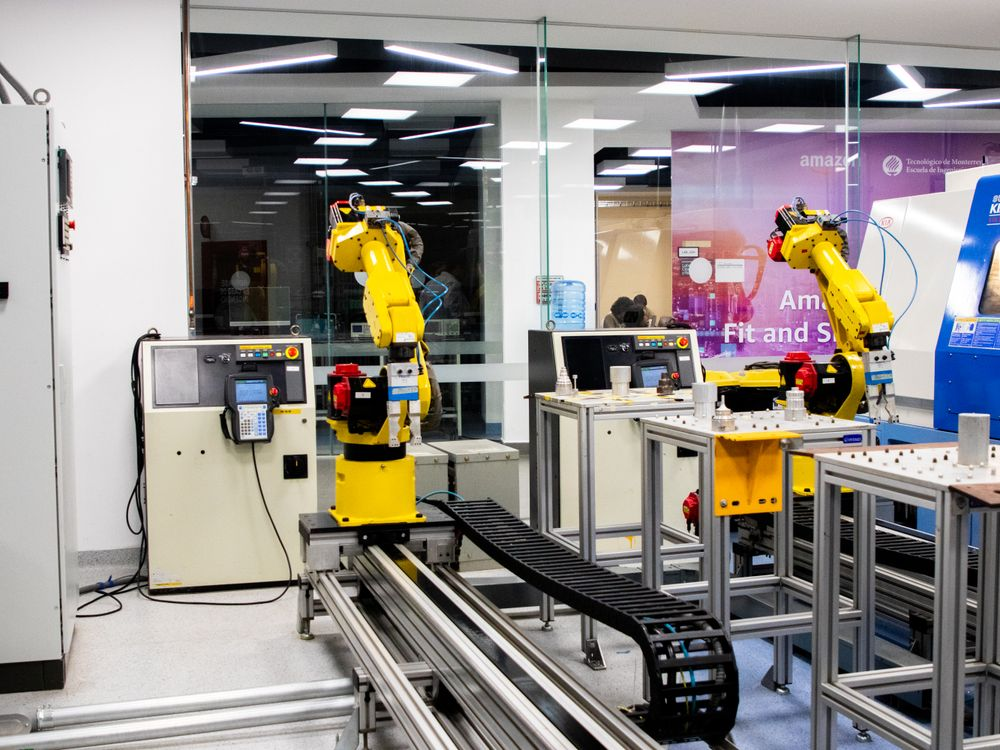
Existing training provision spans teaching facilities at New College Durham, a laboratory-scale lithium-ion pouch cell manufacturing line at Newcastle University and clean room simulation. Learners can therefore encounter representative production equipment and controlled-environment procedures as well as classroom material. The laboratory-scale line provides practical exposure to processes used in battery manufacture; it is not described as a production line supplying commercial cells.
Cell manufacturing comprises interdependent processes in which material handling, electrode preparation, assembly and subsequent testing affect consistency and safety. Operators must follow defined procedures, recognise deviations and understand why contamination control or incorrect processing conditions can compromise a later production stage. The funded academy will build on existing practical facilities, although Newcastle has not specified which additional machines, if any, will be purchased through this award.
The academy’s next programme will include Higher Technical Qualifications at Levels 4 and 5, building progression routes beyond entry-level training. Flexible modular learning is also planned, alongside professional development and Train the Trainer provision. The latter is intended to expand the number of people who can deliver technical instruction, which can become a practical constraint when a manufacturing sector recruits or retrains employees faster than conventional courses can accommodate.
Flexible modular courses could allow factories to release staff for training in shorter periods, rather than depending solely on extended programmes away from production. Their practical value will depend on the competencies covered, how those competencies are assessed and whether the timetable fits operating shift patterns. Newcastle says the new provision will be shaped with regional industrial partners, but participation numbers and the schedule for the expanded courses have not yet been published.
The course expansion will also have to bridge battery science and day-to-day production work. Technicians need to interpret manufacturing instructions, work within safety and quality procedures, and identify conditions that fall outside approved process limits. Engineers and production specialists must understand equipment behaviour, measurement uncertainty and the effect of manufacturing variation on cell performance. Those demands differ among cell chemistries and factory designs, so practical training must develop transferable skills as well as familiarity with particular teaching equipment.
Professor Chris Day, vice-chancellor and president of Newcastle University, said the expanded offer would build on the existing partnership with New College Durham and AESC. He identified Levels 4 and 5 training as a way to help learners develop more advanced capabilities. Dr Matthew Armstrong, reader in control of electrical power and the university’s principal investigator, has emphasised the combination of higher and further education expertise in the programme, including work through Newcastle’s Institute of Electrification and Sustainable Advanced Manufacturing.
The North East already has commercial battery manufacturing activity, including AESC’s Washington operation, alongside training and research institutions. The academy expansion is intended to widen the pool of technically qualified staff available to such employers and prospective suppliers. The award does not establish a forecast for additional factory jobs or completed qualifications; measurable workforce outcomes will depend on course delivery and participation by employers and learners.
Dr Valentina Gentili, director of the Battery Innovation Programme, has linked the investment to nationally accredited, industry-focused training across England. Newcastle and New College Durham will use their £1.2 million allocation to develop the next phase of the academy, while the two other regional initiatives account for the remainder of the £3.7 million total. Further delivery milestones, enrolment figures and qualification outcomes have not yet been confirmed.