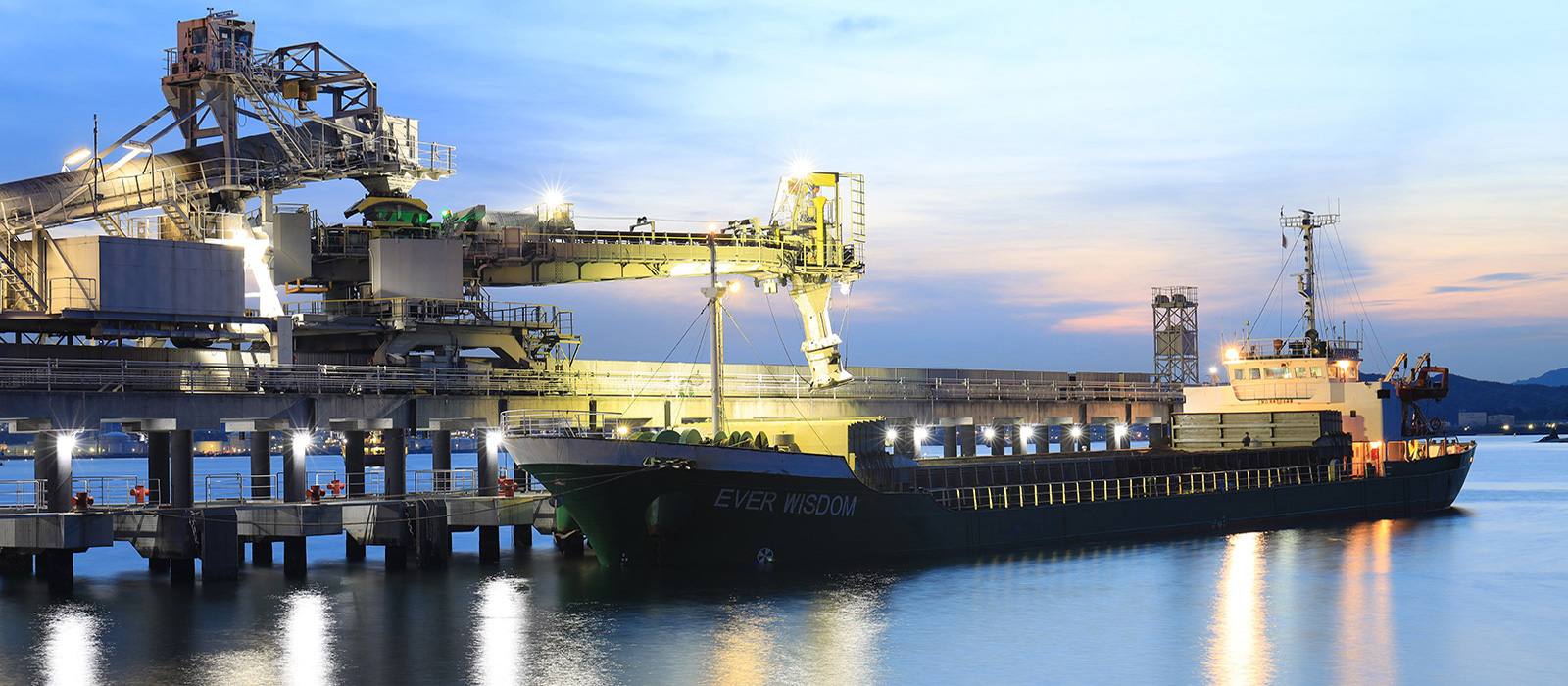
TIER IV has begun a collaboration with Shunan Bulk Terminal to develop autonomous dump truck transport at the Port of Tokuyama-Kudamatsu in Japan’s Yamaguchi Prefecture. With support from chemicals manufacturer Tokuyama, the partners intend to automate a defined route between bulk material storage and the company’s in-house power generation facilities. They are targeting driverless operations by the end of 2028; the current work is a development programme, not an announcement that unmanned trucks are already handling cargo at the port.
Shunan Bulk Terminal unloads, stores and dispatches imported bulk energy resources, including coal and biomass fuels. Tokuyama uses those materials to produce electricity and steam for industrial operations manufacturing chemicals and advanced electronic materials. The transport route is therefore part of an operating production supply chain rather than a passenger or public-road mobility project. Its function is to move fuel from an intermediate logistics site to the facility where it is consumed, in a sequence governed by port deliveries and plant demand.
The existing movement is performed by trucks with drivers. TIER IV and Shunan Bulk Terminal will combine autonomous driving development with the terminal operator’s knowledge of its route, cargo and scheduling requirements. The programme includes the technologies and operational arrangements needed for the site environment, although the partners have not published a detailed sensor specification, vehicle count or automated shift schedule. The stated objective is to remove the need for a driver on the selected movement while maintaining the continuity of material supply to Tokuyama’s power facilities.
Bulk terminal routes present operating conditions that differ from public-road passenger transport. A truck may share space with loading equipment, service vehicles and staff, while stockpiles and handling activity can change the working layout. Vehicle load influences braking and traction, and dust or rain may complicate the interpretation of sensor data. These are engineering considerations for an autonomous bulk haulage system, not reported faults at Shunan Bulk Terminal. The partners have yet to specify the sensor package, vehicle configuration or permitted operating conditions for this installation.
Autonomous control also has to fit the material handling cycle. A vehicle cannot be dispatched solely because its route appears clear: the loading location must have material ready, the receiving point must be able to accept it and the resulting trip must not obstruct other terminal operations. Coordinating those steps generally requires communication between transport scheduling and the industrial process receiving the cargo. The announcement describes work on a site-specific operational framework but does not claim that a complete automated dispatch or plant integration system has been installed.
TIER IV has developed autonomous driving applications around Autoware, an open-source software platform. Its contribution here is to be integrated with Shunan Bulk Terminal’s knowledge of the defined route and of the bulk cargo transport operation. Core perception and driving functions still require site-specific testing of vehicle dynamics, obstacle handling, stopping behaviour and the means of recovering from an interrupted journey. The use of an established software platform is not evidence that a loaded truck has already completed driverless service at the port.
The partners also plan to use Idemitsu Renewable Diesel, supplied by Idemitsu Kosan, a shareholder in Shunan Bulk Terminal. They say the fuel choice is intended to reduce greenhouse gas emissions associated with vehicle movements. That is a separate operating objective from autonomy, and the two effects should not be presented as interchangeable. Driverless operation does not itself establish a reduction in fuel consumption or carbon emissions, while the net benefit of a renewable fuel depends on its feedstock, production pathway and accounting method. No quantified emissions reduction was disclosed.
Tokuyama provides a defined industrial destination for the route. The imported fuels are used in its in-house power generation facilities, making consistent movement from terminal storage an element of the company’s wider materials supply. The release does not identify the supervision model, contingency vehicle arrangements or requirements for restoring service after an automated truck stops. Those details will need to be established alongside the transport technology if routine material movement is to continue without an onboard driver.
Shunan Bulk Terminal’s operation offers a repetitive route between known industrial facilities, but the economics of driverless movement will depend on trip volumes, equipment costs, infrastructure changes and supervision requirements. The companies have not released an investment figure, expected labour saving or quantified productivity estimate. Their collaboration covers development of both the technology and the operating framework, with the target of removing an onboard driver from the specified movement by the end of 2028.
The partners intend to use their experience from the initial route to examine comparable transport operations around Tokuyama-Kudamatsu. Such an extension would require separate operating analysis: traffic patterns, vehicle interactions and site interfaces differ across terminals, even where the haulage function is similar. Shunan Bulk Terminal’s longstanding handling of coal and biomass gives the trial a practical setting, but successful operation elsewhere is a future possibility rather than an agreed deployment programme.
The stated target is driverless operation on the initial transport route by the end of 2028. Testing and commissioning must still establish the vehicle’s performance under the terminal’s actual loading, traffic and environmental conditions. Any later extension around the port would require separate route and operational verification. The current agreement therefore covers a defined industrial fuel movement, not conversion of the wider port fleet.