Higher throughput offers little advantage if food quality becomes less predictable. Ingredient variation, hygiene failures, and changes in product texture can offset gains from faster equipment, particularly as manufacturers introduce new formulations and attempt to reduce energy, water, and chemical consumption.
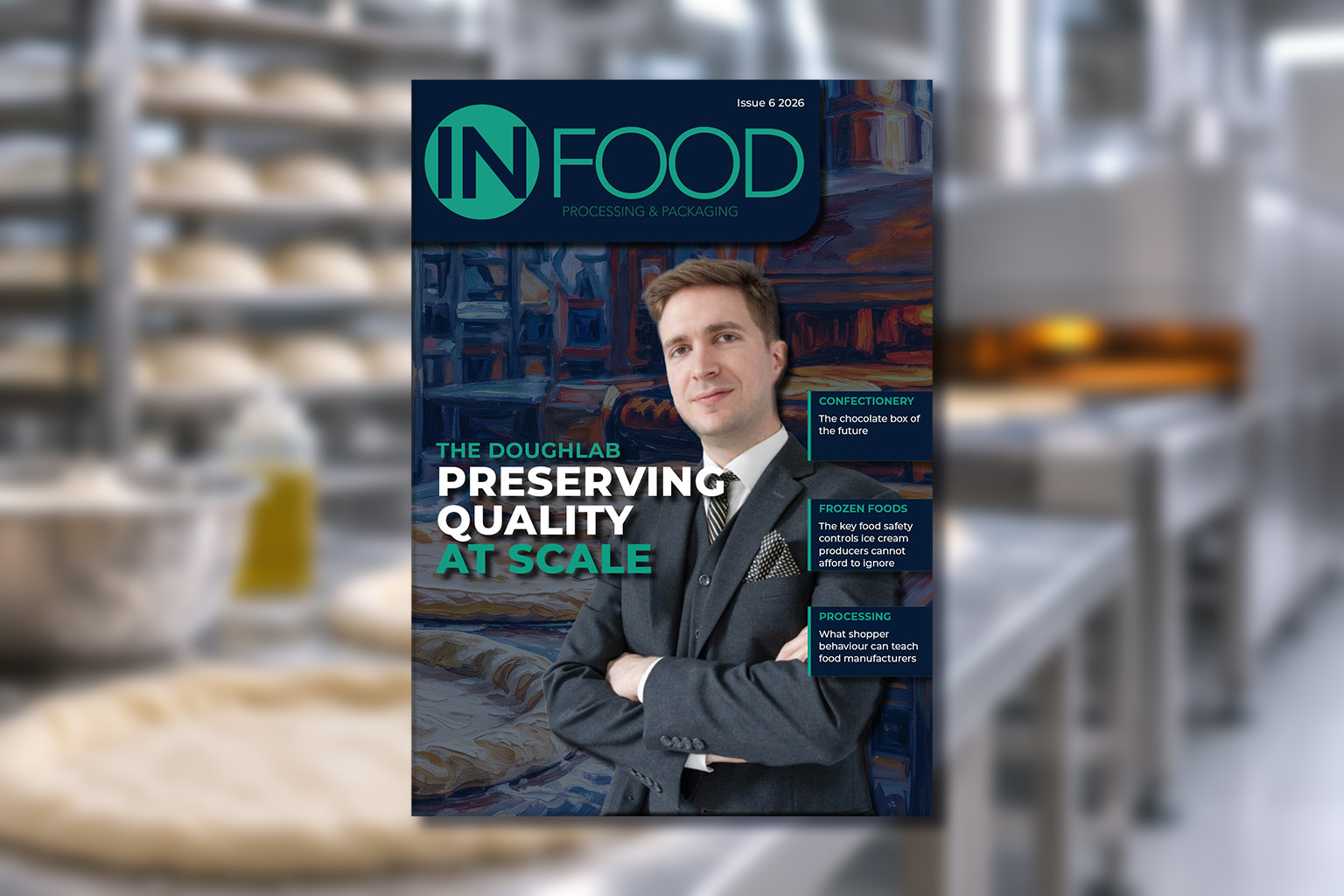
The November 2026 edition of IN Food examines those constraints through production technology, ingredient development, and process control. In its cover interview, Josep Zara, co-founder and CEO of Hungarian pizza producer The DoughLAB, explains how the company manages 48-hour sourdough fermentation before hand-stretching and partial baking. Liquid-nitrogen freezing then helps limit the formation of larger ice crystals, preserving dough structure and toppings before final preparation in foodservice kitchens.
Manual stretching remains part of the process, with corresponding labour and space requirements. The approach illustrates the compromises involved when increasing production capacity without fundamentally changing the product.
Raw material substitution introduces different technical considerations. Reddie & Grose examines patents involving fermented fava beans, cell-cultured cacao, and plant-based substitutes for conventional chocolate ingredients. Point74 reports that plant-based products account for 13% of development activity across its sample of 18 customers, compared with 11% in 2025. The figures are confined to that customer group, but indicate additional development activity requiring control of formulations, ingredient specifications, and supplier information.
Cleaning systems present another opportunity to reduce operational inputs. At Yeo Valley’s Yoxter Organic Farm, a trial of Oxi-Tech’s Pulse Oxidation technology reportedly reduced chemical and hot-water use by 75% at the highest replacement ratio, with hygiene performance maintained during the evaluation. The Ice Cream Alliance’s examination of HACCP, contamination after pasteurisation, and temperature records reinforces the importance of matching process changes with appropriate controls.
The edition also covers packaging performance in the retail environment, new materials, and investments in automated sauce filling. Across these developments, repeatability under normal operating conditions remains central to manufacturing performance.