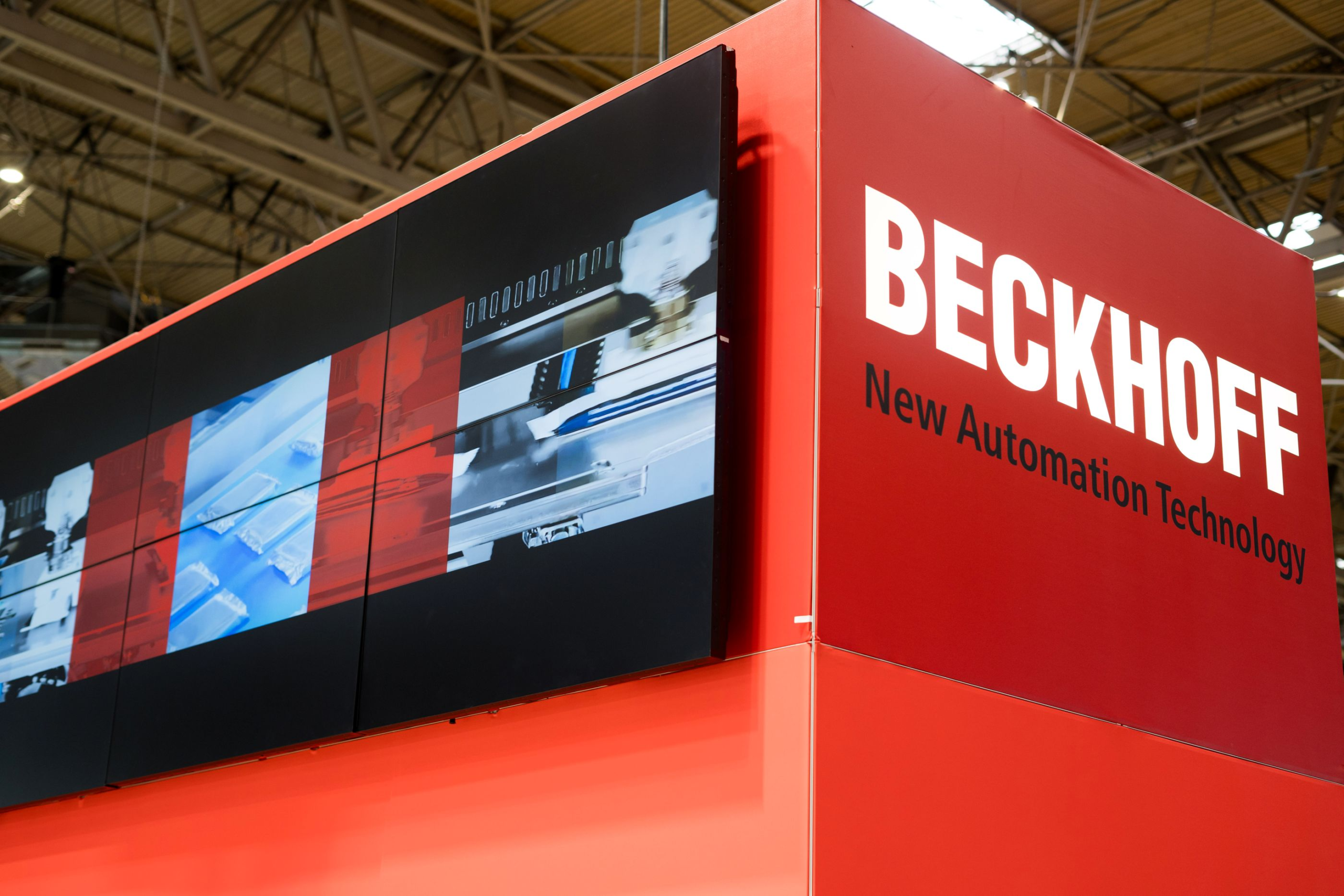
Beckhoff UK & Ireland will demonstrate how integrated automation technology can coordinate building services, energy monitoring and electric vehicle charging at EMEX 2026, taking place at ExCeL London on 25 and 26 November.
The industrial control specialist plans four demonstrations on stand D29, covering applications including EV charging, energy measurement and monitoring, and integration with third-party electricity meters.
Beckhoff will exhibit alongside IAconnects, a long-standing Solution Provider specialising in building controls, condition monitoring and Internet of Things integration. The companies will demonstrate how information from different building systems can be brought together for operational monitoring and control.
The planned displays centre on Beckhoff's PC-based automation architecture, which combines industrial computing hardware, distributed input and output equipment, communication interfaces and control software.
Buildings frequently contain separate systems for heating, ventilation, air conditioning, lighting and electrical distribution. Each may use different controllers, communication methods and operating schedules, making it difficult to coordinate their behaviour across a complete facility.
Energy monitoring systems can introduce another layer of information, collecting electricity consumption data from incoming supplies, distribution boards or individual pieces of equipment.
Bringing these measurements into the building automation environment allows electricity use to be examined alongside information about operating conditions. A change in demand can then be compared with equipment status, occupancy or other recorded variables.
Beth Ragdale, Software Manager at Beckhoff UK & Ireland, said: "Rising energy costs, net-zero targets and increasingly stringent regulations mean effective energy management is more important than ever."
The company will use EMEX to demonstrate how its control technology can support energy measurement and management. Its wider portfolio includes industrial measurement terminals and software designed to collect, process and visualise electrical information.
Electrical monitoring provides several different measurements. Energy consumption records the quantity of electricity used over time, while power measurements indicate the rate at which electrical energy is being consumed or supplied at a particular moment.
Voltage and current measurements provide additional information about electrical operating conditions. More detailed systems can also capture power factor, frequency and other parameters used when assessing electrical equipment or distribution arrangements.
The usefulness of these measurements depends on their location within the installation. A meter at the incoming electrical supply provides an overall figure, but cannot necessarily distinguish electricity consumed by lighting from that used by ventilation equipment, production machinery or vehicle chargers.
Additional measurement points can provide a more detailed breakdown of consumption. Their placement must be considered alongside electrical safety, measurement accuracy and the communications infrastructure needed to transfer readings to the monitoring system.
Where information is collected from several parts of a building, software can compare consumption during different operating periods. A system might identify equipment continuing to draw power when a facility is otherwise unoccupied or record changes associated with different production schedules.
Such observations require interpretation before corrective action is taken. An increase in electrical demand may reflect legitimate operating conditions rather than an efficiency problem, and measurements must be assessed against the activities taking place at the time.
Beckhoff's open control architecture is designed to support communication with equipment using different industrial and building automation technologies. The actual interfaces available in a project depend on the installed devices, supported protocols and system configuration.
Interoperability can reduce the need to examine information separately through several proprietary applications, although exchanging data does not automatically give one system control over every connected device.
Some interfaces may provide monitoring information only. Others can support commands or changes to operating settings, provided the connected equipment permits those functions and the integration has been engineered appropriately.
Clear distinctions between monitoring and control are necessary when integrating building services. Commands affecting heating, ventilation or electrical equipment must operate within the limits and safety requirements of the relevant systems.
IAconnects contributes experience in connecting information from building management systems, sensors and other equipment. Its IoT integration technology can provide links between distributed assets and applications used to monitor building performance.
The two companies will demonstrate complementary approaches to connecting building information with the systems used to manage a facility. A completed installation may require configuration work across several software and hardware platforms before information can be exchanged reliably.
EV charging introduces additional requirements because electrical demand can change substantially as vehicles connect, charge and disconnect throughout the day.
The total charging capacity available at a site depends on its electrical infrastructure, connection arrangements and the power required by other equipment. Simultaneous operation of multiple chargers may need to be considered when determining how charging loads are managed.
An integrated control system can provide information about charging demand alongside consumption elsewhere in the building. Where appropriate equipment and control interfaces are available, this information may support charging schedules or other load management arrangements.
The effectiveness of a charging strategy depends on the available electrical capacity, vehicle requirements and the capabilities of the charging infrastructure. A monitoring platform alone does not increase the power available from the site's electrical connection.
Energy management is also relevant to corporate reporting. The UK's Streamlined Energy and Carbon Reporting framework requires organisations meeting specified criteria to disclose energy use and associated emissions information.
Metering and monitoring systems can support the collection of data used in those disclosures, although reporting obligations also require appropriate organisational boundaries, calculation methods and record keeping.
The requirements differ according to the type and size of organisation. Installation of monitoring equipment does not itself establish that the resulting reporting process complies with the applicable rules.
Combining energy information with building controls can also assist maintenance teams. Unexpected consumption may prompt investigation of equipment operating outside its intended schedule or changes in the performance of an electrical or mechanical system.
Identifying the cause of such changes requires information about the relevant equipment and operating conditions. A measurement may indicate that further investigation is necessary without establishing the underlying fault.
Beckhoff's exhibition programme will demonstrate selected applications of integrated monitoring and control, rather than a completed building deployment with independently measured energy savings.
The proposed displays are intended to illustrate the flexibility of its PC-based automation technology and the contribution of IAconnects' integration capabilities. The performance of an installed system would depend on the building equipment, measurement infrastructure, software and controls selected for the application.
EMEX 2026 takes place at ExCeL London on 25 and 26 November, with Beckhoff scheduled to present its building automation and energy management demonstrations on stand D29.