CCP Gransden, the University of Sheffield Advanced Manufacturing Research Centre (AMRC) and Sigmatex are developing a connected production route for thermoplastic aerospace composites. Their two-year Project OPTIMA programme brings together tape production, engineered textile structures and forming on industrial equipment, with digital records intended to link material and manufacturing information for each demonstrator component.
OPTIMA stands for Optimisation of Thermoplastic Composites Manufacturing with Intelligent Automation. Funding comes through the Aerospace Technology Institute SME Programme, supported by Innovate UK and its programme partners. CCP Gransden is leading the work, while the AMRC and Sigmatex contribute different stages of material manufacture and process development. Combining those stages gives the partners a route to test material and forming performance using the same demonstrator parts.
Thermoplastic composites combine reinforcing fibres with polymer matrices that soften when heated and solidify again on cooling. That processing behaviour can permit rapid forming and consolidation without the chemical cure cycle associated with many thermosetting resin systems. The achievable production rate remains dependent on material format, heat transfer, tool geometry, consolidation pressure and cooling. Complex fibre architectures can also present challenges when fabric is formed into curved or deeply shaped aerospace components.
The AMRC will develop bespoke unidirectional thermoplastic tapes using its new dual-mode thermoplastic processing line. These tapes arrange reinforcement predominantly in one direction, allowing the fibres to be positioned in line with the principal loads expected in a finished component. Material modelling and simulation will be used to examine manufacturability as well as performance. The processing characteristics of the tape then influence the fabric conversion and forming operations carried out by the other partners.
Sigmatex will convert the tapes into engineered woven structures intended for rapid forming. Textile architecture influences how reinforcement moves during shaping, how fibres remain oriented within the part, and how readily a fabric conforms to tooling. Choosing a weave involves balancing the freedom of fibres to move during forming with the orientation needed to carry loads in the finished component. Sigmatex will also explore in-line monitoring and adaptive control, connecting the material handling stage to the conditions used in subsequent forming operations.
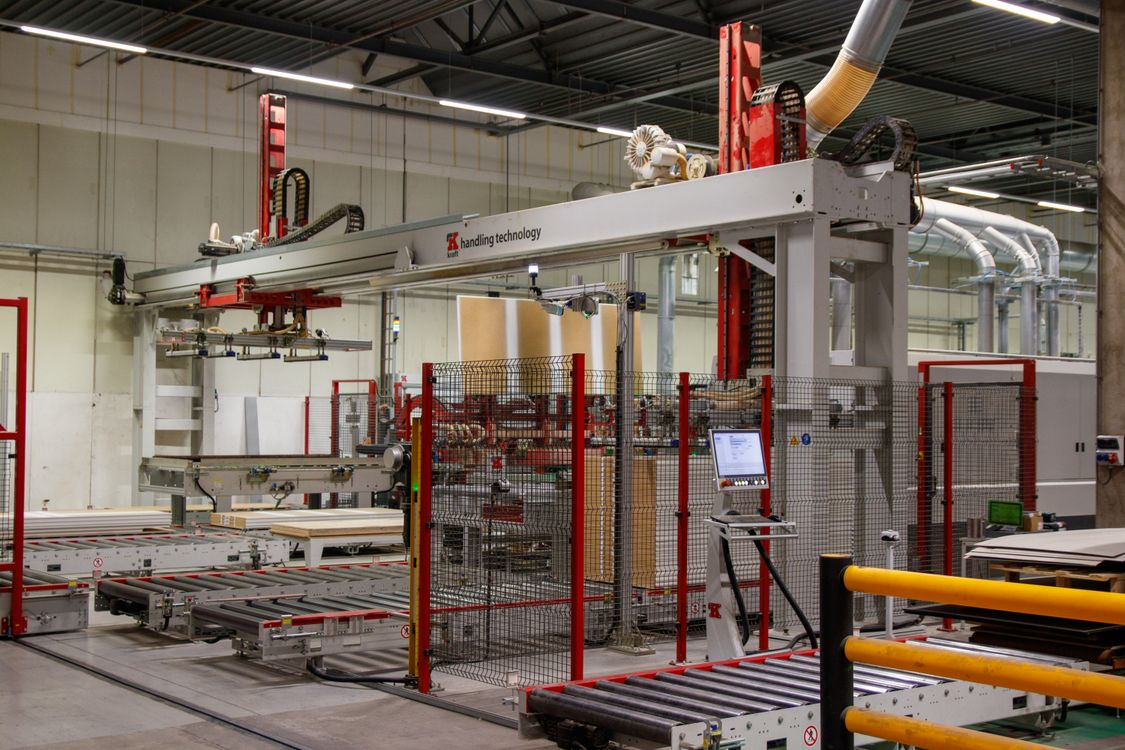
CCP Gransden will use the materials to manufacture aerospace demonstrator components in its high-rate manufacturing cell, centred on a 1,100-tonne ENGEL V-duo platform. The equipment provides a production-scale setting in which fabric construction, applied pressure, heating, forming and cycle conditions can be investigated together. The demonstrators will help establish how tape and fabric choices behave under the loads and temperatures of a larger forming press. Repeating the process across components should also reveal how variations in incoming material affect part quality and the consistency of the finished structure.
Process monitoring will accompany production-scale forming, with the partners exploring automation, machine learning and adjustments to operating settings. Data collected during heating, pressing and cooling can be compared with inspection results to identify variations between components. Linking those measurements with fabric and tape records will allow the team to trace a demonstrator’s processing history back through successive manufacturing operations, supporting evaluation of repeatability across multiple parts.
Every demonstrator is intended to receive a digital product passport recording material provenance, fabric manufacture, component processing, inspection data and relevant lifecycle information. The resulting digital thread is designed to preserve the relationship between a finished part and the production decisions that created it. This can support traceability through a multi-company supply chain, particularly where an aerospace customer needs to establish which material batch, process settings and inspection records relate to a particular manufactured component.
Thermoplastic processing also offers the possibility of reheating and reforming compatible polymer matrices, giving material designers different repair and recycling options from those available with cured thermoset systems. Any reprocessing route must still preserve the fibre reinforcement and meet the mechanical properties required for aerospace use. OPTIMA’s forming trials will provide practical measures of cycle behaviour, scrap generation and consistency as the partners assess whether the selected material architecture can support higher-rate manufacture.
CCP Gransden and Sigmatex are due to present OPTIMA at the Advanced Engineering exhibition in Birmingham on 4–5 November. The partners will then continue developing tapes, weaving architectures and production-scale demonstrators on the 1,100-tonne ENGEL V-duo cell. Component inspection and the linked digital records will allow results from material batches and forming cycles to be compared as the manufacturing route is developed.