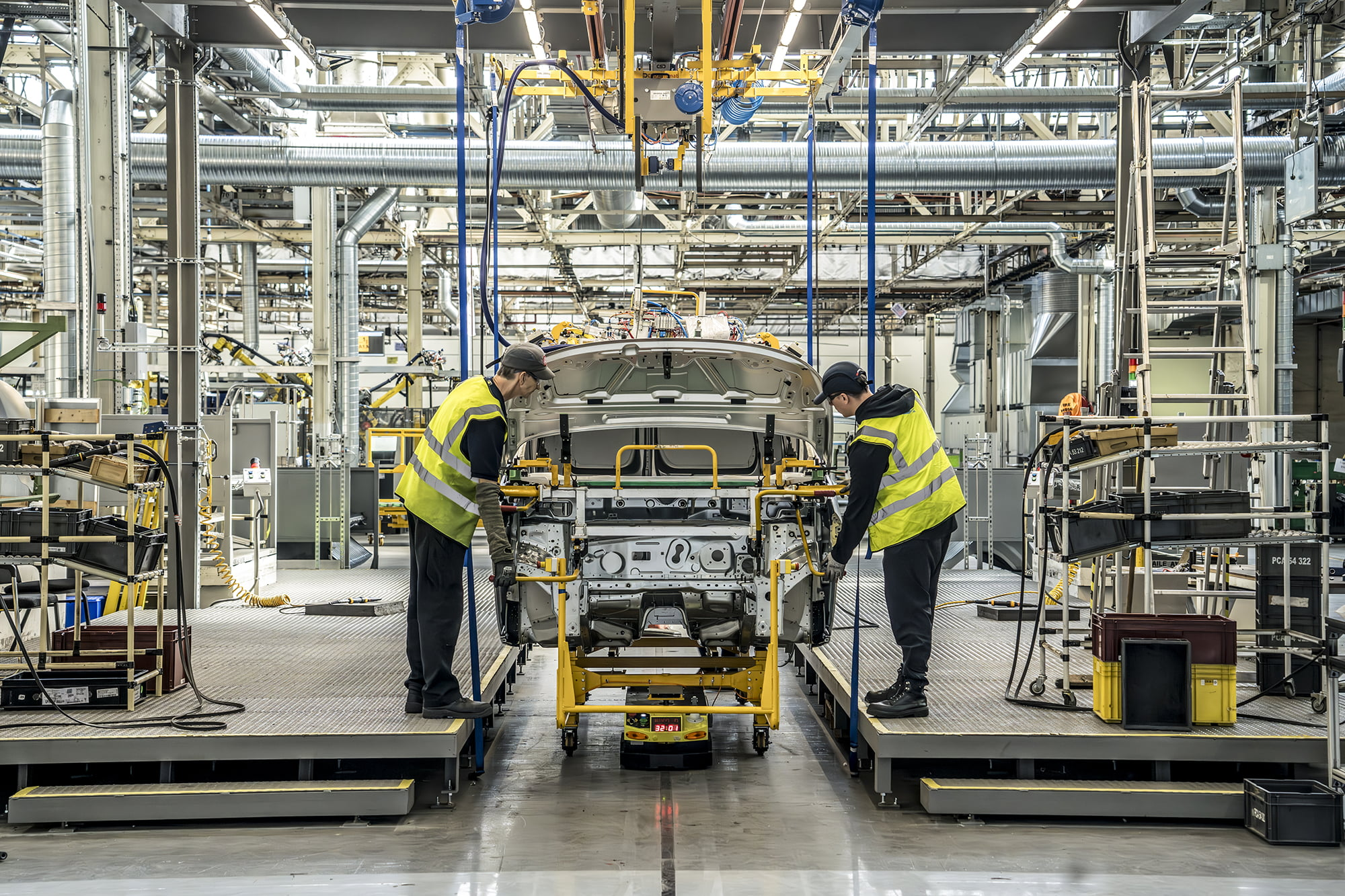
The Society of Motor Manufacturers and Traders (SMMT) has recorded 74,031 cars and commercial vehicles built in the UK during September, a 36.3% increase from the same month last year. Car assembly accounted for 70,831 units, up 38.6%, while commercial vehicle production fell by 0.9%. The monthly increase is substantial, but it is measured against a September 2025 affected by the cyber incident that stopped production at the country’s largest automotive employer.
September’s 70,831 cars marked the strongest output for that month since 2023, while the growth rate for total vehicle production was the highest since August 2022. Across January to September, however, UK plants built 564,537 cars and commercial vehicles, a 3.0% decline on the same period of 2025. The year-to-date measure captures factory output beyond the disruption affected comparison that drove September’s large percentage rise.
Electric and other electrified models supplied a significant proportion of September’s assembly volume. Their combined output increased by 22.5% and represented 42.3% of cars manufactured during the month. The electrified category covers more than battery electric vehicles alone, so the share cannot be interpreted as the proportion of wholly electric cars. The SMMT also reports that 70.1% of electrified models made in the UK were exported.
The wider manufacturing base remains organised primarily around overseas demand. Some 76.7% of September car output was destined for export. The European Union received 57.5% of exported cars, followed by the United States at 16.8% and China at 4.4%. Shipments to the EU rose 12.7% year on year, while those to the US increased 234.8% and those to China increased 357.7%. The much larger percentage increases in the latter two markets partly reflect lower comparative volumes, particularly in China.
Factory production counts vehicles completed on assembly lines, whereas registrations and retail sales measure different points in the market. Output can recover quickly when a plant resumes work after a stoppage, changes its model mix or clears deferred production. Sustained recovery will therefore depend on subsequent monthly factory schedules and demand for the vehicles allocated to British plants, rather than the September comparison alone.
Commercial vehicle factories experienced a different month. Their export production was 1.6% higher, but output for the domestic market fell 2.6%, leaving a 0.9% overall decline. The year-to-date decrease of 46.7% is much sharper, reflecting structural changes in that manufacturing segment. A single stronger export month is insufficient to reverse the effect of changes to factory operations and the range of vehicles made in Britain.
The independent light-vehicle forecast cited by the SMMT now projects 731,000 units in 2026, down 2.3% on the preceding year and below the earlier mid-year expectation. For 2027 it projects 752,000 units, supported by new model launches, predominantly electric vehicles. Achieving those volumes will depend on production schedules, component supply and demand as manufacturers introduce the new vehicles.
Vehicle manufacturing relies on long investment cycles in plant tooling, body assembly, paint systems, battery integration and supplier production. A new model typically requires coordinated changes across equipment, component specifications, workforce training and quality checks before a plant reaches its intended operating rate. Changes in the timing of launches or factory shutdowns can consequently move output substantially between reporting periods, without producing a corresponding change in the industry’s underlying productive capacity.
The SMMT has also identified potential barriers to European trade. Proposed European manufacturing-preference measures could affect the treatment of UK-built vehicles, although their final scope has not been settled. More demanding electric-vehicle rules of origin are scheduled for 2027 under the UK-EU trading framework. If manufacturers cannot satisfy the applicable origin thresholds, affected trade could face tariffs, with the industry estimating a potential shared annual bill of £1.4 billion across both directions.
The UK’s Zero Emission Vehicle mandate introduces another constraint on manufacturers’ planning. Its sales-mix requirements operate alongside factory investment decisions made several years in advance, during which tooling, supplier contracts and launch programmes are fixed. The SMMT is calling for a substantial change to the mandate because it considers the required sales trajectory ahead of consumer demand; the current policy remains the basis on which manufacturers must plan.
A large proportion of UK automotive employment and supplier activity depends on keeping assembly plants supplied and winning allocations for future models. The SMMT puts direct sector employment at 188,000 and its annual economic contribution at £18 billion. Changes to final-assembly volume can affect the utilisation of component plants, logistics networks and specialist engineering capacity, although the effect varies with domestic content and plant-level sourcing decisions.
September’s rebound restores some of the production lost in last year’s disruption, while the first nine months still show lower total output. The next factory figures will indicate whether the stronger car assembly rate continues, and scheduled model introductions in 2027 will test the sector’s ability to turn new investment into sustained production.