Envale UK has received a recommendation for planning approval for a proposed plastics chemical recycling and energy recovery development on Shireoaks Road in Worksop, Nottinghamshire, following assessment by county council planning officers.
Nottinghamshire County Council’s Planning and Rights of Way Committee is due to consider the application on 3 November 2026. Officers recommend granting permission subject to conditions and a Section 106 legal agreement, but councillors have not yet determined the application. Neither planning permission nor authorisation to operate the proposed plant has been granted by that recommendation.
The development would occupy the former Nottinghamshire Recycling site. Its proposed layout combines a chemical recycling facility, an energy recovery plant and an integrated materials recovery area. Two principal buildings would be linked by an enclosed conveyor system, while emissions infrastructure would extend to approximately 30 metres.
The chemical recycling element is designed to handle up to 20,000 tonnes annually of plastic material considered unsuitable for conventional mechanical recycling. A separate energy recovery facility is proposed for up to 24,369 tonnes of residual waste a year, with stated output of 2.5MW of electricity and 10MW of heat.
These are planned capacities and design figures. They are not evidence that waste has been processed, that electrical generation has begun or that the heat output has found a committed customer. The planning recommendation concerns whether the proposed scheme should be allowed to proceed, not its operating performance.
The applicant is working with Refiniti, whose proposed chemical recycling process uses pyrolysis and additional treatment of the resulting liquids. Pyrolysis heats suitable plastic feedstock in the absence, or near absence, of oxygen, breaking larger polymer structures into smaller hydrocarbon compounds. The output may include liquid, gaseous and solid fractions, depending on feedstock and processing conditions.
The resulting liquid is not automatically suitable for use as petrochemical feedstock. Mixed post-consumer plastics can contain contaminants, coatings, additives and substances that must be removed or controlled before the material can meet the specifications of a downstream industrial process.
Refiniti describes a purification system intended to remove unwanted components from plastic pyrolysis oil. The technical viability of using recovered hydrocarbons in new chemical manufacture will depend on the feedstock, purification performance, quality assurance and acceptance standards of the receiving processor.
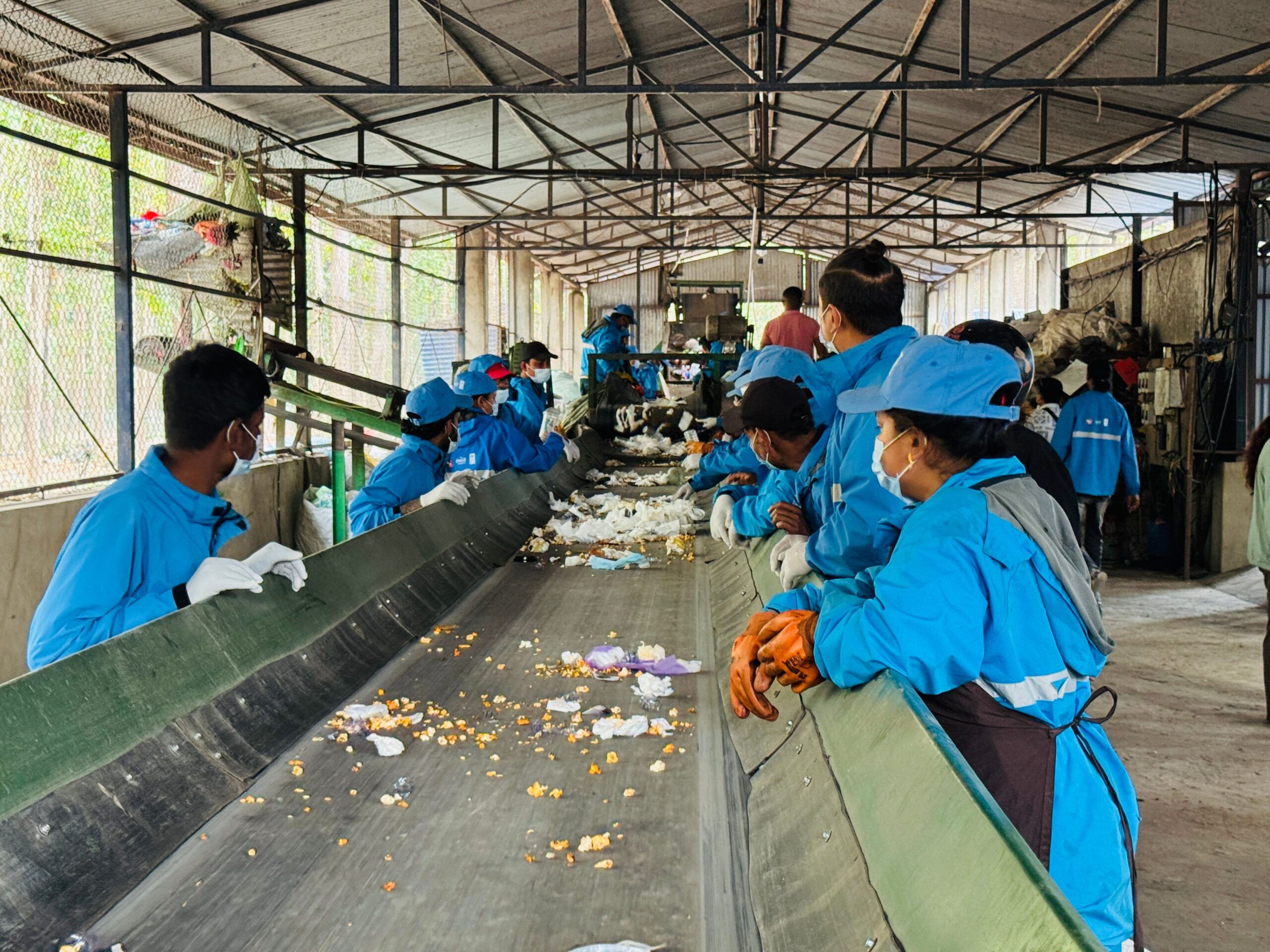
Sorting is therefore an important element of the proposed integrated arrangement. Materials must be separated into streams compatible with the selected treatment processes, and unsuitable fractions need other authorised outlets. The relationship between incoming waste composition, sorting losses and actual recovery yield cannot be established from headline annual throughput alone.
The proposed energy recovery plant would handle residual material directed away from recycling. Electricity and heat production would depend on the properties and available quantity of that fuel, the efficiency of the installed equipment and demand for any exported energy.
Although the stated 10MW thermal output indicates the scale of possible heat generation, useful heat supply requires appropriate transfer equipment, operating arrangements and a customer or process able to absorb it. No verified long-term heat offtake has been established in the available public coverage.
Combining waste sorting, pyrolysis and energy recovery on one site creates engineering interfaces between material reception, internal handling, process isolation and emissions controls. Enclosed conveyors can transfer material between buildings, but their use does not eliminate the need to manage fire risk, equipment maintenance and the different characteristics of incoming waste.
The scheme has attracted substantial local opposition. More than 900 objections have been reported, alongside a petition carrying 1,230 names. The Shireoaks and Rhodesia Against Plastic Pyrolysis group and Bassetlaw District Council have objected to the application.
Residents have raised concerns about emissions, pollution, traffic, noise, odour, fire and explosion risk and the proximity of the development to properties and other businesses. Opponents also argue that the surrounding area has changed since the original waste-related permission was granted in 2006.
Planning officers have assessed the proposed effects and consider that the development’s benefits include bringing previously developed land back into use and recovering value from waste. The recommendation is conditional, reflecting the need for controls over the development and its operation.
According to the reported committee assessment, the Environment Agency and Nottinghamshire County Council highways officers have not objected, subject to conditions. Their position should not be interpreted as a blanket approval of every technical or environmental aspect of the eventual plant.
The environmental assessment characterises the development’s greenhouse gas effect as a minor adverse impact over a 20-year period. A specialist consultant advising the planning authority agreed with that assessment. This finding does not support describing the overall development as automatically carbon neutral or emissions-free.
Planning and environmental permitting perform different functions. Permission to build or use land for a specified development does not replace the requirements for operating waste treatment, combustion or emissions-producing processes under the applicable environmental regime.
Project information indicates that a separate environmental permit would be required for the energy recovery operation. The precise permits, emission limits and monitoring provisions will need to be established through the relevant authorities before the proposed operations can begin.
The site shares an access road with Worksop Household Waste Recycling Centre, which is operated separately by Veolia on behalf of the county council. Envale’s proposal should not be described as an expansion of that council household collection service.
The planned project also remains subject to the detailed conditions and obligations attached to any eventual decision. The accessible public coverage does not establish that every design issue has been resolved or that construction contractors have been appointed.
The Planning and Rights of Way Committee is scheduled to meet at 10.30am on 3 November. Councillors may accept or reject the recommendation in accordance with the planning process. Until a decision is recorded, the scheme remains a proposal whose industrial capacity, emissions controls and construction timetable have not been realised.