ASML could account directly for 1.6% of the Netherlands’ gross value added in 2026, according to economists at ING. Their broader estimate reaches 2.2% when domestic supplier activity and associated investment are included. The figures describe the growing economic concentration around advanced semiconductor manufacturing equipment, but they are projections rather than audited full-year results.
ING’s assessment, published on 26 October, estimates the contribution generated by the Dutch lithography manufacturer and its domestic industrial network. It does not announce an additional machine order, a new production line or a Dutch government investment. Direct value added, the purchases made from Dutch suppliers and the creation of capital assets enter the wider model differently, so the 1.6% and 2.2% estimates must not be treated as interchangeable.
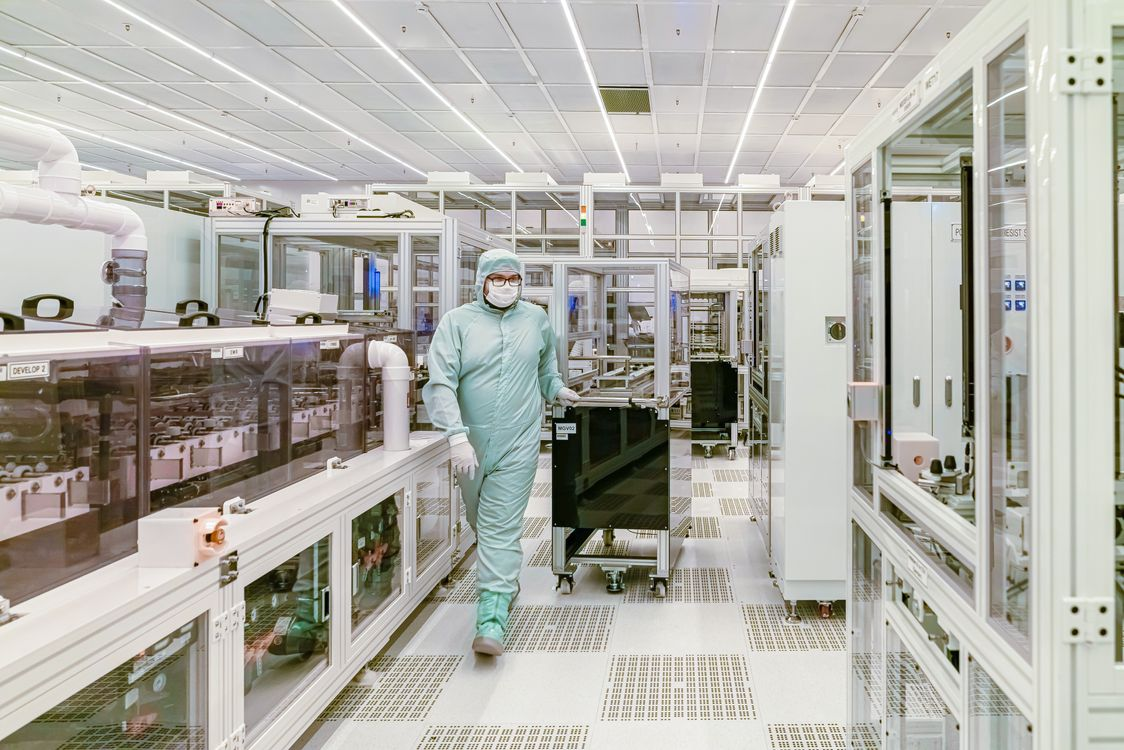
ASML designs and manufactures lithography equipment used to project intricate circuit patterns onto semiconductor wafers. Exposure optics must work with precision wafer stages, vacuum systems, light sources and sophisticated measurement and process-control software. These machines depend on long-term partnerships with specialist component producers, making the company’s production programme an important source of orders throughout a broader engineering supply chain.
ING estimates that ASML’s direct contribution to Dutch value added grew from around 0.1% in 1995 to 1.3% in 2025. Its provisional 2026 calculation uses the midpoint of €44.5bn from the company’s turnover expectations, together with the bank’s own forecasts. The resulting 1.6% share could change with actual annual results, the mix of work performed in the Netherlands and the final national accounts.
ASML reported revenue of €33.7bn in 2025, an amount ING compares with approximately half of the Dutch machinery industry’s annual turnover. That comparison gives a measure of the company’s industrial scale, but turnover is not the same as value added. The latter removes the costs of intermediate inputs before attributing the remainder to production, labour and capital in the relevant economy.
ING’s model treats about half a euro in worldwide ASML value added as arising from each euro of sales, before allowing for the share generated within the Netherlands. That adjustment recognises the country’s large manufacturing and R&D base while accounting for international operations and imported components. The result is a modelled domestic contribution, not a company-produced account assigning every euro of global sales to a Dutch location.
To estimate the larger 2.2% footprint, the economists add demand directed towards domestic suppliers and capital formation. Purchases of precision components, production equipment and engineering services can sustain other Dutch industries, while investment in software, facilities and research creates additional activity. Counting these relationships requires care because the same intermediate product can pass through several companies before reaching final assembly.
ING uses input-output relationships and machinery-sector averages where company-specific domestic sourcing data are unavailable. Imported content, the allocation of expenditure and suppliers’ own purchases can change the estimate. The additional 0.6 percentage points therefore represent modelled spillovers and investment effects rather than a measured increase in ASML’s direct share of the economy.
Semiconductor machinery is unusually dependent on a combination of advanced components and specialist skills. Lithography systems must coordinate optical exposure, wafer movement and process control to extremely tight tolerances. Even where final integration takes place in the Netherlands, critical materials and subassemblies may come from several countries. An expanding domestic industrial cluster therefore creates demand for facilities and personnel while continuing to depend on cross-border supply arrangements.
Research and development is central to that investment pattern because future lithography systems require work on optics, motion control, materials, light sources and software well before factory assembly. ING identifies R&D as a large component of machinery-sector capital formation, together with equipment, computing and buildings. Such expenditure supports high-skilled employment, although the broader productivity effects across unrelated businesses cannot be read directly from the 2.2% total.
Concentration also creates exposure to the semiconductor capital spending cycle. When chipmakers expand fabrication capacity, lithography orders can rise sharply; a change in the pace of investment or technology adoption can affect machinery demand. Restrictions on equipment exports to China, cross-border trade tensions and reliance on specialised components from outside the Netherlands can interrupt sales or production even when domestic factories are operating normally.
Domestic bottlenecks add a different constraint. Engineers, technicians, production facilities, grid capacity and suitable development sites all have to be available as the cluster expands. ING notes that the Dutch government committed €2.5bn in 2024 to improve conditions for the sector, yet skill and physical-capacity limitations remain considerations for future growth.
ING compares the potential concentration risk with Finland’s previous reliance on Nokia, while stressing that the Netherlands has a broader industrial base. ASML’s systems are sold to semiconductor manufacturers rather than directly to consumers, but the company remains exposed to customer investment programmes and technical competition. The latest estimates quantify its economic importance and the sensitivity that follows from a growing share of national industrial activity.