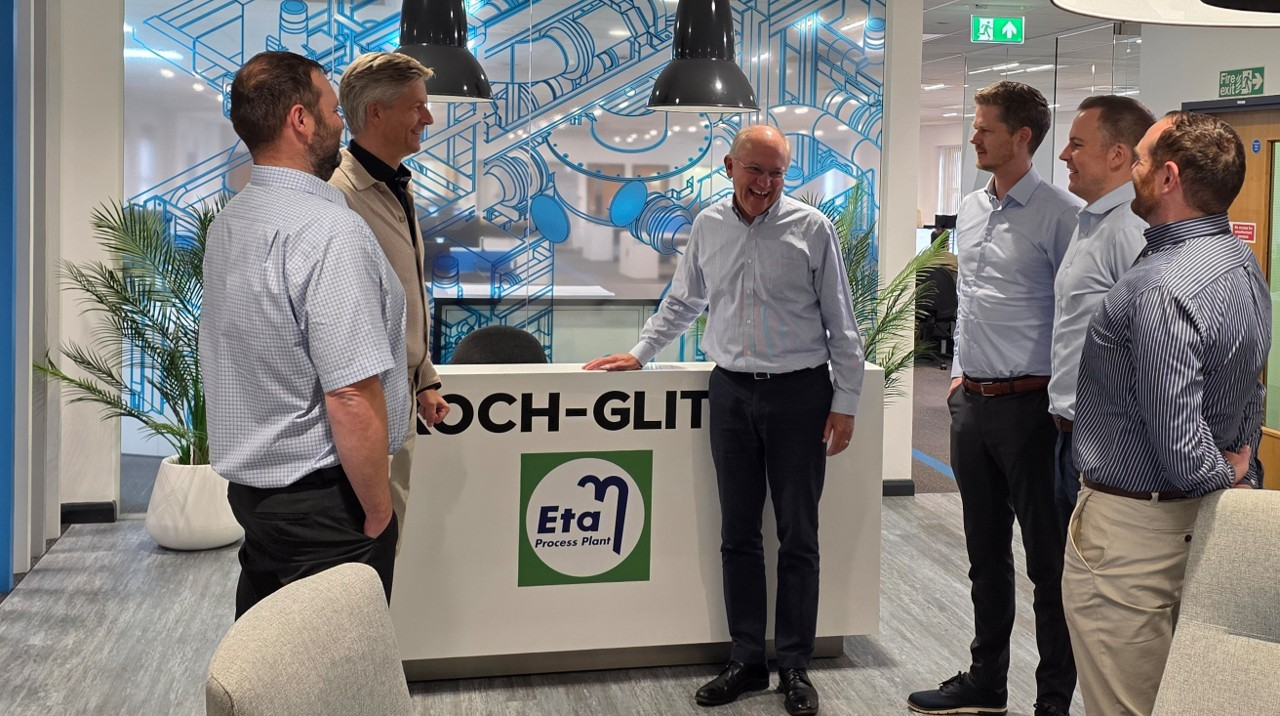
Techouse has entered into an agreement to acquire Stoke-on-Trent-based Eta Process Plant from Koch-Glitsch, extending the Norwegian engineering company’s planned range of water treatment systems for offshore and onshore energy installations. The proposed transaction, announced on 19 October, would combine Techouse’s filtration and sulphate removal capabilities with Eta’s experience in vacuum and gas-strip deaeration.
Eta Process Plant is being carved out of Koch-Glitsch, part of Koch Engineered Solutions within the privately held US industrial group Koch. The parties have agreed not to disclose the financial terms. The announcement confirms an agreement to acquire, not that the sale has completed or that ownership has already been transferred.
Once the transaction is completed, Eta is expected to become part of Techouse’s UK operation, which also has an office in Glasgow. No completion date, employment change, restructuring programme or new factory investment has been announced alongside the agreement.
Founded in 1972, Eta specialises in packaged deaeration equipment and complete water injection systems. Its operations are based in Stoke-on-Trent, while fabrication is undertaken through established manufacturing partners. The business manages engineering, procurement, installation and commissioning arrangements around those supplied systems.
Eta reports an installed base of more than 400 deaeration plants, operating in markets ranging from Alaska to Australia. The figure describes installations supplied over the company’s history and is not an order book or a forecast of new deliveries arising from the proposed ownership change.
Water injection is used in oil and gas production to maintain reservoir pressure and improve recovery from a field. Water entering the injection system may come from the sea, an aquifer or another approved source, but its composition has to be controlled according to the reservoir and equipment requirements.
Dissolved oxygen is one of the substances that can cause difficulties when seawater enters carbon steel pipelines and other susceptible equipment. Oxygen promotes electrochemical corrosion, while the effects of dissolved gases and contaminants depend on materials, temperature, operating pressure and the wider process chemistry.
Deaeration reduces the concentration of dissolved oxygen before the water is injected. Removing oxygen does not make untreated seawater suitable for every reservoir: suspended solids, sulphate, hardness and other constituents may require separate treatment, depending on the specification for the particular field.
Eta’s vacuum deaeration technology works by lowering the pressure around the liquid, reducing the equilibrium solubility of oxygen and allowing dissolved gas to leave the water. A packed tower increases the contact area available for gas transfer, while vacuum equipment removes the released gases.
The design must balance gas removal performance against vessel dimensions, pumping requirements and operating conditions. More than one treatment stage may be used where a low outlet oxygen concentration is required, but actual performance depends on inlet conditions and the equipment specification.
Gas-strip deaeration uses a different driving force. Water and an oxygen-poor stripping gas move through a contacting system, allowing oxygen to transfer from the liquid into the gas stream. Packed towers provide the contact area needed for the process, with the gas flow and water loading influencing the resulting separation.
Eta uses specialist packing technology in its deaeration designs and offers complete skid-mounted water injection systems. Offshore packages are designed within constraints involving weight, available deck space, maintenance access and power consumption, all of which affect the practicality of installing equipment on a platform or floating production facility.
Techouse already develops membrane deaeration equipment through a partnership with 3M Membrana. In that method, a gas-permeable membrane provides an interface through which dissolved gases can be removed from the water without the same direct gas-liquid contact arrangement used by conventional packed towers.
Its published product information describes offshore membrane systems capable of producing treated seawater with dissolved oxygen below 10 parts per billion under specified conditions. That is a capability claim for the company’s particular treatment systems, not a guarantee that every water source or new combined product will achieve the same concentration.
The two businesses therefore offer different approaches to oxygen removal. Their technologies may be selected according to water flow, the required outlet quality, space restrictions, energy use and maintenance considerations. No single method can be assumed to be superior across every installation.
Techouse also supplies sulphate removal units for water injection. Sulphate entering a reservoir can contribute to scale formation when it encounters incompatible dissolved ions, including barium and strontium. Deposits in equipment or reservoir flow paths can reduce system performance and require additional intervention.
Nanofiltration membranes offer one means of reducing sulphate and certain hardness constituents in seawater, while upstream filtration helps prevent solids from damaging or fouling the more selective membranes. These stages address different contaminants from the oxygen removed by a deaeration unit.
The order in which the processes are arranged matters. A treatment package may incorporate solids removal, sulphate reduction and deaeration alongside pumps, chemical systems and instrumentation, with each stage specified around the quality of the incoming and required outgoing water.
Techouse chief executive Svein Helge Pettersen said the company was familiar with Eta’s vacuum deaeration expertise through earlier sulphate removal projects. That existing relationship provides a technical basis for the transaction, although the statement does not announce a new customer contract or an integrated product already commissioned.
Giles Cobley, commercial leader at Eta Process Plant, pointed to the complementary nature of the companies’ deaeration, filtration and water injection systems. Offering customers several established process options could widen the range of treatment packages available to operators and engineering contractors once the transaction is completed.
The two businesses also bring different geographic relationships. Techouse identifies Europe and Asia as established markets, while Eta reports its strongest current position in the Middle East. Both serve energy projects, although Eta’s customer base extends across onshore and offshore applications and Techouse has a stronger offshore focus.
Managing projects in those markets requires coordination between process design and specialist suppliers. Fabrication partners must build equipment to the approved drawings and specifications, while the engineering contractor oversees inspection, documentation, delivery and integration with the wider plant.
Those responsibilities become demanding when packaged equipment must be transported and installed on offshore facilities. Vessel sizes, structural loads, pipework connections and access for subsequent maintenance can determine how a design is divided into transportable and installable units.
Any integration of Eta’s capabilities into Techouse will have to preserve the specifications and contractual commitments associated with existing projects. The proposed acquisition does not change the technical requirements of installed equipment or automatically qualify one company’s process designs for the other company’s applications.
As announced, the transaction is a proposed consolidation of established engineering activities rather than a new water treatment technology launch. It would expand the technologies and markets represented within Techouse, but the commercial benefits and any operational changes will become clearer only after completion and subsequent project delivery.
Completion of the carve-out is the next corporate milestone. Until then, Eta’s existing capabilities and installed base remain the basis for evaluating the transaction, with no disclosed purchase price, new production capacity or confirmed change to the company’s staffing.