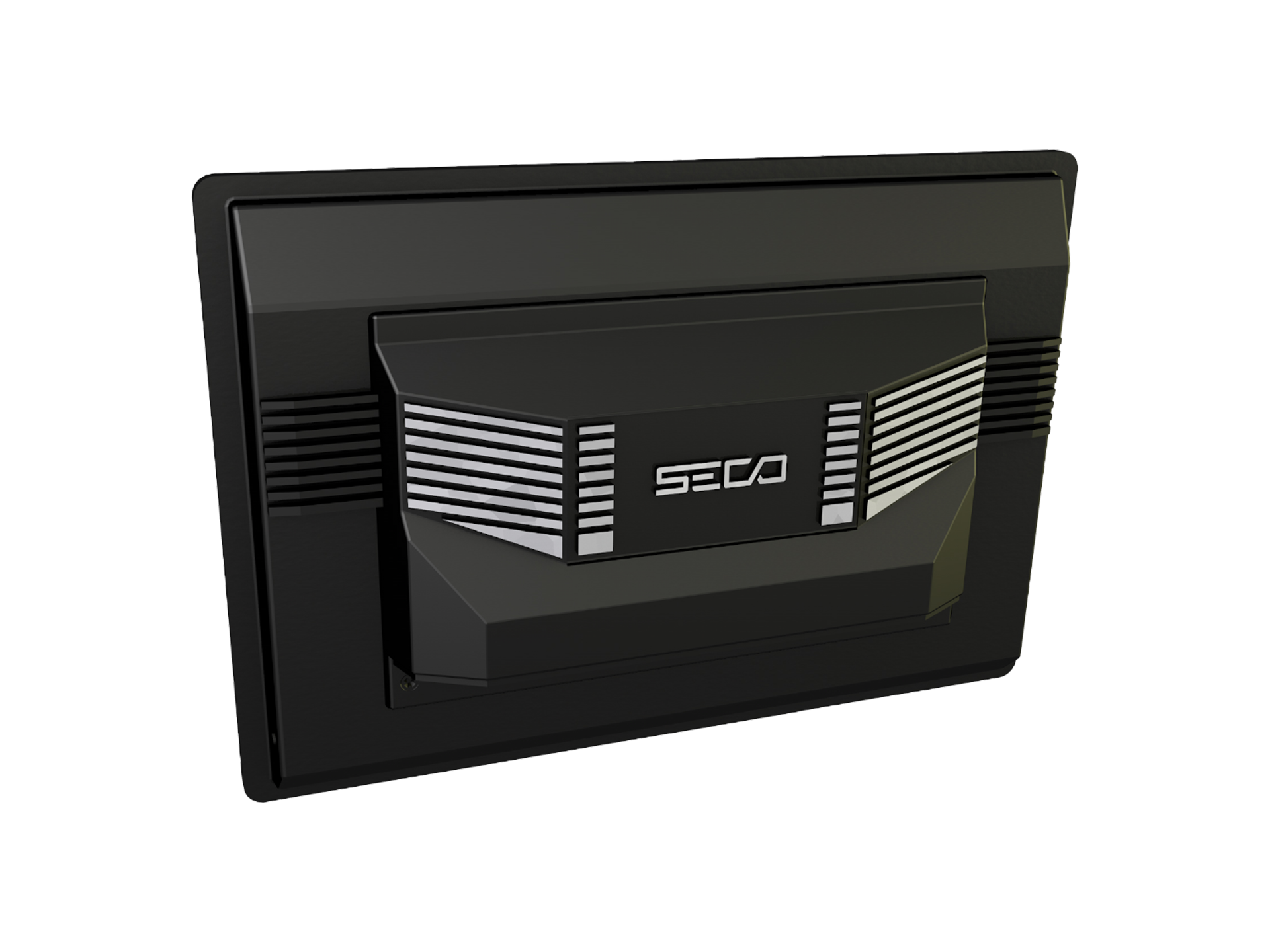
SECO has moved its Modular Vision 10.1 MX95 industrial human-machine interface into series availability following an early access programme, giving equipment manufacturers a commercially distributed platform for machine operation, monitoring and embedded data processing. The touchscreen system can now be ordered through DigiKey, including individual units and small quantities for integration testing.
The 15 October announcement establishes the transition into routine supply, rather than the first unveiling of the product. SECO presented the platform earlier in 2026 and opened pre-orders in May, allowing manufacturers to begin evaluating its hardware and software before the series production stage.
The MX95 integrates a 10.1-inch projected capacitive touchscreen, an NXP i.MX 95 applications processor, industrial interfaces and SECO’s Clea operating system. Bringing these functions into one platform is intended to reduce the engineering work involved in selecting, connecting and maintaining the separate elements of an operator interface.
The display has a resolution of 1280 by 800 pixels and a specified brightness of at least 400 nits. SECO quotes a backlight lifetime of at least 30,000 hours, a component characteristic that should not be interpreted as a guaranteed maintenance-free life for the complete HMI.
The NXP processor combines six Arm Cortex-A55 cores for applications with additional Cortex-M33 and Cortex-M7 cores serving other processing functions. An Arm Mali-G310 graphics processor supports the interface, while a dedicated neural processing unit provides hardware acceleration for suitable artificial intelligence workloads.
SECO identifies a theoretical neural processing capability of up to 2.0 TOPS. This is a peak processing specification, not a guarantee that a deployed application can classify images, detect defects or complete other tasks at a particular rate. Performance also depends on model design, memory use, data acquisition and software optimisation.
Machine interfaces traditionally display process variables, alarms and operating information, with commands passed to control equipment using the protocols supported by the installation. Local processing capacity can extend those functions to diagnostic analysis or machine vision, provided the necessary sensor information and application software are available.
Inspection illustrates the difference between computing capability and a complete industrial solution. A vision application needs appropriate cameras and illumination, a validated method of recognising acceptable and defective products, and a means of communicating results to the machine’s control system. An NPU can accelerate part of that processing without determining the accuracy of the overall installation.
SECO provides Ethernet, USB and serial interface options for connection with external equipment. The product family also supports industrial communications appropriate to embedded machinery systems, although a physical connector does not by itself guarantee compatibility with every controller or protocol used by a machine builder.
Existing machinery may rely on proprietary software or interfaces developed for a previous generation of touchscreen hardware. Replacing the HMI can therefore require changes to application code, communications and panel mounting, even where the new product offers a standardised base for subsequent equipment designs.
Power and environmental requirements must be assessed in the same way. The product literature specifies operation from 0°C to 60°C and a wide direct current supply range. Its suitability for a particular cabinet depends on heat dissipation, mounting, wiring and the environment surrounding the installed equipment.
The enclosure and mounting arrangement also determine exposure to moisture and dust. Protection attributed to a front panel does not extend automatically to rear connections or the entire assembled control cabinet, which remains subject to its own mechanical design and installation requirements.
The software foundation is Clea OS, SECO’s industrial operating system built using Yocto Linux. It provides a common environment for applications, system maintenance and device management, supporting manufacturers that need to deploy related software across a series of machines or equipment versions.
Connected equipment requires a method for distributing updates and managing configuration changes over its service life. A manufacturer may need to correct security issues or maintain compatibility with other systems after the original machine has been delivered, creating demands that extend well beyond initial software development.
Clea includes mechanisms for monitoring, management and software updates. Those capabilities can support controlled maintenance programmes, but their presence does not eliminate the need to test new software against the machinery configuration and establish procedures for interrupted updates or recovery.
Security functions built into the processor and software may help an equipment developer address applicable requirements, including those associated with the European Union’s Cyber Resilience Act. They do not independently establish conformity of a finished machine, nor do they amount to certification of every installed system.
The October announcement lists two standard configurations: 4GB RAM with 16GB eMMC storage, and 8GB RAM with 64GB eMMC. Selection depends on the requirements of the display application, connected processes and any embedded analytics that the manufacturer intends to run locally.
Access to low order quantities through DigiKey allows developers to test the interface with their own equipment before committing to a production programme. This may include checking physical fit, application performance, interface compatibility and operational stability under representative conditions.
A standardised platform can simplify subsequent procurement and software maintenance if the same equipment family is used across multiple machine variants. The advantage depends on configuration control and continued availability of compatible hardware, not simply on the existence of a common product name.
SECO is targeting industrial automation alongside other embedded applications, where products are often required to remain serviceable for years. The series release creates a route from prototype testing to normal ordering, while manufacturers remain responsible for validating the complete system in which the HMI is installed.
The company’s next commercial milestones will be customer integration and sustained use of the platform across production equipment. No number of units sold or installed in operating factories was disclosed in the October announcement.