KUKA and TD SYNNEX have agreed a European distribution arrangement that will initially give technology channel partners access to KUKA’s autonomous mobile robot portfolio in the UK, France, Spain and Benelux. Collaborative robots, education packages and industrial software are expected to follow as the relationship expands into additional products and territories.
TD SYNNEX will support partners with technical training, enablement and demand generation while KUKA supplies the automation portfolio, creating a route to market more commonly associated with enterprise computing and networking than physical automation. That channel model places greater emphasis on resellers and integrators being able to combine robotics with the connectivity, computing and software systems already used by industrial customers.
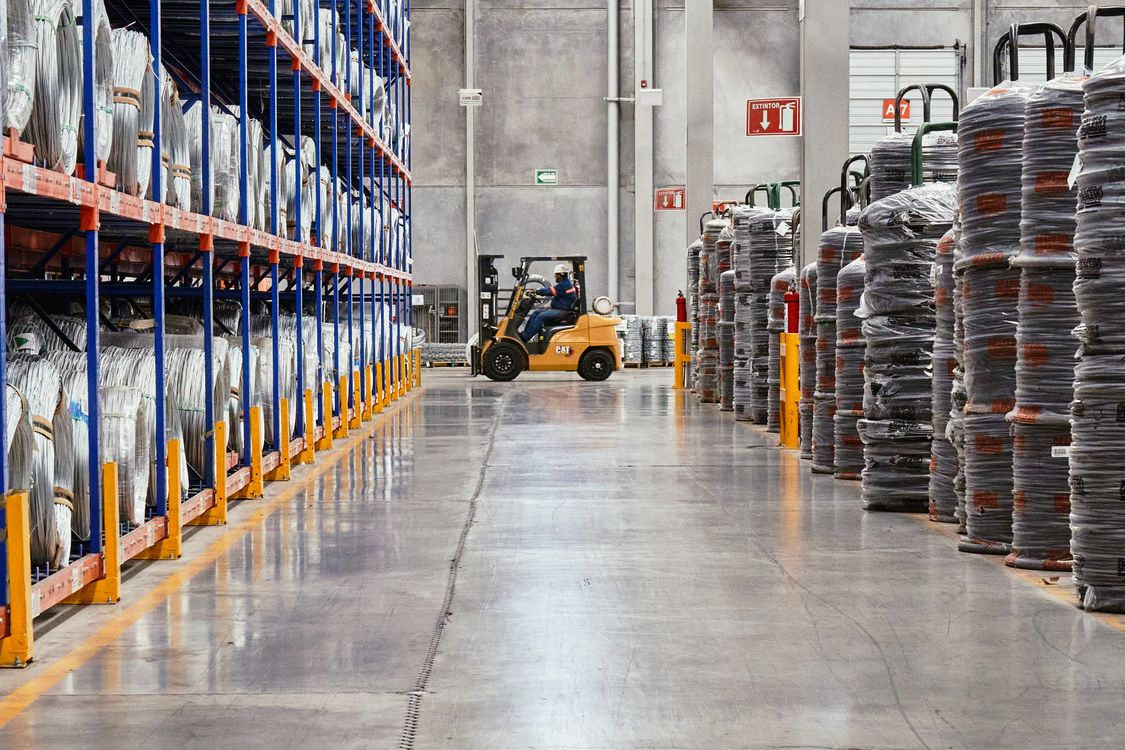
Autonomous mobile robots are suited to that approach because they can be introduced incrementally into material handling rather than requiring the fixed infrastructure of a complete conveyor system. Onboard sensing and mapping allow an AMR to localise itself, calculate routes and adapt as layouts or transport tasks change, giving manufacturers scope to automate individual movements before expanding into a larger fleet.
KUKA’s KMP 600P illustrates the engineering involved. The platform can carry loads of up to 600kg and uses differential drive to move forwards, reverse, negotiate curves and turn on the spot. Simultaneous localisation and mapping supports autonomous navigation, QR based navigation can be used where appropriate, and compatibility with VDA 5050 provides an interface for communication between mobile robots and fleet control systems from different suppliers.
Those capabilities still have to be integrated with the production environment around the vehicle. Transport orders must reach the robot, routes have to account for people and obstacles, and the fleet may need to exchange signals with doors, lifts, loading stations or machine cells. As fleets grow, traffic management and charging strategy become part of the same control problem because a technically capable robot can still spend too much time waiting if the surrounding workflow is poorly designed.
The engineering burden therefore moves beyond selecting payload and vehicle size. Partners need to understand route geometry, floor condition, duty cycle, battery use, safety requirements and the interfaces connecting the AMR with warehouse or production systems. Technical training becomes important because the quality of that integration determines whether mobile automation improves material flow or simply introduces another layer of equipment requiring manual intervention.
TD SYNNEX’s existing position in computing, networking and data infrastructure gives the partnership a natural route into projects where physical automation is already being considered alongside wireless connectivity, edge computing and production software. Mobile robots increasingly depend on those surrounding systems for fleet orchestration and data exchange, so channel partners able to work across both operational and information technology can take responsibility for a larger part of the deployment.
The companies use the term physical AI to describe that convergence, although the immediate engineering requirements remain grounded in localisation, sensing, deterministic control and safe interaction with people and machinery. Artificial intelligence can improve perception or route decisions, but dependable industrial operation still rests on braking distances, safety zones, load stability and clearly defined interfaces that behave predictably under changing factory conditions.
Planned expansion into collaborative robots would take partners closer to the production process itself. Cobots used in assembly, handling or machine tending have to be specified around tooling, payload, reach, cycle time and risk assessment, while industrial software adds programming, orchestration and data management. Each additional product category therefore increases the application engineering expected from a channel that begins with mobile transport.
That progression also changes how KUKA can reach smaller automation projects. A manufacturer may begin with a handful of AMRs serving one process and later add more routes, cobots or software once the initial system has demonstrated reliable throughput. Distribution can make those products easier to procure, while the lasting value of the arrangement will depend on partners being able to design and support systems after the transaction itself.
The first phase across the UK, France, Spain and Benelux will require TD SYNNEX’s established channel scale to translate into industrial application capability. Successful deployments would give KUKA a broader European route to market and give resellers a pathway from enterprise technology into robotics, provided the physical and software integration receives the same attention as the hardware sale.