Tata Electronics has started pilot chip production at its semiconductor assembly and test facility in Jagiroad, Assam, after completing the first of two planned cleanrooms at the ₹27,000 crore manufacturing site.
Assam Chief Minister Himanta Biswa Sarma said on 3 October that pilot production is under way while construction continues on the second cleanroom, with formal inauguration expected around December 2026 or January 2027. The milestone moves the factory from construction into process proving, where equipment, materials and test routines can be exercised together before sustained commercial output begins.
Jagiroad is an outsourced semiconductor assembly and test operation rather than a wafer fabrication plant, so processed wafers arrive from an upstream fab before individual dies are packaged and tested. Packaging provides electrical connections between microscopic circuitry and the larger contacts used by a circuit board, protects the silicon from mechanical and environmental damage and creates a route for heat to leave the device during operation.
Tata plans to use wire bond, flip chip and Integrated Systems Packaging technologies at the site, allowing the factory to handle products with different combinations of cost, power, input and output density and thermal performance. The manufacturing equipment, materials and inspection requirements change significantly between those approaches even though each begins with a completed semiconductor die.
Wire bonding connects a die to its package using very fine metallic wires and remains widely used because the method is mature and economical across many semiconductor products. The length and number of those connections can limit performance in more demanding devices, leading manufacturers towards package designs that create shorter and denser electrical paths.
Flip chip assembly turns the die so that connections on its face attach directly to a substrate, shortening electrical paths and supporting much higher connection density. Alignment, bump formation, underfill and substrate flatness have to be controlled closely because small placement or material defects can compromise hundreds or thousands of connections inside one package.
Integrated Systems Packaging moves further towards combining several functions within one package or module, allowing different dies, memory or other components to work together through advanced interconnection. As conventional semiconductor scaling becomes more difficult and expensive, packaging has taken a larger role in increasing performance without placing every function onto one monolithic die.
The cleanroom provides the controlled environment required for those processes because particles can interfere with exposed die surfaces, fine connections and bonding interfaces. Temperature and humidity also have to remain stable enough for materials and precision equipment to behave consistently while features are measured in micrometres.
Pilot production gives Tata an opportunity to tune equipment and establish yield before customer volumes place greater pressure on throughput. Test lots can reveal defects associated with alignment, bonding, materials or equipment settings, while engineers still have room to modify the production route without disturbing a large commercial schedule.
The Jagiroad site is designed for capacity of up to 48 million semiconductor devices a day when fully commissioned, with more than 27,000 direct and indirect jobs expected around the project. Reaching that scale will require much more than completing the cleanrooms because substrates, lead frames, bonding materials, chemicals, test equipment and precision components also have to arrive in sufficient quantity and quality.
Tata has been building supplier relationships alongside the factory, including an agreement with Japanese precision component manufacturer Enomoto to support the packaging supply chain. Other partnerships connect the Assam operation with packaging technology and customer programmes, creating an industrial network around the plant rather than relying entirely on imported finished inputs.
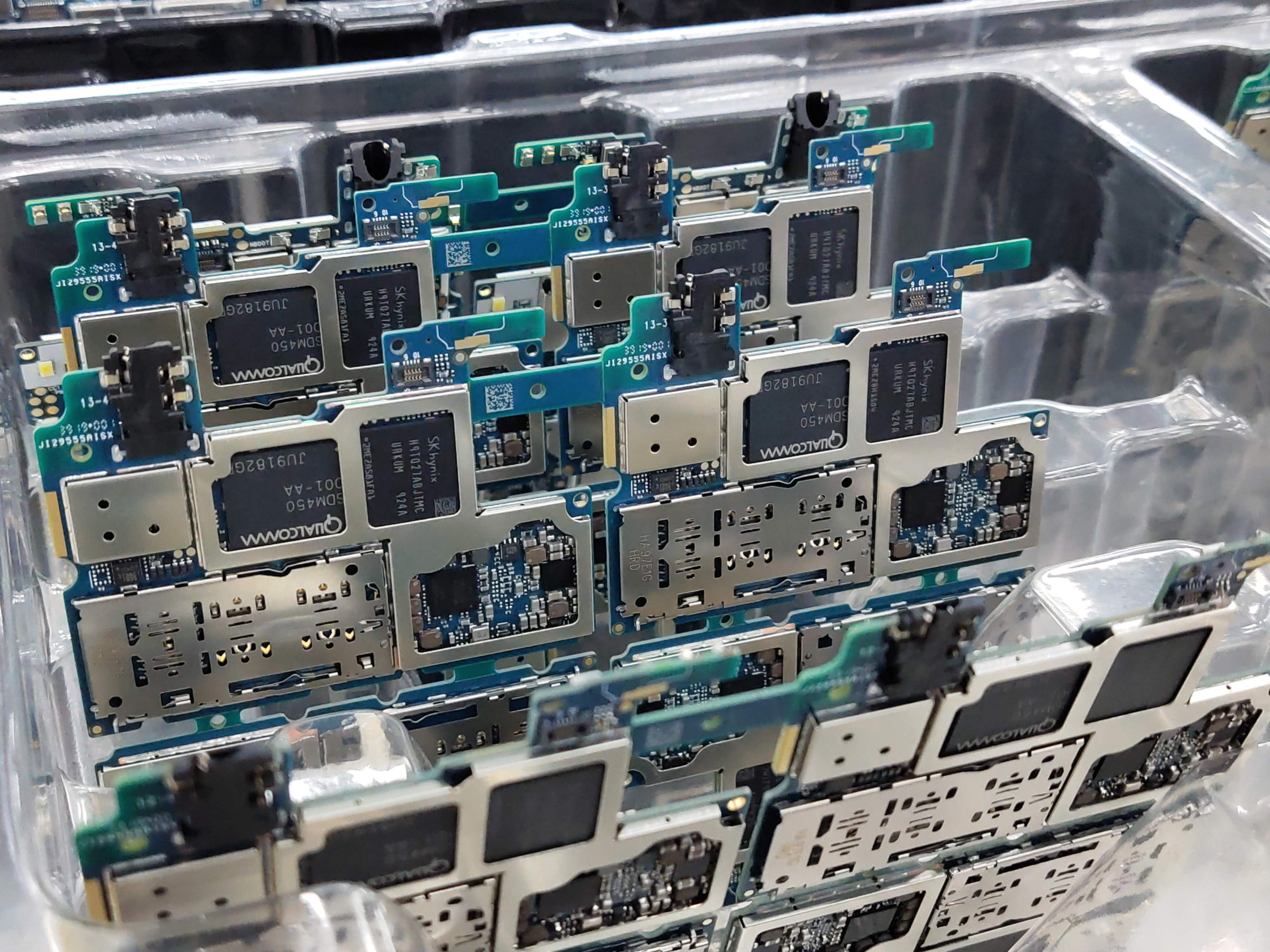
Qualcomm automotive modules have already been identified among the products connected with the facility, bringing additional qualification requirements because automotive semiconductors are expected to operate across wide temperature ranges and remain reliable for long service periods. Moving from pilot assembly into automotive volume production therefore requires reliability evidence extending well beyond a successful electrical test at the end of the line.
Testing will remain a substantial part of the site’s workload because packaged devices must be screened against electrical specifications before shipment, while some applications require thermal cycling, stress testing or additional reliability checks. Increasing assembly output without equivalent test capacity would simply move the production bottleneck downstream.
With its first cleanroom operating, Tata can now accumulate the process data needed to establish stable yields while construction and equipment work continue elsewhere on the site. The second cleanroom, supplier qualification and customer validation still have to progress before the stated 48 million device capacity becomes routine manufacturing output.
Pilot chips therefore mark the beginning of industrial operation rather than the completion of the project. Jagiroad now has to turn controlled trial production into qualified products, repeatable yields and a manufacturing cadence capable of supporting customers at the scale envisaged when the factory was approved.