Yamazaki Mazak will bring three new laser processing platforms to EuroBLECH 2026, expanding its European offer across accessible sheet cutting, high-power plate processing, and automated three-dimensional tube and structural fabrication.
The company is presenting the Optiplex Ez-L, Optiplex 3015 HP, and FG-400 NEO alongside automation designed to connect cutting equipment more closely with material handling. The range reflects a broader shift in fabrication equipment, where machine utilisation and process integration are becoming as important as nominal laser power.
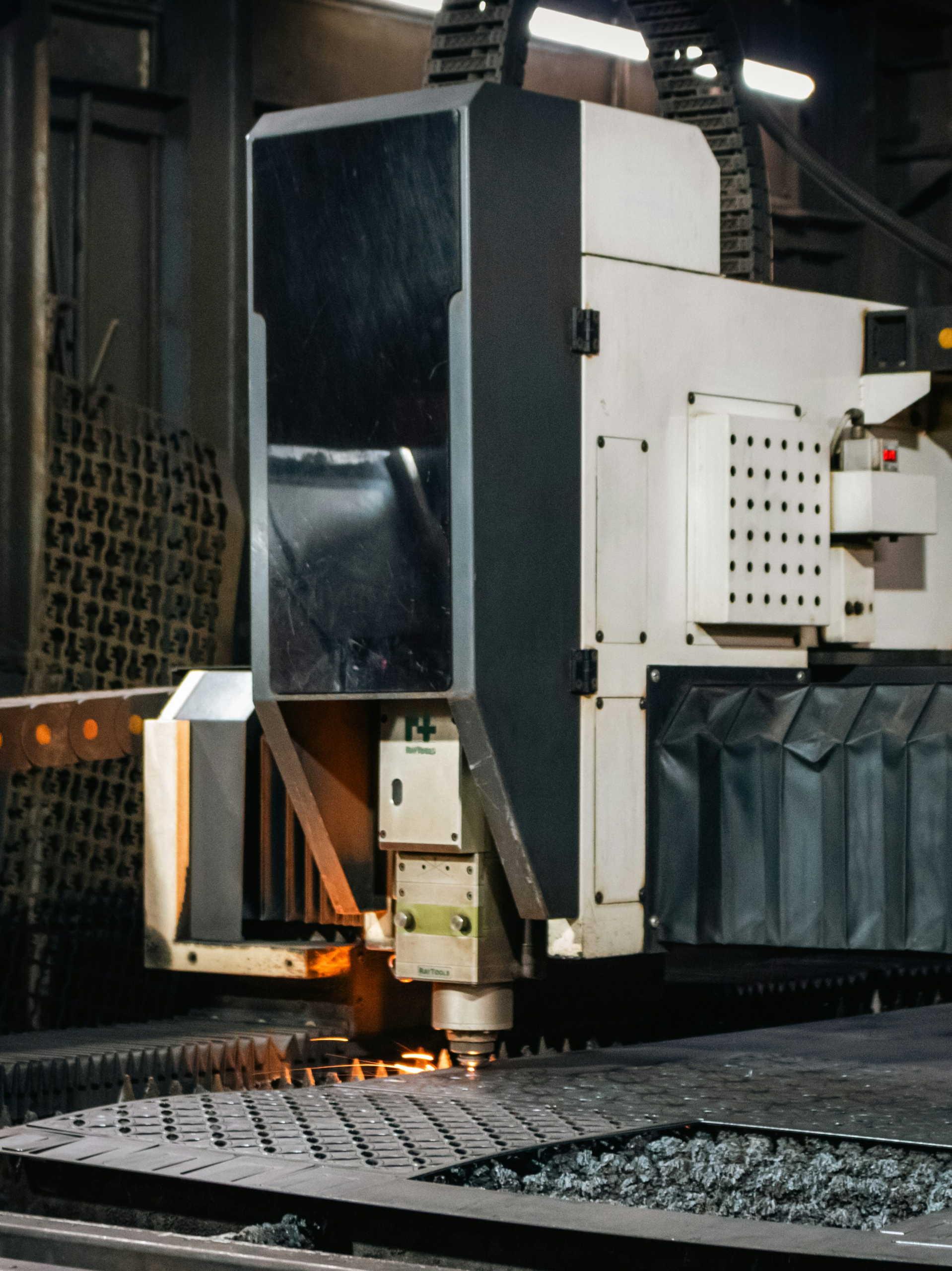
The Optiplex Ez-L is aimed at manufacturers entering fibre laser cutting or adding relatively straightforward sheet capacity. Its European debut configuration uses a 6kW SmoothCUT fibre laser, a redesigned body and cutting head, and controls intended to reduce operating complexity while maintaining consistent cutting performance.
Mazak is pairing the machine with its CSS 3015e loading and unloading system. The automation cell is intended to reduce manual handling between sheets, allowing the laser to spend a greater share of the working shift cutting rather than waiting for operators to remove finished material and load the next blank.
That distinction becomes more important as cutting speeds increase. A faster laser does not automatically create higher factory output if loading, unloading, sorting, programming, bending, or welding cannot keep pace. Once the cutting cycle is shortened, delays that were previously secondary can become the dominant constraint.
The Optiplex 3015 HP moves to high-power processing. Mazak’s current range supports SmoothCUT fibre laser power up to 20kW, targeting medium and thicker plate where additional power can increase cutting speed but also raises demands around heat control, assist gas, nozzle condition, piercing, and edge quality.
The HP platform uses technology intended to stabilise processing across different material thicknesses. High-power cutting increasingly depends on controlling how energy reaches the material rather than simply adding more kilowatts, particularly where manufacturers need clean edges that can move directly into welding or assembly without extensive finishing.
Mazak is also using EuroBLECH to demonstrate the FG-400 NEO, its large tube and structural fibre laser system. The machine can process round material up to 406mm in diameter and square sections up to 305mm by 305mm, with loading options extending into long structural workpieces.
The FG-400 NEO combines three-dimensional cutting with operations including bevel processing, drilling, and, with the appropriate tooling, tapping. A four-chuck arrangement supports and controls long workpieces while the cutting head approaches round, square, rectangular, and structural sections from different angles.
Bringing several processes into one machine can remove intermediate handling between saws, drills, machining centres, and manual preparation stations. That is particularly useful on fabricated structures where holes, slots, bevels, and end features have to align accurately before welding.
The trade-off is that the laser becomes a more central production asset. If one integrated machine performs several operations previously spread across different equipment, its reliability, programming, maintenance, and material flow become more important to the wider fabrication line.
Automation is consequently a recurring theme across Mazak’s EuroBLECH line-up. Its current exhibition material places the Ez-L beside automated sheet handling while presenting the FG-400 NEO as a high-throughput system for tube and profile work. The machines are increasingly being configured as parts of production cells rather than isolated cutting equipment.
That reflects the investment decisions facing sheet metal businesses. Labour availability, energy use, floor space, batch size, product mix, and downstream processes can matter more to return on investment than the highest quoted cutting speed. A machine that completes one operation extremely quickly can still create poor flow if material accumulates before or after it.
The 6kW Ez-L and 20kW-class HP therefore address different production economics. The first aims to make fibre laser cutting easier to adopt and automate for everyday work, while the second targets manufacturers able to use substantially higher power on thicker or higher-volume material. The FG-400 NEO extends fibre laser processing into structural fabrication where part geometry and material handling are considerably more complex.
EuroBLECH runs in Hanover from 20 to 23 October, giving manufacturers the opportunity to compare the systems directly with competing machinery across cutting, forming, joining, automation, and software. Mazak will exhibit in Hall 11, where the equipment will be presented around a common production issue: faster cutting produces value only when material and information can move through the rest of the factory at a compatible rate.
The three platforms broaden Mazak’s laser offer, but the larger development is the amount of automation surrounding the cutting process. Higher optical power remains an obvious specification; utilisation increasingly determines whether that power produces additional finished work or simply shorter bursts of cutting between longer periods of waiting.