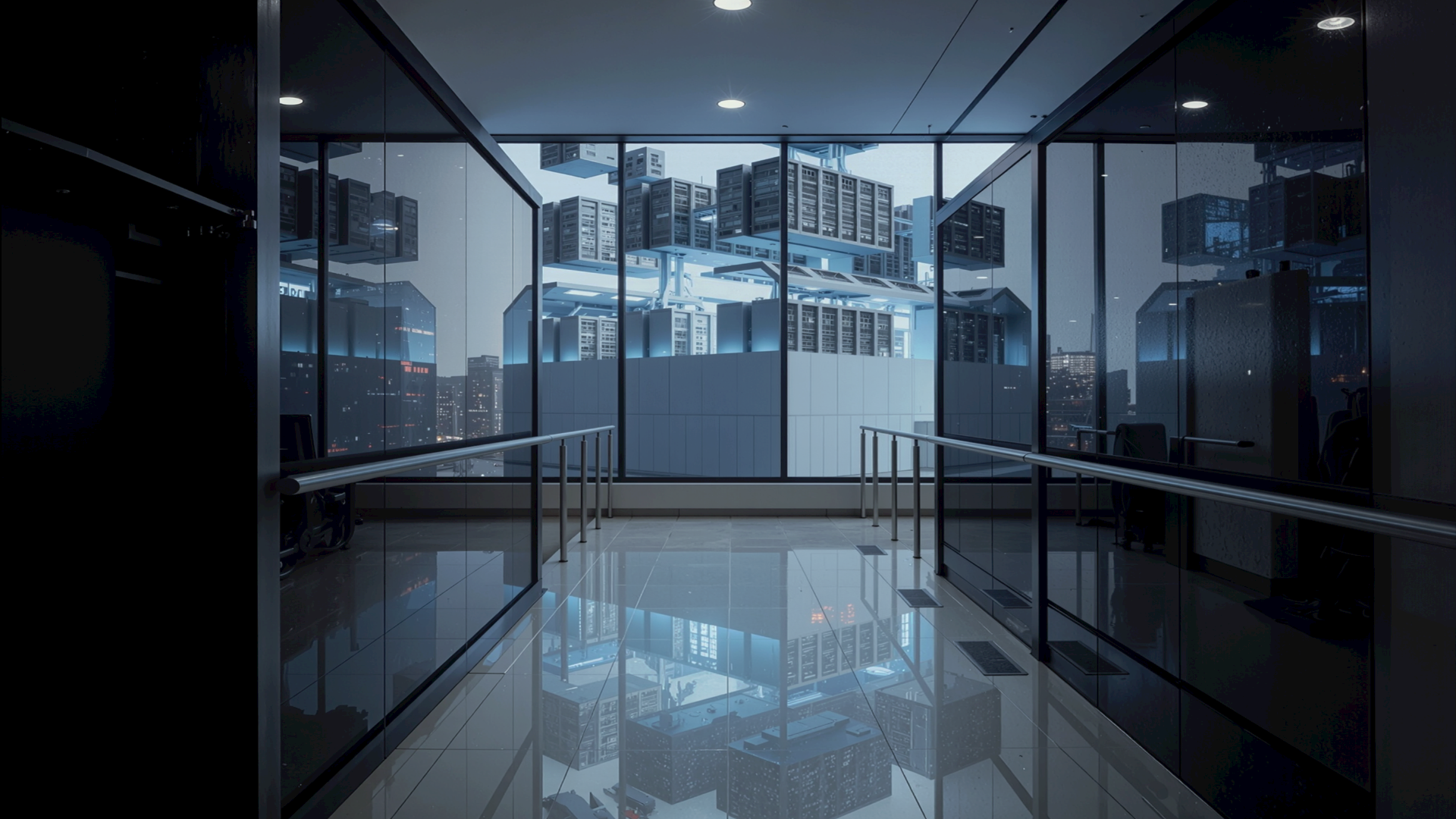
Encirc has submitted plans for a £98 million automated warehouse beside its Elton glass manufacturing site near Ellesmere Port, proposing a 44-metre-high storage building centred on crane-served high-bay logistics.
The application covers a 4.04-hectare area within Encirc’s wider manufacturing estate and proposes a building approximately 200 metres long and 82 metres wide. Its central high-bay section would contain 12 automated crane aisles alongside lower-bay handling areas, covered despatch space, offices, operational mezzanines, and supporting infrastructure.
Planning documents put the total new floorspace at just over 25,000m². Around 16,800m² would sit within the 44-metre automated high bay, with a further 8,500m² of lower-bay space at roughly 13.3 metres high.
The project also includes pallet storage, substations, sprinkler infrastructure, internal road changes, and a covered despatch area. An automated bridge is proposed between the warehouse and existing factory operations, allowing material to move directly between production and storage while preserving vehicle access underneath.
The scheme remains at planning stage and has not yet been approved. It follows an earlier automated-warehouse proposal for the site that received permission in January 2026 but was not implemented, with the revised application changing the building layout and associated logistics arrangements.
Elton is one of the UK’s largest container-glass manufacturing sites. Encirc says the 205-acre operation employs more than 1,000 people and includes two furnaces, 14 production lines, automated warehousing, a rail head, and beverage-filling facilities.
The proposed warehouse would consequently form part of an integrated manufacturing and distribution operation rather than a stand-alone logistics site. Container-glass furnaces run continuously, while production lines can generate large volumes of finished bottles at a steady rate regardless of short-term variation in collection or customer schedules.
Storage capacity therefore functions as a manufacturing buffer. If finished goods cannot be removed from the production area quickly enough, logistics constraints can begin to affect line operation even though the warehouse itself sits downstream from forming and inspection.
High-bay automation addresses the problem by increasing storage density vertically. Computer-controlled cranes move pallets through fixed aisles, reducing the amount of floor space required for vehicle manoeuvring and allowing stock to be positioned and retrieved through a warehouse control system.
The 44-metre proposed height is substantial, but it allows Encirc to concentrate a large number of pallet positions within an established industrial footprint already occupied by furnaces, production lines, utilities, roads, filling equipment, and rail infrastructure.
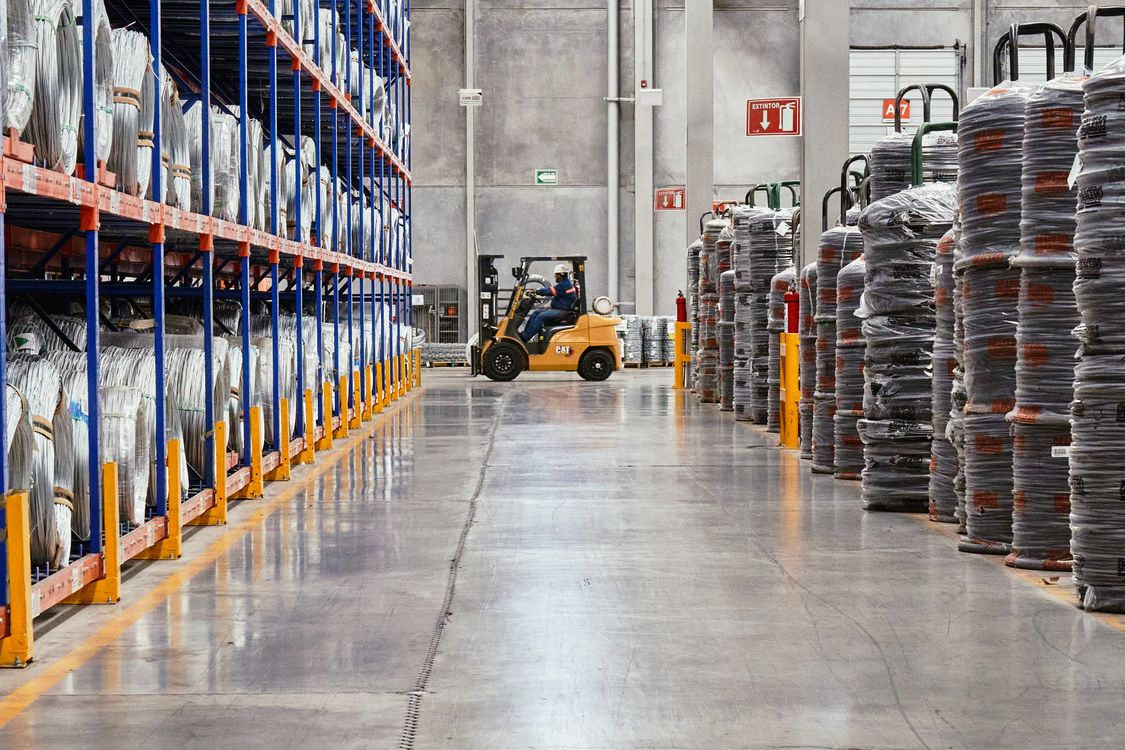
Automation also changes the labour and maintenance profile of the facility. Routine pallet movement shifts away from forklift operation towards cranes, conveyors, sensors, software, and controls, placing greater emphasis on mechanical availability and the resilience of the warehouse-management system.
A crane or conveyor fault can affect more than storage productivity when the warehouse is connected directly with continuous manufacturing. Buffer design, redundancy, maintenance access, spare-parts availability, and recovery procedures therefore become part of the production-risk calculation.
The application estimates a three-year construction period and forecasts around 122 direct construction jobs. Once operating, the applicant projects 16 direct permanent positions, figures that remain estimates associated with the planning case rather than confirmed recruitment commitments.
The comparatively low operational headcount reflects the intended level of automation. Staffing would move towards control, engineering, maintenance, despatch supervision, and exception handling rather than continuous manual pallet movement through the store.
Encirc has developed Elton around the combination of glass manufacture, beverage filling, warehousing, and distribution. The proposed automated bridge would deepen that integration by moving finished product from manufacturing into storage through a controlled internal route rather than treating warehouse intake as a separate yard operation.
The project also demonstrates why logistics investment can become inseparable from production investment at high-throughput plants. Increasing furnace or forming-line capacity has limited value if finished goods accumulate faster than they can be identified, stored, sequenced, and dispatched.
The planning process will now determine whether the revised high-bay scheme can proceed. If approved and built, the £98 million project would extend automation beyond the production line into another part of the Elton material flow, making warehousing a more tightly connected element of the site’s continuous manufacturing system.