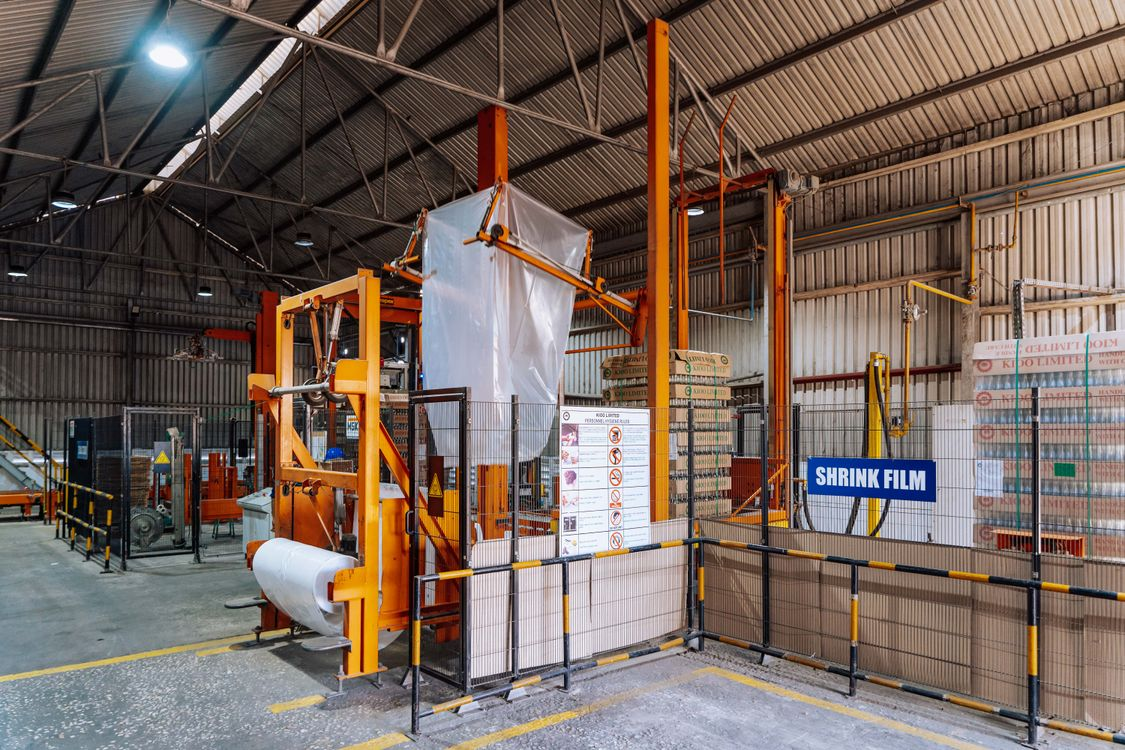
TOPPAN and its Italian subsidiary Irplast have inaugurated a new production line for high-performance biaxially oriented polypropylene film at Atessa, expanding European capacity for packaging structures designed around recyclable polypropylene. The line was formally opened on 15 September and is expected to move into full commercial operation by the end of 2026.
Combined with Irplast’s existing equipment, the investment will give the site capacity to supply up to 30,000 tonnes a year of high-performance BOPP film. TOPPAN is targeting mono-material packaging applications in which functional layers remain within the same polymer family rather than combining materials that can be difficult to separate in established recycling systems.
The new line uses LISIM simultaneous biaxial stretching technology. BOPP manufacturing stretches polypropylene film in two directions to alter its mechanical, optical and dimensional characteristics. Irplast’s process is intended to provide high heat resistance, mechanical strength, transparency and reduced thermal shrinkage.
Those characteristics are particularly important where film has to perform more than one role within a packaging structure. TOPPAN is targeting applications including retort packs, where sealed products are exposed to elevated temperatures during sterilisation. Films used in those conditions have to maintain dimensional stability while supporting printing, sealing and barrier requirements.
Traditional high-performance flexible packaging often combines several materials because no single polymer provides every required property. Aluminium, polyester, nylon and polypropylene can each contribute heat resistance, stiffness, barrier performance or sealability, but mixed structures can be more difficult to recycle once the pack reaches the waste stream.
Higher-performance polypropylene creates an opportunity to move more of those functions into structures based predominantly on one polymer family. That does not make the finished package automatically recyclable, but it can simplify material composition and improve its compatibility with recycling systems designed around polypropylene.
TOPPAN is also targeting downgauging, reducing film thickness while retaining sufficient strength and processing performance. Material reduction matters because a package that is technically recyclable can still carry an unnecessarily high polymer burden if equivalent performance requires substantially more material.
The investment arrives as the European packaging market adjusts to the Packaging and Packaging Waste Regulation. The regulation began applying across the EU in August 2026 and introduces a common framework for packaging design, waste reduction, recyclability and future recycled-content requirements.
Converters and brand owners consequently have to consider more than machinability and appearance when specifying new films. Material composition, future recyclability classifications and the amount of polymer used in each pack are becoming increasingly important alongside seal integrity, shelf life and production speed.
Mono-material design still carries technical compromises. Adhesives, coatings, inks, barrier layers and contamination can all affect whether a package is successfully sorted and reprocessed. Recycling infrastructure also differs between countries, meaning the same structure may not achieve identical outcomes in every market.
The manufacturing challenge is therefore to simplify material composition without losing the properties that made complex laminates attractive in the first place. Heat resistance, barrier performance, mechanical strength and dimensional stability must remain consistent through printing, lamination, filling, sealing, transport and use.
TOPPAN plans to combine Irplast’s BOPP capability with its GL BARRIER range of transparent barrier films. The technology uses coatings and vapour-deposited layers to provide oxygen and moisture protection for applications spanning food, healthcare, pharmaceuticals and industrial materials.
The objective is to develop polypropylene-based structures that can reduce reliance on aluminium foil or more complex laminates while retaining the shelf-life performance required by the packed product. Whether that can be achieved commercially will depend on converter trials, filling-line performance and qualification by individual customers.
The new line also increases regional production capacity at a point when European packaging regulation is becoming more prescriptive. Local manufacture can shorten physical supply routes for converters, but the larger commercial advantage will depend on how rapidly the new grades are approved for high-volume applications.
Irplast already has experience with LISIM technology, so the investment expands an established production method rather than introducing a completely unfamiliar process. Scaling output still requires tight control of film temperature, stretching conditions and thickness across the web, particularly for demanding applications where thermal behaviour can affect downstream conversion.
Full commercial operation by the end of 2026 will therefore mark the beginning rather than the completion of the programme. New packaging films commonly move through print trials, lamination tests, filling-line assessment, shelf-life work and regulatory review before entering sustained volume production.
The 30,000-tonne figure describes available manufacturing capability rather than guaranteed sales. The more useful measure will be how quickly customers can use that capacity to replace complex structures with thinner polypropylene-based alternatives that remain stable through industrial conversion and filling. Europe’s packaging rules are tightening; TOPPAN now has to show that the new line can produce materials capable of meeting them without introducing a different set of manufacturing compromises.