Ishida Europe will demonstrate an integrated range of weighing, packing, inspection, and production-monitoring equipment at Gulfood Manufacturing 2026, using the Dubai exhibition to show how individual machines can operate as a more closely coordinated food packing system.
The company will exhibit on Stand C3-4 in Hall 3 at Dubai World Trade Centre from 3–5 November. Its line-up covers snack packing, frozen-food weighing, tray sealing, X-ray inspection, metal detection, checkweighing, and production-data monitoring.
The centrepiece will be Ishida’s Inspira iTPS snack packing system, combining multihead weighing, bagmaking, and seal testing. The configuration is designed to demonstrate the benefit of treating those operations as one production process rather than optimising each machine independently.
That matters on high-speed packaging lines because nominal machine speed rarely determines overall output on its own. A fast weigher creates little benefit if the bagmaker becomes the bottleneck, while increasing bagging speed can simply increase waste if seal integrity deteriorates or target weights become less consistent.
Coordinating the weighing and packaging stages allows line settings and performance data to be considered together. For manufacturers producing large volumes of snacks or similar free-flowing products, small improvements in giveaway, stoppage time, and rejected packs can accumulate into substantial changes in material use and finished output.
Ishida will also show its CCW-AS multihead weigher configured for frozen-food applications. The system belongs to the company’s established range of combination weighers, which use several weigh hoppers simultaneously to calculate the combination of portions that most closely reaches the required target weight.
The engineering objective is not simply weighing quickly. Producers need to remain safely within declared-weight requirements without repeatedly giving away unnecessary product, while frozen products can introduce their own handling issues through surface moisture, product shape, and changes in flow behaviour.
Tray sealing will be represented by the QX-500, a compact machine designed around rapid tooling changes and a range of tray and film formats. The system operates without compressed air, removing one utility requirement from the installation while retaining automated sealing functions.
Changeover speed is increasingly relevant where manufacturers are running more product variants and shorter campaigns through the same equipment. A machine capable of high throughput during a long production run can still lose substantial capacity if tools, films, recipes, and settings require lengthy intervention each time a different pack is introduced.
Removing pneumatic functions can also reduce the supporting infrastructure needed around a machine. Compressed air remains common throughout food and packaging plants, but it carries energy and maintenance costs that have to be considered alongside the electrical consumption of the equipment itself.
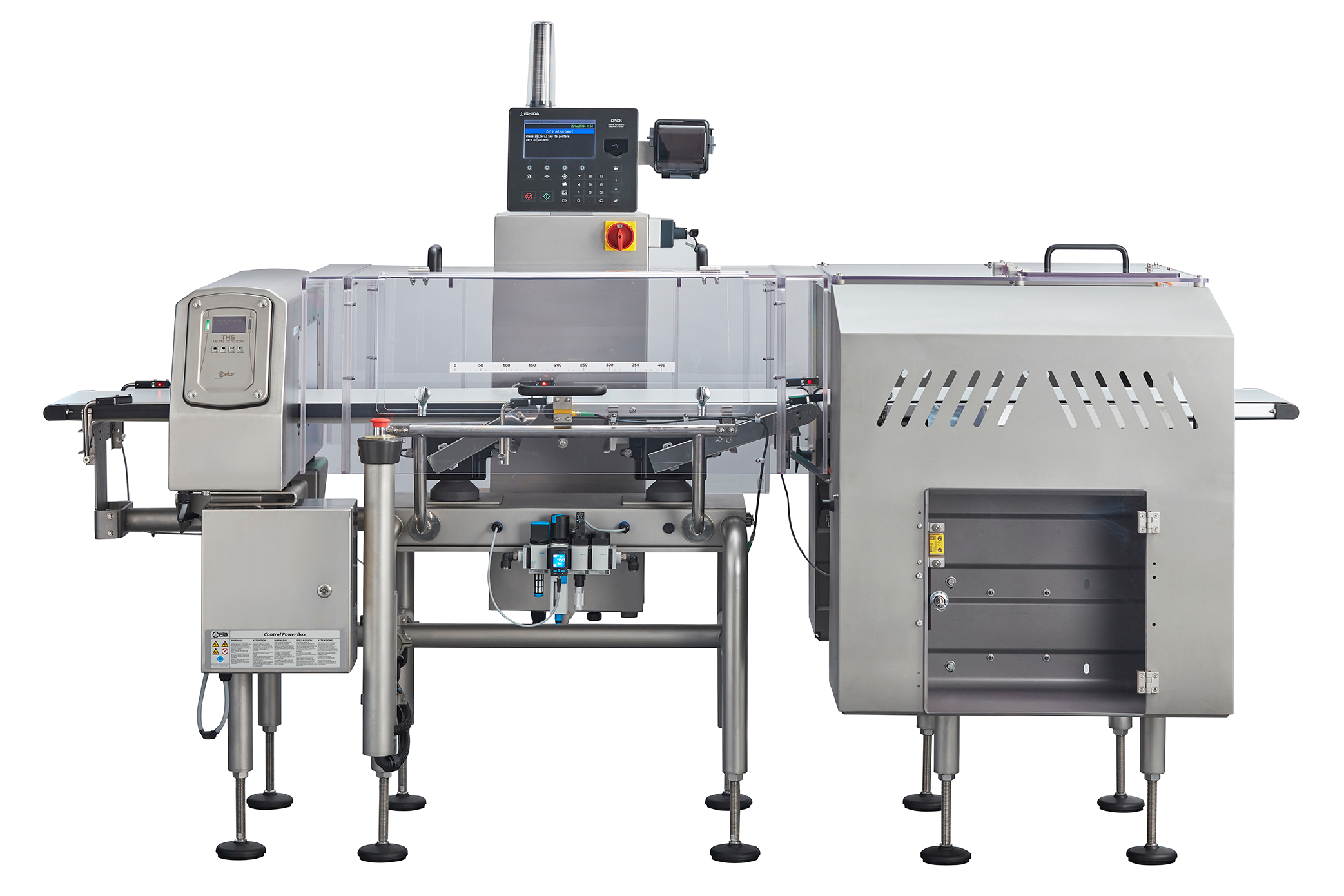
Inspection forms another major part of Ishida’s Gulfood line-up. Its IX-PD X-ray system will be shown alongside a DACS-GN-SE checkweigher incorporating a CEIA metal detector, providing several layers of finished-product control before packs leave the line.
The technologies address different inspection risks. Metal detection remains effective for many ferrous and non-ferrous contaminants, while X-ray inspection can identify a wider range of foreign materials where density differences permit detection. The appropriate system depends on the food product, packaging, likely contaminants, line speed, and required sensitivity.
Ishida’s IX-PD uses photon-counting dual-energy technology intended to improve detection of lower-density foreign objects. The company also uses image-processing algorithms to distinguish product characteristics from potential contamination, with the aim of improving detection while reducing unnecessary rejects.
False rejection remains a practical concern because inspection equipment that removes large quantities of good product creates its own cost in waste, operator intervention, and production interruption. Detection sensitivity therefore has to be considered alongside repeatable performance on the actual product being manufactured.
The DACS-GN-SE adds weight verification to the inspection sequence, giving producers another check that packs leaving the process comply with their specification. Combined systems can also simplify rejection handling and the collection of production records compared with several isolated inspection machines.
The final part of the demonstration will focus on Sentinel 5.0, Ishida’s production-monitoring software. The platform is intended to make machine-performance information visible in real time, helping production teams identify losses in output, equipment effectiveness, giveaway, or reject rates.
Steve Jones, Marketing Director of Ishida Europe, said: “Across the industry, businesses are under increasing pressure to enhance productivity, reduce costs and maintain the highest levels of product quality and compliance.”
The practical challenge is turning the additional data generated by connected packaging equipment into decisions. A factory can have dozens of machines producing status information without providing operators with a useful explanation for why a line has slowed down or why giveaway has increased during a shift.
That places more emphasis on integration between production equipment, inspection systems, monitoring software, and the people responsible for the line. Older plants are particularly likely to contain equipment from different manufacturers and generations, making the ability to add connected technology incrementally important.
Gulfood Manufacturing gives Ishida a controlled setting in which to show weighing, packaging, inspection, and monitoring as one system. The harder test comes on a production floor, where cleaning, product variation, operator intervention, changeovers, equipment wear, and unplanned stoppages determine whether nominal line performance translates into saleable output.