Analog Devices has agreed to acquire Alif Semiconductor in an all-cash transaction carrying $1.35 billion of upfront consideration, adding AI-native microcontrollers and fusion processors to its industrial sensing, power, signal-processing, connectivity, and software portfolio.
ADI may pay a further contingent consideration of up to $200 million. The boards of both companies have approved the transaction, which is expected to close before the end of 2026 subject to customary conditions and expiry of the applicable US antitrust waiting period.
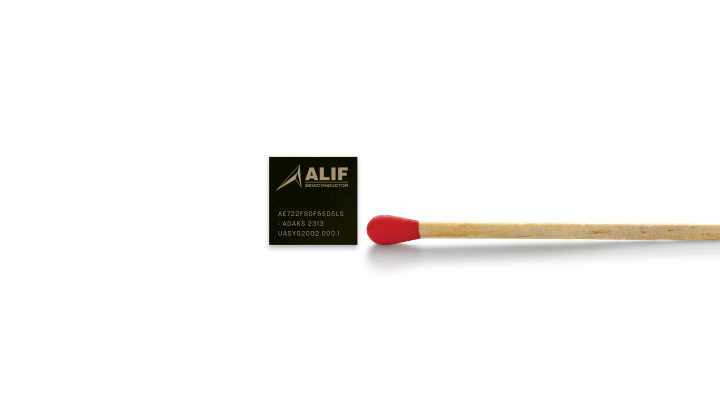
Alif develops secure, low-power microcontrollers and processors designed to perform artificial-intelligence workloads locally. Its architecture integrates processing cores with neural processing, graphics, connectivity, security, and power-management functions.
The company is already shipping silicon in production and has design wins across consumer and industrial customers, giving ADI an existing commercial processor platform rather than a technology still waiting to progress beyond sampling.
ADI describes the wider opportunity as “Physical Intelligence”, its term for systems that combine information from physical sensors with local processing and real-time action. Strip away the branding and the engineering direction is straightforward: more computation is moving towards the machines generating the data.
Industrial equipment already contains large numbers of sensors monitoring variables such as vibration, temperature, pressure, current, position, sound, and motion. Historically, many systems have used relatively simple local processing before passing data upwards into a controller, server, or cloud platform for more advanced analysis.
Increasing the computing capability near the sensor allows more of that analysis to take place locally. A machine can classify vibration signatures, identify abnormal sound, interpret images, fuse information from several sensors, or make other decisions without transmitting every raw data point to a remote system.
Latency is one reason. A cloud connection can be entirely adequate for long-term fleet analytics but becomes less attractive where a local machine needs a response within a predictable time window.
Connectivity is another. Industrial sites can contain equipment expected to operate continuously even when external network services are unavailable, while manufacturers may deliberately restrict access from operational systems to outside networks.
Data governance provides a third constraint. Process information can expose production volumes, recipes, equipment condition, product designs, and other commercially sensitive information. Local inference reduces the quantity of raw operational data that has to leave the machine or plant simply to perform an intelligent function.
Alif’s heterogeneous processor architecture is intended for that environment. Different computing resources can be assigned to different parts of the workload, while integrated neural-processing units handle trained AI models more efficiently than relying exclusively on a general-purpose processor.
Power efficiency matters even where a device is permanently wired into industrial infrastructure. Every watt consumed by embedded electronics becomes heat that has to be handled inside an enclosure, and thermal design becomes particularly difficult in compact equipment, sealed sensors, or systems installed in demanding environments.
The acquisition fills a strategic gap in ADI’s portfolio. Analog Devices has long been strongest around the boundary between physical processes and digital electronics, supplying sensors, analogue front ends, data converters, power products, communications devices, and signal-processing technology.
Alif adds a more capable digital-compute layer to that chain. A manufacturer developing condition-monitoring equipment, robotics, intelligent instrumentation, energy systems, or embedded control could potentially combine sensing, power, connectivity, and AI processing around a broader ADI architecture.
Hardware integration will only deliver part of the value. Microcontroller and processor decisions increasingly depend on software development environments, security support, libraries, debugging, model-conversion tools, middleware, and the availability of application engineering.
ADI will therefore have to integrate Alif’s software ecosystem as carefully as its silicon roadmap. Industrial customers expect development tools to remain supported over long product lives, and qualification work makes it expensive to replace a processor after equipment has entered production.
That lifecycle requirement differentiates industrial embedded computing from faster-moving consumer markets. Automation equipment, instrumentation, energy assets, medical systems, and defence electronics can remain in production and service for many years, making continuity of supply and software maintenance material purchasing considerations.
ADI’s scale can give Alif’s architecture access to a wider customer base and longer support infrastructure. In return, Alif gives ADI a stronger platform for local AI as semiconductor suppliers compete to provide more complete systems rather than isolated components.
The industrial AI debate has concentrated heavily on the enormous processors used to train large models in data centres. Deployment presents a different engineering problem. Most machines cannot justify a rack of GPUs and operate under much tighter limits on power, cost, thermal performance, latency, security, and reliability.
That makes edge processors one of the more practical routes for AI into physical equipment. The $1.35 billion acquisition is a substantial bet that more intelligence will move down towards sensors and actuators, where ADI already supplies much of the electronics used to observe and control the physical process.