AFYREN’s NEOXY biorefinery has passed 1,000 tonnes of bio-based acid production during its industrial ramp-up, with recent modifications allowing the French plant to reach higher production rates after restarting in July.
AFYREN says more than 200 tonnes have been produced since the restart, while demonstrated capacity has reached 30% on several occasions and 40% during one 48-hour period. Those figures compare with approximately 20% before technical work carried out during June.
The percentages relate to the plant’s initial nominal capacity of 16,000 tonnes a year. They describe demonstrated production rates rather than sustained annual utilisation, leaving AFYREN with the more difficult task of maintaining the improved performance over progressively longer operating campaigns.
NEOXY has taken longer to reach this point than originally anticipated. The plant at Carling Saint-Avold in France’s Moselle region was inaugurated in 2022 as the first large-scale application of AFYREN’s fermentation process for producing seven bio-based carboxylic acids from agricultural co-products.
Commissioning subsequently exposed technical and reliability constraints that held production below its intended level. AFYREN declared that continuous production had been achieved in June 2025, but the factory remained in ramp-up as the company worked through equipment limitations and sought greater operating stability.
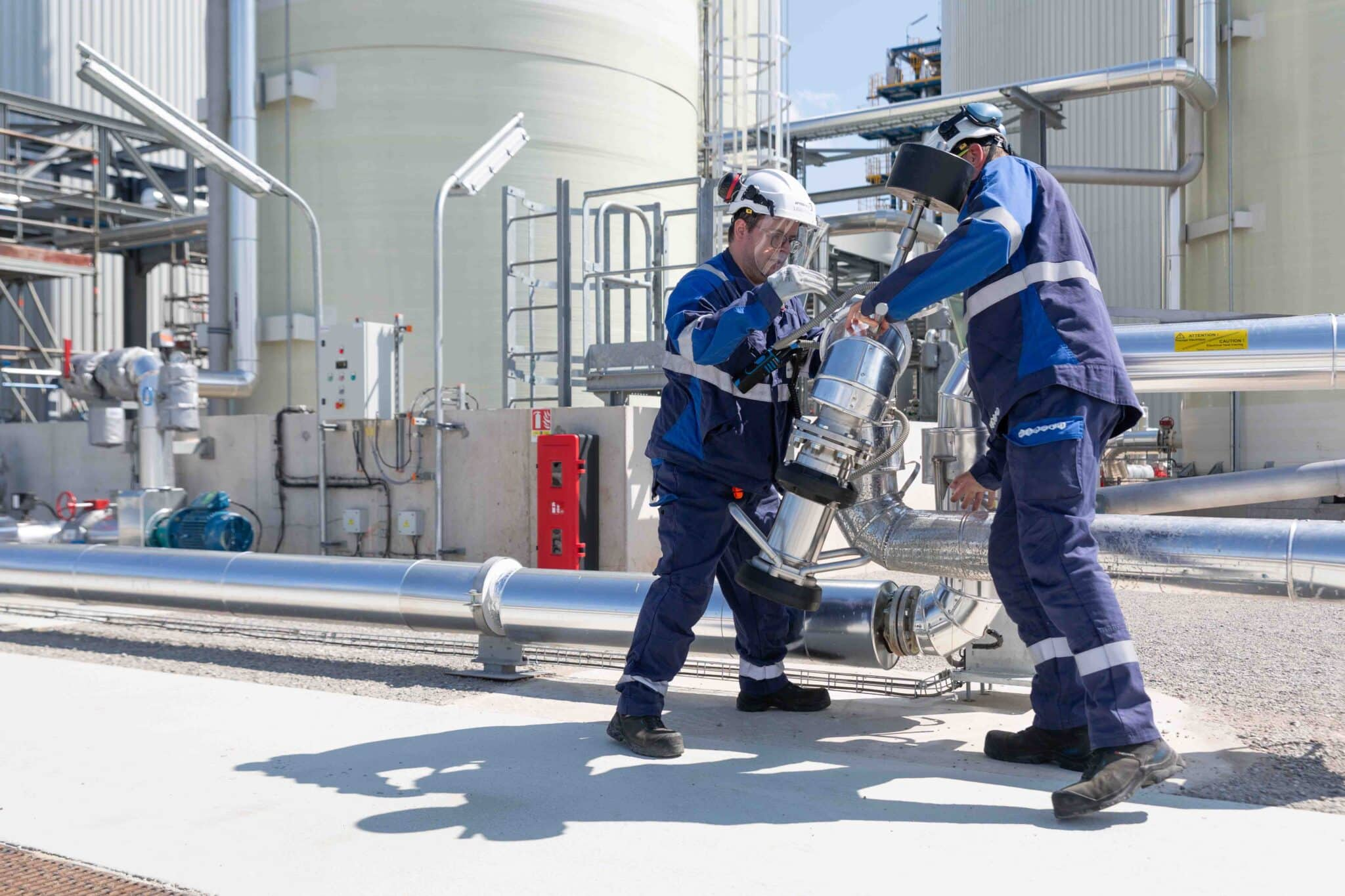
A four-week technical shutdown this June formed part of that work. AFYREN invested approximately €6 million in modifications and new equipment, particularly in downstream sections of the process, with around 20,000 working hours completed during the intervention.
Production resumed in early July. The company says the work addressed important technical bottlenecks and enabled the higher demonstrated rates recorded since the restart, although August output has remained below its own expectations and additional corrective measures are continuing.
The distinction between peak rate and sustained availability is fundamental in process manufacturing. A plant can demonstrate that individual sections are technically capable of operating at a particular throughput without proving that the entire production chain can maintain that rate through feedstock variation, cleaning, maintenance, utilities, separation, purification, and routine operating disturbances.
AFYREN’s process starts with fermentation, but biological conversion is only one part of the factory. The resulting material must pass through downstream separation and purification stages before individual acids reach the quality and concentration required for commercial sale.
Those downstream operations have been a particular focus of the recent improvement programme. Pumps, heat exchangers, separation equipment, instrumentation, control systems, and utility services all have to operate in sequence, so instability in one section can restrict an otherwise productive fermentation stage.
The plant also recycles water as part of its operating model. AFYREN says both the production process and water-recycling system remained resilient during recent heatwaves and periods of water stress, providing another test of the site’s ability to operate under conditions that can place additional pressure on cooling and process-water systems.
That performance has commercial consequences because NEOXY is intended to compete partly on its environmental profile. The company produces acids for applications including flavours and fragrances, food and feed, life sciences, materials, and lubricants, positioning fermentation as an alternative to conventional routes based largely on fossil feedstocks.
The Carling Saint-Avold factory represents roughly €60 million of industrial investment. AFYREN has previously indicated that optimisation could eventually move production capacity beyond the initial 16,000-tonne design towards approximately 20,000 tonnes, but the immediate priority remains reliable operation of the capacity already installed.
Customer demand has been developed ahead of full utilisation. The company has reported substantial cumulative commercial commitments extending over several years, meaning the production challenge is no longer simply whether buyers can be found for the acids.
Revenue from the plant is beginning to reflect physical output. AFYREN is targeting another doubling of NEOXY revenue during the second half of 2026 compared with the first six months, making production hours, yield, quality, and availability increasingly important to its financial performance.
Low utilisation is expensive in any continuous chemical operation because labour, maintenance, site infrastructure, utilities, financing, and other fixed costs are spread across fewer saleable tonnes. Increasing the rate helps, but operating reliably for longer periods usually matters more than a brief production record.
The current 40% peak should therefore be read as an engineering milestone rather than a new steady-state capacity. Reaching it for 48 hours shows that the modified process can operate above its previous ceiling; accumulating enough operating time to demonstrate that performance repeatedly is the next step.
The 1,000-tonne cumulative threshold is nonetheless useful because it establishes that NEOXY is producing material at commercial industrial scale rather than remaining a pilot or demonstration installation. The factory has moved beyond proving that AFYREN’s fermentation route can make the required products in meaningful quantities.
Its remaining challenge is more conventional and rather less forgiving: keeping an interconnected chemical process running predictably enough for production rates, quality, maintenance, and customer deliveries to settle into routine manufacturing. The technology has already produced the acids; NEOXY now has to prove that the factory can produce them with considerably less drama.