Certain Energy has raised £10 million in Series A funding to commercialise its manganese flow battery technology, expand its UK research capability, and prepare a grid-connected MWh-class system for deployment in India.
The business, previously known as RFC Power, was spun out of Imperial College London in 2017 from research in electrochemistry and energy storage. The round was led by the British Business Bank, which invested £3.5 million, with participation from Centrica Energy, Ceres Power, and Temasek Trust’s Catalytic Capital for Climate and Health. Ceres is contributing £1 million in cash and will receive a further £1.5 million of equity in exchange for engineering services.
The financing also changes the ownership structure around the technology. Ceres acquired RFC Power in September 2025, making it a wholly owned subsidiary before the latest funding round and rebrand. Following the new investment and spin-out, Ceres expects to retain an interest of about 37%, while Certain Energy operates as a separately funded long-duration energy storage business.
Certain Energy’s system uses hydrogen-manganese chemistry in a flow-battery architecture. Unlike conventional battery packs, where increasing energy capacity generally means adding more electrochemical cells, flow batteries store much of their energy in liquid electrolytes held in tanks. Increasing storage duration can therefore be achieved by increasing electrolyte volume, while the electrochemical stack is sized principally around power output.
Certain Energy specifies system round-trip efficiency above 75% and a design life of more than 20 years. Commercial deployments will still have to demonstrate those figures under operating conditions, but the architecture addresses a familiar storage problem: the economics of moving from a few hours of discharge to much longer durations without scaling the electrochemical stack in direct proportion to stored energy.
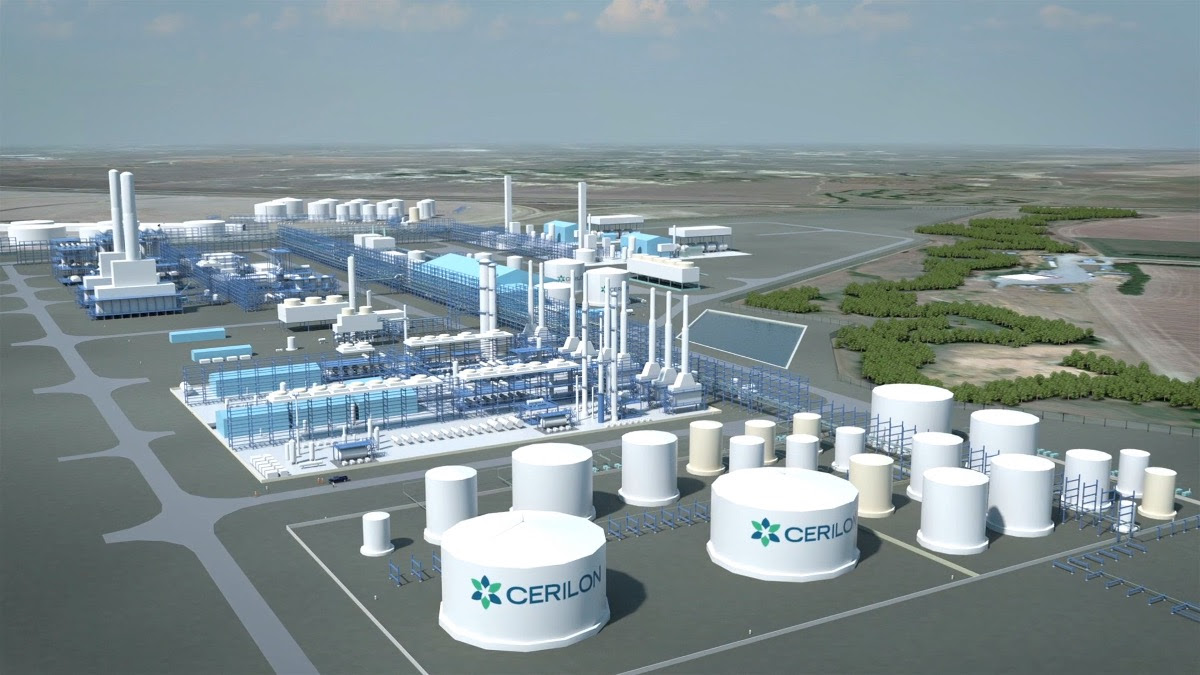
The £10 million round is intended to move that proposition into repeatable industrial delivery. Certain Energy plans to expand its UK research facilities, establish the supply chain required for future projects, and develop a grid-connected MWh-class installation in India. The company intends to work with manufacturing partners and existing production infrastructure rather than rely on dedicated gigafactories for each stage of scale-up.
That supply-chain model will shape the cost of commercial deployment as much as the cell chemistry. Long-duration storage is capital equipment, and the cost and availability of tanks, pumps, balance-of-plant equipment, power conversion systems, controls, and site integration can determine whether promising electrochemistry becomes a bankable project. Using abundant manganese may reduce exposure to some constrained battery materials, but commercial scale still depends on disciplined engineering, standardisation, and manufacturing repeatability.
Great Britain’s long-duration storage market is also moving from policy design towards project selection. Ofgem’s first cap-and-floor application window has provisionally identified 16 projects across pumped-storage hydro, compressed-air energy storage, lithium-ion batteries, and vanadium redox flow batteries, while a separate £3 million Innovate UK competition is funding development studies for electrochemical systems capable of continuous 100-hour discharge. Ofgem expects final decisions on its first window in autumn 2026.
Certain Energy is not among the technologies identified in that provisional first-window portfolio, and its near-term demonstration plans are centred on India. Even so, the UK policy direction gives domestic storage developers a clearer view of the technical and commercial evidence expected from long-duration assets. New chemistries have to show not only cycle performance, but credible construction costs, operating behaviour, supply-chain resilience, and a route to project finance.
The transition from prototype performance to volume production is where attractive chemistry meets less forgiving industrial reality. Certain Energy now has fresh capital, strategic investors, and a defined MWh-scale deployment target, but the next milestones will be physical rather than financial — commissioning hardware, validating performance, and proving that the supply chain can reproduce the system at commercially useful cost. The first Indian installation will therefore test integration as well as chemistry, particularly once pumps, controls, power electronics, and site interfaces are operating together.
The company has positioned manganese flow storage as a route to shifting renewable electricity over periods measured in hours and days rather than the shorter discharge windows common in much of today’s battery fleet. Its Series A gives it the means to test that proposition at larger scale. The consequential evidence will come from grid operation, where efficiency, availability, maintenance, and installed cost can be measured without the cushioning effect of a laboratory specification sheet.