Ursa Major has opened a new manufacturing facility in Longmont, Colorado, expanding production space for avionics and in-space propulsion while releasing capacity at its Berthoud headquarters for engines, vehicle integration, missile systems, and solid rocket motors.
The Longmont operation covers approximately 25,000 sq ft and can accommodate more than 125 employees. It contains dedicated manufacturing and welding laboratories, an ISO 7 hard-walled cleanroom with an ISO 8 gowning area, and environmental-test facilities for aerospace hardware.
Ursa Major is consolidating avionics and in-space propulsion activity at the new site as part of a broader reorganisation of its Colorado manufacturing footprint. Moving those programmes to Longmont creates additional room at Berthoud for Hadley and Draper liquid engines, vehicle integration, all-up-round assembly, the HAVOC missile system, and other propulsion work.
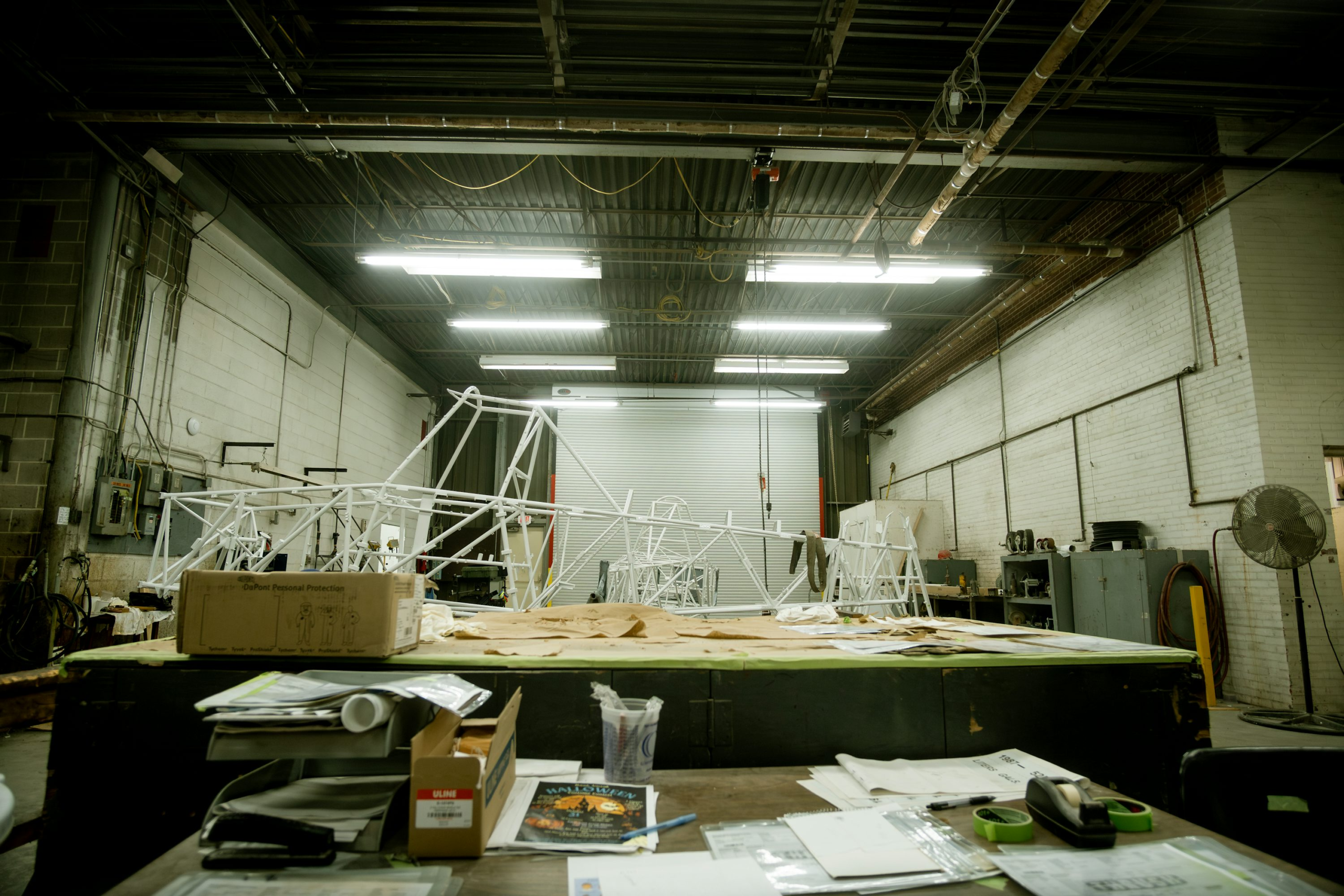
The arrangement separates manufacturing processes that place very different demands on a building. Electronics and some spacecraft hardware need controlled contamination environments, while propulsion production requires welding, assembly, pressure testing, specialist handling, and larger areas for integrated hardware.
The ISO 7 cleanroom provides controlled particulate levels for contamination-sensitive assembly and inspection. Its associated ISO 8 gowning area reduces contamination introduced by operators before they enter the higher-grade environment, supporting production where small particles can compromise surfaces, sensors, valves, electronics, or precision interfaces.
Environmental testing gives the facility another part of the manufacturing cycle. Aerospace equipment can face vibration, temperature extremes, vacuum conditions, shock, and other qualification requirements depending on its intended mission, making test capability an important bridge between assembly and final system integration.
Locating test facilities alongside engineering and production can shorten the loop between failure, investigation, modification, and requalification. Components that reveal weaknesses during environmental testing can be returned directly to the responsible engineering and manufacturing teams instead of travelling between separate facilities.
Welding capability reflects the mechanical side of the product mix. Propulsion systems rely on joints that must withstand pressure, temperature, vibration, and demanding service conditions while meeting tight standards for geometry and defects. Dedicated welding areas also allow processes to be separated from cleaner electronics and spacecraft assembly.
The Longmont opening creates additional capacity indirectly as well as directly. Berthoud gains floor space for larger propulsion systems and integrated hardware without Ursa Major having to stop or relocate its entire existing operation, while the company’s Galeton facility remains part of its solid rocket motor manufacturing network.
That distribution of work becomes more significant as the number of propulsion technologies increases. Liquid rocket engines, solid rocket motors, hypersonic systems, avionics, and in-space propulsion each require different materials, tooling, inspection regimes, test equipment, and safety arrangements.
Liquid propulsion involves complex fluid systems, precision components, valves, combustion hardware, and pressure-bearing assemblies. Solid motors introduce a different manufacturing chain around cases, energetic materials, filling, curing, inspection, and controlled handling, while avionics adds electronic assembly, software, configuration management, and environmental qualification.
A multi-site structure can prevent those processes competing for the same production space, but it creates its own operating burden. Material movement, engineering changes, quality documentation, product configuration, and final integration must remain consistent when work is divided across several facilities.
Ursa Major now operates six sites, reflecting a shift from a smaller propulsion developer towards a distributed production organisation. The Longmont building does not by itself demonstrate high-rate manufacturing, and broader state-level employment projections should not be confused with the facility’s stated capacity of more than 125 workers.
The physical changes are nevertheless clear. Ursa Major has added specialist cleanroom, welding, manufacturing, and test infrastructure, while simultaneously freeing space at an existing factory for propulsion and integrated defence hardware that needs a different production environment.
Capacity figures in aerospace are often expressed through programme value or theoretical engine output, but factory constraints are more mundane: available bays, qualified weld stations, cleanroom space, test equipment, trained operators, and safe separation between incompatible activities. Removing one of those bottlenecks can unlock several programmes at once.
Longmont therefore gives Ursa Major a dedicated production environment for work that no longer has to compete with heavier propulsion activity at Berthoud. The next measure is whether that extra floor space converts into repeatable output across the company’s growing programme portfolio, rather than simply providing more room in which prototypes can accumulate. That distinction will matter commercially.