Cleveland-Cliffs will invest in a US$1 billion modernisation of its Middletown Works steel plant in Ohio, combining US$500 million of company capital with US$500 million in support from the US Department of Energy.
The four-year programme retains the site’s established blast-furnace steelmaking route and concentrates investment on ironmaking, materials handling, process control, and energy recovery. Work is planned while the wider steelworks remains operational, with completion of the blast-furnace rebuild targeted for the first quarter of 2030.
Projects include rebuilding and upgrading the main blast furnace, installing advanced raw-material handling equipment, and introducing artificial-intelligence-enabled process controls. A new cogeneration facility will also use blast-furnace gas to produce electricity and steam for the site.
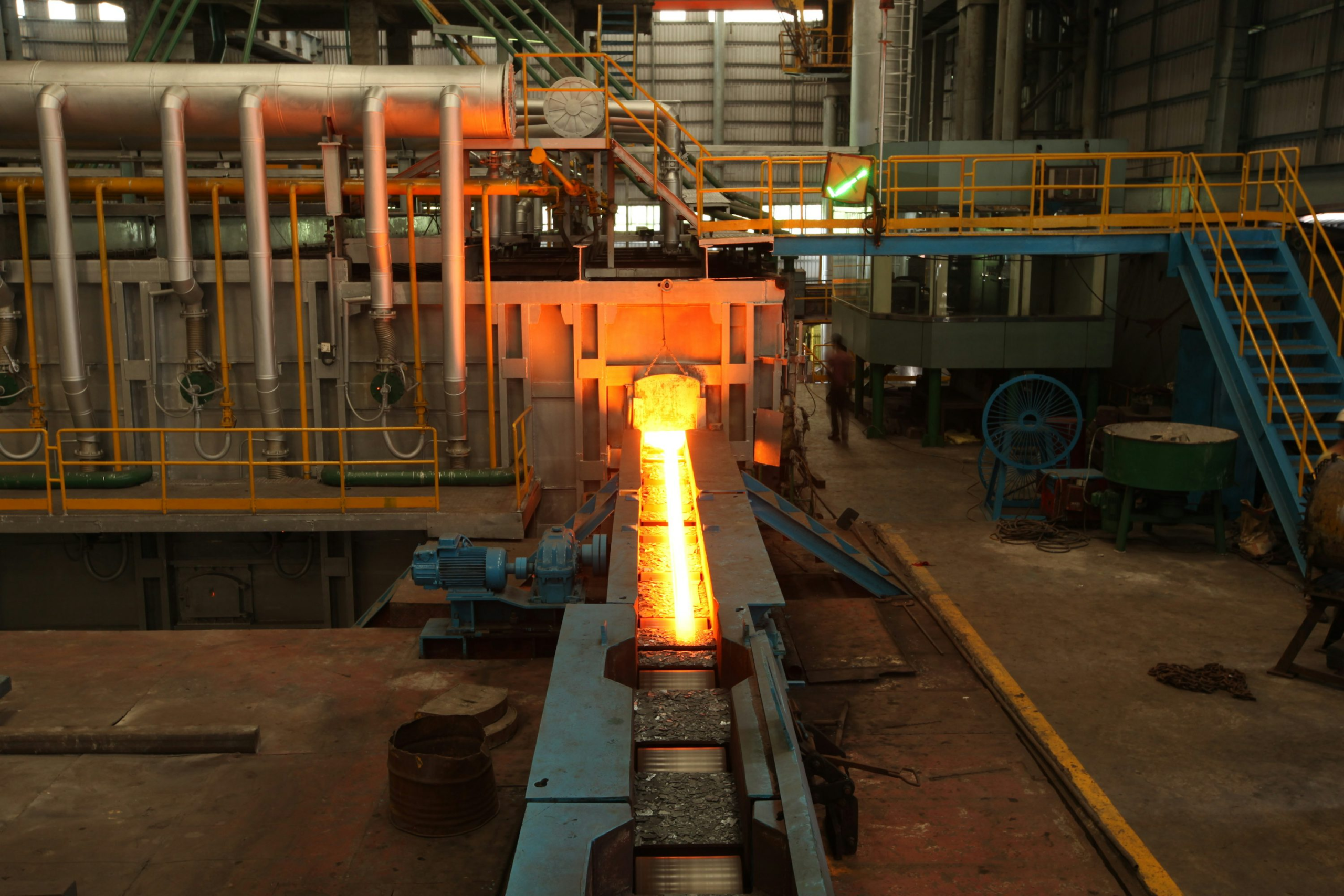
Middletown Works is an integrated operation capable of producing around three million tons of raw steel annually. Changes at the ironmaking stage consequently affect a production system extending through steelmaking, casting, rolling, finishing, utilities, and internal logistics rather than an isolated production cell.
The revised investment follows a reassessment of an earlier decarbonisation proposal. The Department of Energy said the previous project configuration depended on customers paying a premium for lower-carbon steel that Cleveland-Cliffs concluded was not commercially supportable under current market conditions.
The replacement programme is more closely tied to the economics of the existing plant. Instead of replacing the fundamental ironmaking route, it concentrates on extracting greater operating efficiency, reliability, and energy value from assets that are already embedded in the Middletown production system.
Blast-furnace control offers substantial scope for incremental improvement because the process operates continuously across a large number of interacting variables. Burden composition, gas flow, temperature, pressure, fuel rate, furnace condition, and raw-material quality all influence productivity and fuel consumption, making better instrumentation and control valuable even without changing the basic chemistry of iron production.
AI-enabled optimisation is intended to improve that control by analysing plant data and supporting adjustments to furnace operation. The commercial gain is unlikely to come from a single dramatic intervention; steelmaking economics are more often changed by small improvements repeated continuously across very large production volumes.
The planned cogeneration plant tackles another part of the operating balance. Blast-furnace gas contains combustible constituents that can be recovered and used rather than treated only as a low-value process by-product. Converting more of that gas into electricity and steam can reduce external energy requirements elsewhere on site.
Materials recovery is also included in the programme, with Cleveland-Cliffs planning to increase the use of steelmaking by-products in concrete for regional infrastructure. Integrated steelworks already reuse substantial volumes of slag and other process materials, and higher-value outlets can reduce disposal requirements while replacing some virgin material in downstream applications.
Executing the work while Middletown remains in production will create a separate engineering challenge. An integrated steel plant depends on continuous flows of ore, coke, molten iron, gases, water, power, semi-finished steel, and finished product, so major construction and furnace work must be coordinated with outages and temporary production arrangements.
The blast-furnace rebuild itself represents one of the plant’s most consequential maintenance cycles. Furnaces operate in campaigns lasting many years, and a major rebuild provides an opportunity to renew refractory systems, cooling, instrumentation, materials handling, and auxiliary equipment that would be difficult to replace during ordinary operation.
More than 1,500 construction workers are expected at the programme’s peak, while the Department of Energy says the investment supports approximately 2,300 existing jobs at Middletown Works. Those numbers reflect both the scale of the construction programme and the importance of maintaining the plant as an operating integrated steel producer.
The project also illustrates the commercial constraint surrounding more fundamental changes to primary steelmaking. Alternative routes can require new furnaces, electricity supply, hydrogen or gas infrastructure, raw-material specifications, and downstream adjustments, all of which add capital and operating costs before a tonne of saleable steel reaches the customer.
Where buyers will not absorb that additional cost, producers are left balancing decarbonisation ambitions against the economics of existing plants. Cleveland-Cliffs and the Department of Energy have chosen a programme built around efficiency, energy recovery, process control, and asset renewal rather than forcing an investment model the company says its customers would not support.
Middletown Works will remain a blast-furnace operation after the programme is complete, but it should not be the same blast-furnace operation. The useful measures will be fuel consumption, yield, energy recovery, reliability, production cost, and quality once the rebuilt furnace and supporting systems are operating — rather than how much artificial intelligence appears in the project description.