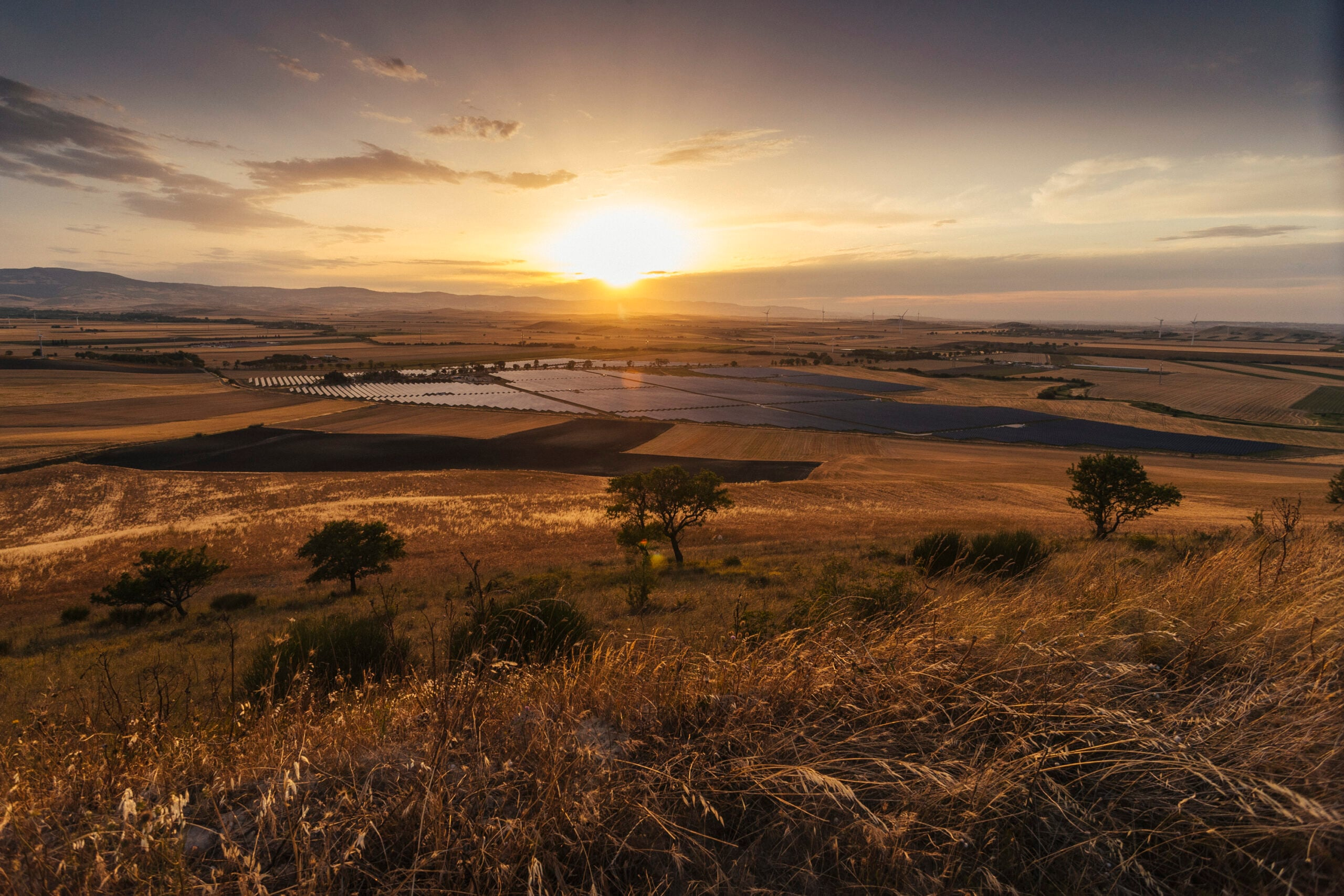
European Energy has reached financial close on €234.1 million of project financing for its Vizzini agrivoltaic development in Sicily, securing long-term bank funding after construction began earlier this year. The financing covers a 225MW project designed to combine utility-scale solar generation with continued agricultural activity across the site.
Crédit Agricole CIB, Intesa Sanpaolo’s IMI Corporate and Investment Banking division, NORD/LB, and Société Générale are providing the financing. Sun Project s.r.l. is the borrower, with European Energy acting as sponsor. Commercial operation is currently expected in 2028, while construction is already under way following the project’s earlier investment and procurement stages.
The financing milestone is separate from the construction start reported in May. Work at Vizzini began after a final investment decision exceeding €200 million, while the latest development establishes the long-term project debt that will support construction. It is therefore a new financing stage rather than a repetition of the physical start on site.
Vizzini is expected to generate around 405GWh of electricity annually when operational, equivalent to the annual consumption attributed by the developer to more than 135,000 households. The site combines solar arrays with sheep grazing, reforestation, and biodiversity measures, creating a project in which the electrical layout and agricultural use have to coexist rather than treating farming as an activity displaced by energy infrastructure.
Agrivoltaic engineering changes some of the assumptions used for conventional ground-mounted solar. Module height, row spacing, foundations, cable routes, inverter locations, access roads, drainage, maintenance areas, and vegetation management all have to take account of continued use below and around the generating equipment. At Vizzini, the design includes elevated modules and livestock activity, meaning the operating environment has to work for both power-generation equipment and agricultural management over several decades.
That dual use can strengthen the land-use case, but it creates additional interfaces. Maintenance teams need safe access without disrupting farming activity, while agricultural operations cannot compromise cables, structures, earthing systems, or electrical clearances. Vegetation must be controlled sufficiently to avoid shading and fire risk without turning the site into land from which agriculture has effectively disappeared.
The project’s financing is supported by a 20-year Contract for Difference awarded through Italy’s FerX mechanism. Long-term contracted revenue is important to project lenders because it reduces exposure to wholesale electricity-price volatility during the debt period. For a capital-intensive generating asset, predictable revenue can support larger and longer-dated debt facilities than a project relying entirely on merchant power prices.
Grid connection is equally important. Sicily has strong solar resource, but generation capacity has value only where the transmission system can accept the output and move electricity towards demand. European Energy says Vizzini has secured its grid connection, removing one of the development uncertainties that frequently slows large renewable projects. Construction still has to deliver the electrical infrastructure, civil works, generation equipment, and grid-compliance systems needed before that connection becomes an operating asset.
Financial close also moves the project into a period of tighter delivery scrutiny. Lenders will typically monitor construction progress, technical compliance, budgets, insurance, contractual milestones, and commissioning because debt repayment ultimately depends on the asset entering operation and generating contracted revenue. Engineering changes that affect cost or schedule therefore become commercial issues as well as technical ones once external finance has been committed.
The four-bank structure indicates that lenders are prepared to fund the additional design complexity associated with large agrivoltaics where revenue support, grid access, engineering, and land-use arrangements are sufficiently developed. It does not mean every hybrid agricultural-solar project will attract similar finance. Scale, site quality, permitting, contractor capability, power prices, support mechanisms, and agricultural design all influence whether a project reaches the same point.
Vizzini now has construction under way, a contracted revenue mechanism, a secured grid connection, and €234.1 million of project finance. Those pieces move it considerably beyond the development pipeline, although commissioning remains some distance away. The next challenge is straightforward to describe and considerably harder to deliver: turning the financing structure and 225MW design into an operating plant that produces power while retaining the agricultural use around which the project has been designed.