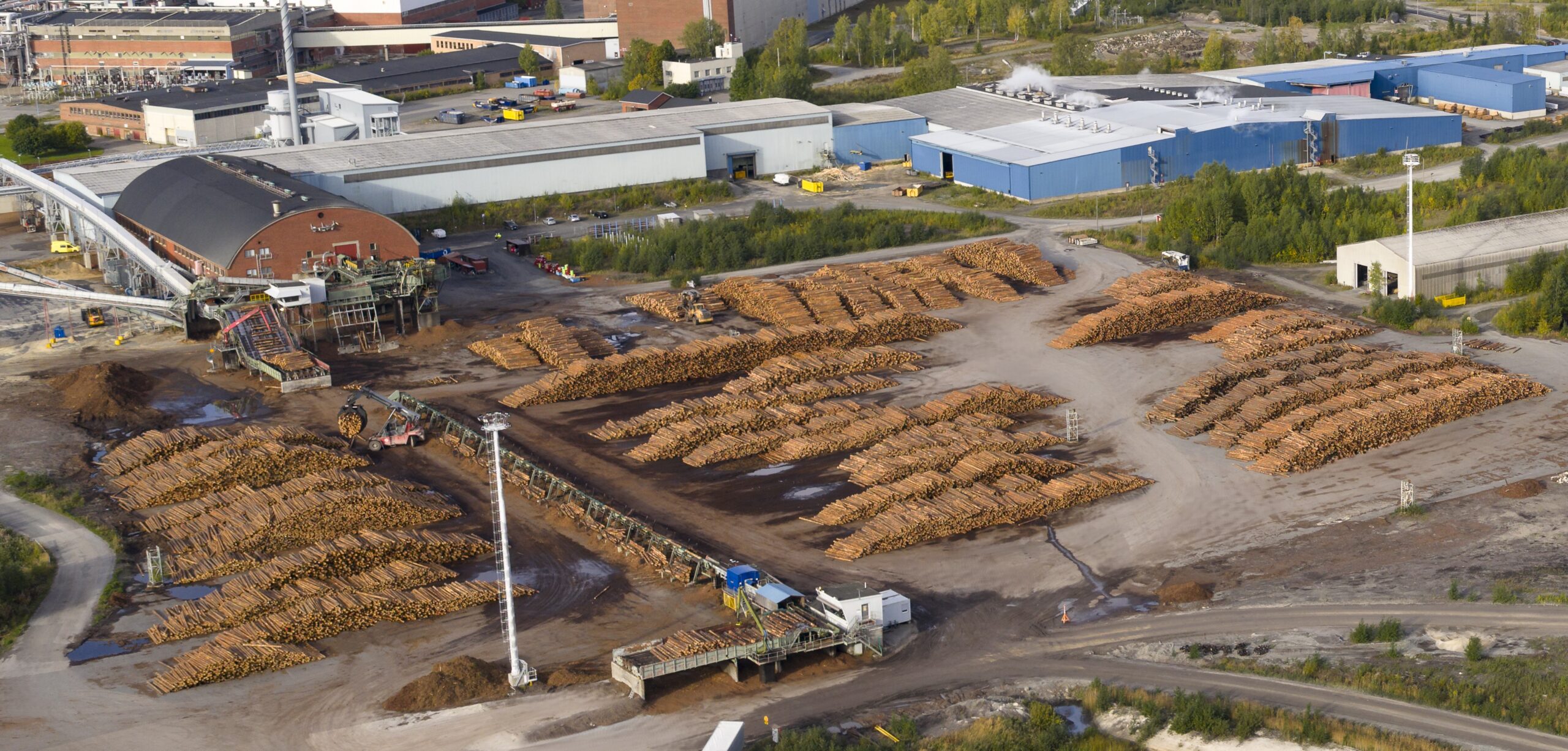
Stora Enso plans to centralise pine sawing in northern Finland by transferring production from its Veitsiluoto sawmill in Kemi to other sites, particularly Oulu and Kalajoki. If the proposal proceeds, Veitsiluoto would close permanently rather than restart after its current temporary production curtailment, concentrating output in newer and more recently expanded assets.
The proposed closure is subject to change negotiations covering approximately 60 employees. Those discussions are expected to run for three weeks, and Stora Enso has stressed that no final decision on closure or personnel reductions will be made until the process is complete. Under the current proposal, however, the Veitsiluoto sawmill would not return to production in October when its temporary curtailment was due to end.
Veitsiluoto has more than a century of operating history, but age is central to the investment case. Stora Enso says continued production would require significant capital expenditure, while its newer Oulu sawmill is still ramping up. Moving output towards more recently invested assets therefore offers an alternative to committing further capital to an older plant whose equipment, process layout, maintenance requirements, and energy systems have evolved over many decades.
Sawmill economics are heavily influenced by utilisation. Logs are a major input cost, while kilns, sawing lines, handling equipment, sorting systems, maintenance teams, and site infrastructure create a fixed-cost base that has to be spread across production volume. Concentrating throughput at fewer sites can improve utilisation where the remaining plants have spare capacity, although any saving must be balanced against transport distances, product mix, bottlenecks, and the receiving mills’ ability to absorb additional material reliably.
Stora Enso’s northern Finnish footprint gives it several options. The Oulu business unit includes the Oulu board mill, port operations, and sawmill, together with sawmills in Veitsiluoto, Oulainen, and Kalajoki, employing around 900 people in total. Closing Veitsiluoto would therefore remove one sawing operation from a wider regional production network rather than represent an exit from timber processing in northern Finland.
The company expects only a minor effect on the business unit’s overall wood consumption. That is an important indication of the strategy: timber demand would largely be redistributed rather than eliminated. For forestry suppliers and transport operators, the practical consequences will depend on how procurement areas and delivery routes change as more logs are directed towards Oulu, Kalajoki, or other facilities.
Capacity decisions in timber manufacturing increasingly sit alongside investments further downstream in engineered and fibre-based products. Stora Enso has been expanding modern board production in northern Finland, while its sawmilling operations remain part of a broader material and forestry system. A newer sawmill can form part of a more integrated regional network in which wood fractions, residues, energy flows, logistics, and port access are coordinated across several production activities.
That integration does not automatically make older capacity redundant. Existing mills can remain competitive where they serve specialised products, have efficient logistics, or avoid major capital requirements. The calculation changes when an ageing plant needs substantial reinvestment at the same time as another site has new capacity coming on stream. Management then has to compare the cost of modernisation with the cost and operational risk of consolidating production elsewhere.
The Veitsiluoto proposal illustrates that calculation clearly. Keeping the sawmill operating would require further investment, whereas Stora Enso has already committed capital to modern production in northern Finland. Transferring pine sawing allows the company to test whether recently expanded capacity can carry more regional volume without maintaining an additional ageing production base.
For employees, Kemi, and the local supply chain, the effect would be less abstract. Permanent closure would remove an industrial operation with a history extending beyond the modern Stora Enso group itself. The company says it will support personnel through the negotiation process, but the approximately 60 roles covered by the talks remain the direct employment consequence of concentrating output into fewer facilities.
The three-week consultation now separates proposal from decision. If closure is confirmed, the operational test will be how smoothly pine volume transfers to Oulu, Kalajoki, and other sites, whether newer capacity maintains the required product mix and delivery performance, and whether the expected efficiency improvement appears without creating new constraints elsewhere. Sawmill consolidation can remove ageing machinery from a network; it cannot remove the tonnes of timber that still have to move through the remaining lines.