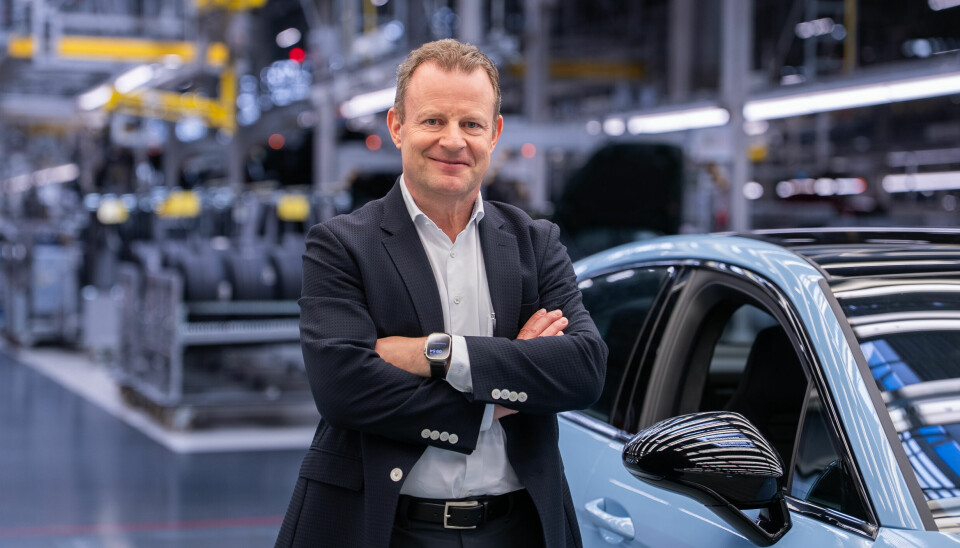
Porsche has reconfigured its Leipzig plant to manufacture combustion, plug in hybrid, and fully electric vehicles on a shared production line following the integration of the electric Macan.
The company chose to convert its existing factory rather than construct a separate electric vehicle operation. Forming the fifth expansion of the Leipzig site, the programme involved investment of around €600 million and extensive changes to assembly, logistics, automation, and worker training.
The plant now produces the electric Macan alongside Panamera variants using different propulsion systems. More than 4,600 people work at Leipzig, which began series production in 2002 and has been expanded repeatedly as Porsche added models and manufacturing responsibilities.
Engineering work began with an assessment of machinery already installed across the factory. Equipment was retained, modernised, relocated, or repurposed where it could meet the requirements of the new vehicle, while new systems were introduced where the existing technology lacked the necessary capacity or flexibility.
Reusing serviceable equipment reduces unnecessary capital expenditure and avoids discarding machinery with remaining operating life. It also places tighter constraints on layout, installation, and commissioning, since new processes must fit within buildings, utilities, material routes, and cycle structures developed around earlier products.
The electric Macan required substantial changes where the vehicle body and chassis are joined. Porsche expanded this section from four to nine assembly stations and increased its length from 24 metres to 60 metres.
Six robots and 18 automated fastening stations were added to manage the greater number of bolted connections. Their integration involved tooling, parts presentation, torque control, quality records, operator access, safety systems, and cycle timing rather than the installation of robots alone.
Front and rear axle production now covers around 20 axle variants with several hundred safety critical fastened joints. Automated acceptance systems record assembly conditions and verify results, helping the plant control variation while retaining traceability for components that directly affect handling and safety.
Material flow for the electric Macan body shop has also been digitised. RFID enabled carriers and driverless transport systems move large loads towards production equipment, while sequence planning prevents particular combinations of vehicles from placing excessive work on individual stations.
Mixed powertrain production creates a more complicated parts environment than a dedicated line. Batteries, electric drive units, high voltage cables, exhaust systems, fuel components, engines, transmissions, cooling circuits, and model specific structures must reach the correct vehicle without disrupting the common sequence.
Variation is absorbed through controlled sequencing, preassembly, flexible station content, and accurate vehicle identification. The plant must also separate high voltage procedures from conventional assembly while ensuring employees understand the safety and production requirements attached to every drivetrain.
Major conversion work is prepared away from the live line where possible and installed during planned shutdowns or tightly controlled intervention periods. Digital layouts and virtual process checks are used to identify space conflicts, movement problems, and bottlenecks before physical equipment enters the factory.
Virtual planning reduces installation risk, but commissioning data remains necessary once vehicles, workers, parts, tooling, and software interact at full cycle rate. Small delays at one station can propagate along a mixed line, particularly when different models impose uneven workloads.
Mercedes Benz has also expanded its Kecskemét operation around flexible electric vehicle production, as manufacturers seek to balance combustion, hybrid, and electric output without maintaining completely separate plants.
Shared production protects capacity when electric vehicle adoption develops more slowly or unevenly than product plans anticipated. The approach allows the mix to change, although it increases process variation, training requirements, inventory exposure, and the number of error proofing controls required.
A dedicated electric vehicle plant can be optimised around battery handling, simplified underbodies, and fewer propulsion variants. A shared plant preserves flexibility but must manage more component families and process routes, placing greater pressure on logistics data and production control.
Brownfield conversion will remain central as European manufacturers revise electrification schedules while continuing to meet emissions requirements. Existing factories contain presses, paint shops, body lines, utilities, logistics systems, and experienced workforces that cannot be replaced economically each time a propulsion strategy changes.
Workforce qualification has progressed alongside the equipment programme, with employees, maintenance teams, and managers introduced to new processes and safety requirements before production began. Ergonomics, job rotation, access, and manual task design remain part of the line even as more fastening and transport operations become automated.
Leipzig’s three powertrain capability has been created through coordinated factory engineering rather than one production technology. Layout, fastening, logistics, digital planning, traceability, maintenance, automation, and workforce knowledge now operate around a line expected to absorb further changes in models and demand.